
From Approved Sample to Bulk Pajama Production
From Approved Sample to Bulk Pajama Production
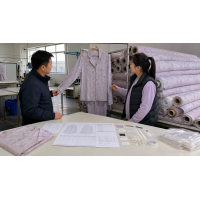
A sleepwear brand came to KoalaPurr after approving its pajama sample and needed reliable support for bulk production. This case study shows how we moved the style from sample approval into fabric preparation, pre-production checks, sewing, quality control, labeling, packaging, and final inspection while maintaining consistency with the approved sample.
Client Background
For many sleepwear brands, approving the sample feels like the biggest milestone in product development.
But from a manufacturing perspective, sample approval is not the end of the project. It is the point where a new challenge begins: how do you reproduce the approved garment consistently across bulk production?
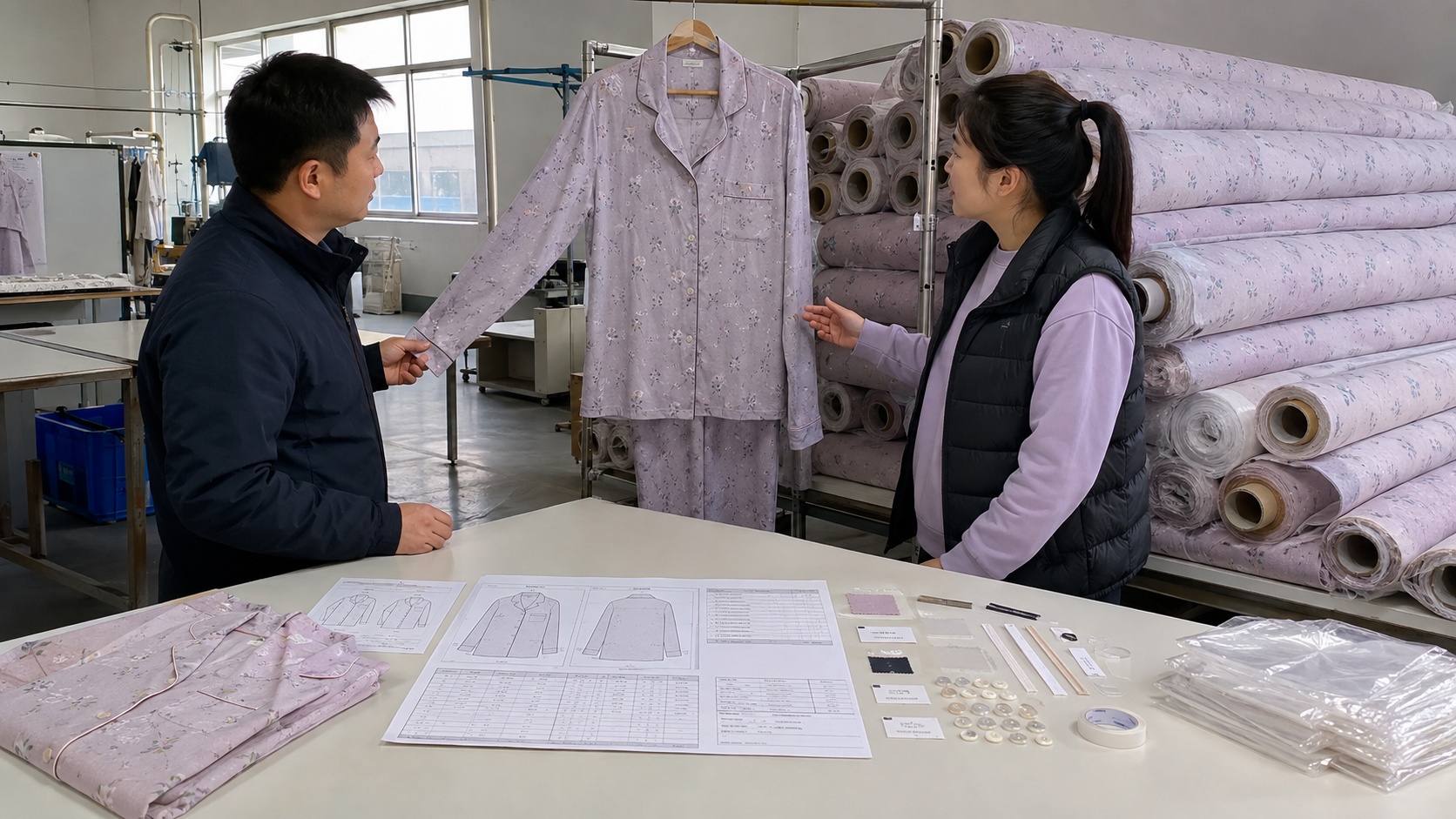
In this project, KoalaPurr worked with a sleepwear brand that had completed sample development for a women's pajama set and was ready to move forward with its first bulk order.
The style itself had already been confirmed. The client was satisfied with the overall fit, fabric direction, construction, color, and private label details.
The next objective was different. The brand needed the bulk garments to stay as close as possible to the approved sample while maintaining consistency across sizes, production batches, labels, finishing, and packaging.
For the client, the main concern was not simply whether the factory could produce the order. It was whether the final bulk shipment would still feel like the product they had approved during development. That became the focus of the project.
The Challenge: Keeping Bulk Production Consistent With the Approved Sample
Moving from one approved sample to a full production order introduces variables that do not exist during small-scale sampling.
A single sample can be carefully handled by one development team. Bulk production involves larger fabric quantities, cutting, multiple sewing operations, finishing, inspection, labeling, packing, and repeated handling. Without clear production standards, small inconsistencies can appear.
For this pajama project, the team needed to pay particular attention to:
- Fabric hand feel
- Fabric shade consistency
- Garment measurements
- Pajama top and pant proportions
- Stitching quality
- Collar and placket shape
- Button positioning
- Piping consistency
- Waistband construction
- Labels and care information
- Packaging presentation
The approved sample therefore became more than a visual reference. It became one of the key standards used to guide production.
Step 1: Finalizing the Production Standard
Before bulk manufacturing began, KoalaPurr reviewed the approved product information together with the final sample. The goal was to make sure that the development decisions had been transferred clearly into production.
The team reviewed:
- Final garment measurements
- Approved fabric
- Color standard
- Construction method
- Stitching details
- Button and trim specifications
- Piping details
- Label placement
- Packaging requirements
- Size assortment
This stage is important because bulk production should not rely on verbal instructions or memory. The approved product needs to be supported by clear specifications so that the production team knows exactly what must be maintained.
Once these details were confirmed, the style could move into production preparation.
Step 2: Preparing and Checking Bulk Fabric
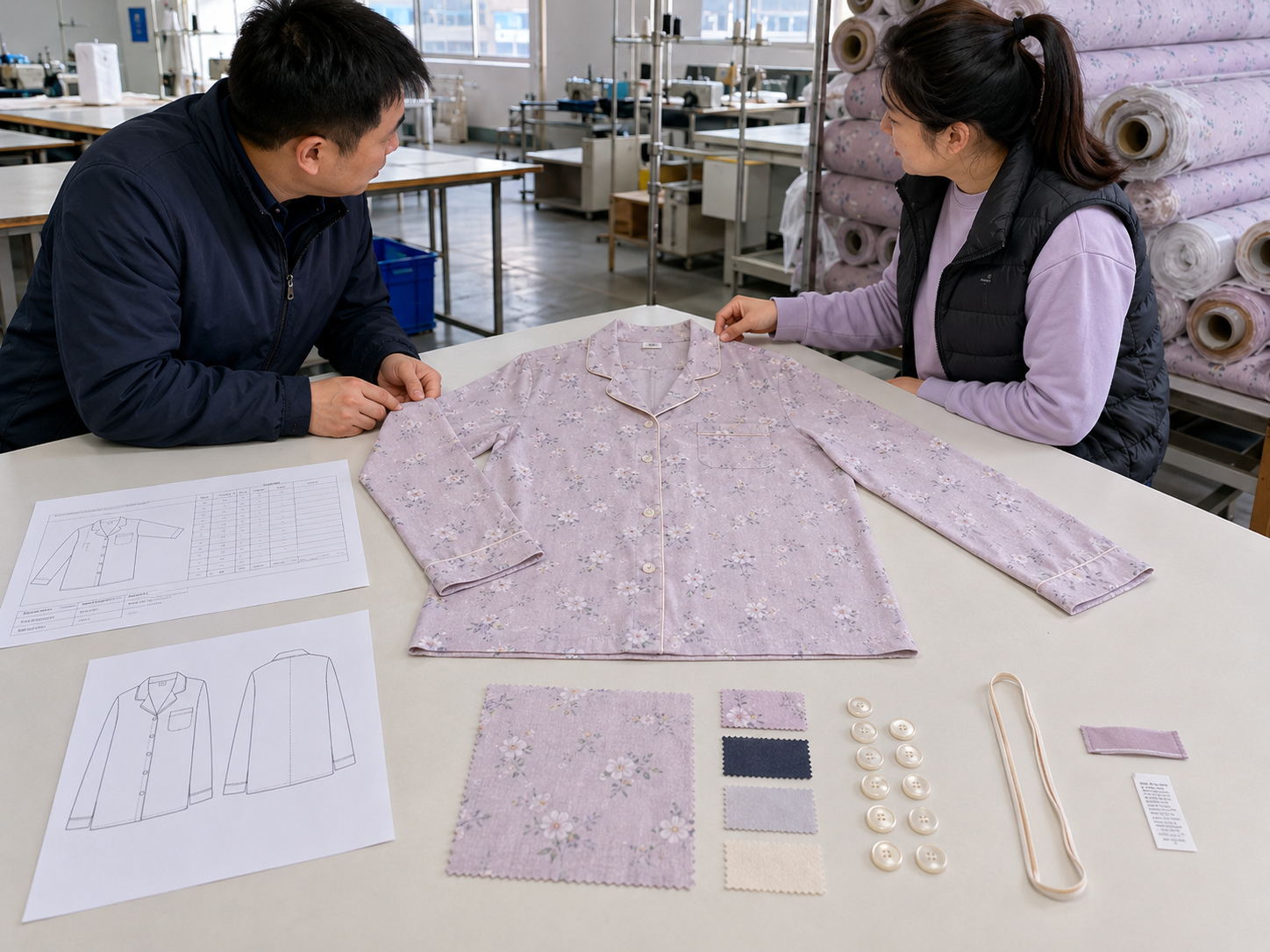
Fabric is one of the biggest factors affecting sample-to-bulk consistency. Even when the same fabric composition is ordered, the production team still needs to pay attention to characteristics such as:
- Color
- Surface appearance
- Stretch
- Hand feel
- Fabric width
- Weight
- Shrinkage behavior
- General consistency
For this pajama set, the bulk fabric was reviewed before cutting so that obvious differences could be identified early.
This matters because once fabric has been cut into hundreds of garment panels, correcting a fabric-related problem becomes much more difficult.
The production team also considered how the fabric would behave during cutting and sewing. Soft sleepwear fabrics often require careful handling to avoid stretching, distortion, or inconsistent garment dimensions.
The objective was simple: control as many variables as possible before the garment reached the sewing line.
Step 3: Cutting With the Approved Measurements in Mind
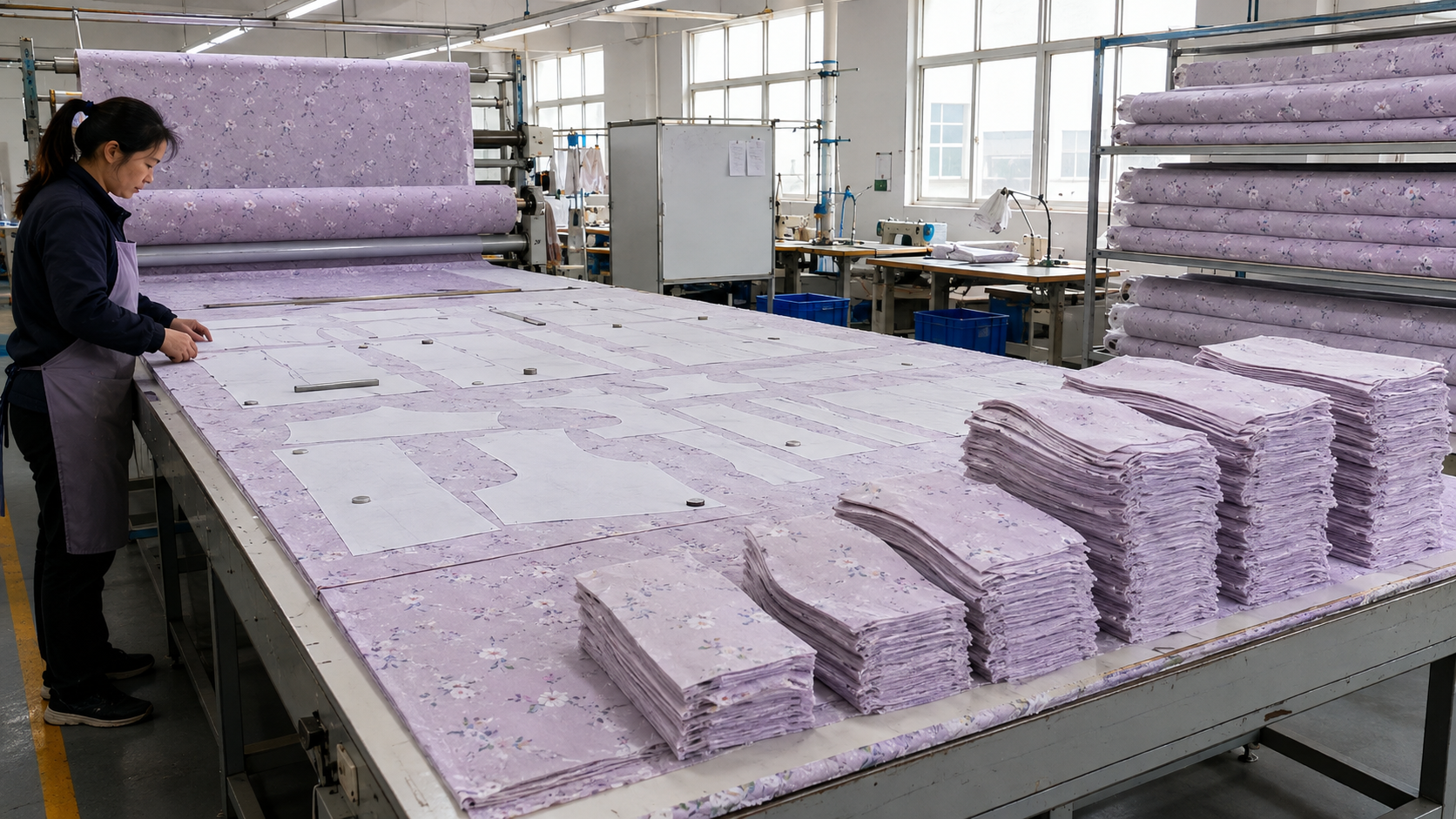
Once the fabric was ready, the order moved into cutting. Accurate cutting is especially important for pajamas because relaxed garments still rely on correct proportions.
A few centimeters of variation can affect:
- Shoulder balance
- Sleeve length
- Body width
- Pant length
- Rise
- Leg shape
The cutting process therefore needed to follow the finalized pattern and size specifications rather than relying on visual judgment.
The production team reviewed the cutting preparation carefully and checked that the relevant size breakdown and pattern information were correct before the full order progressed. This helped create a more stable foundation for the sewing stage.
Step 4: Controlling Key Sewing Details
After cutting, the order moved into sewing. For a classic pajama set, many of the most noticeable quality differences come from small construction details. The production team therefore focused on areas that could strongly influence the finished appearance.
Collar and Neckline Shape
The collar needed to maintain the same clean appearance as the approved sample. Uneven collar points, poor pressing, or inconsistent seam allowance can immediately make a pajama top look less refined.
Front Placket and Button Placement
The front opening needed to remain straight and balanced. Button spacing was checked so that the finished garment followed the approved design.
Piping
Where piping was used, consistency in width and placement was important. Piping that twists, changes width, or sits unevenly can affect the overall premium appearance of the pajama.
Sleeve and Cuff Construction
Sleeve shape and cuff finishing needed to remain consistent across the order.
Pajama Pants
Waistband construction, rise, inseam, leg shape, and hem finishing were also controlled so that the pants matched the approved fit direction.
Bulk manufacturing is not simply a matter of repeating the same sewing operation. It requires controlling the details that define the approved product.
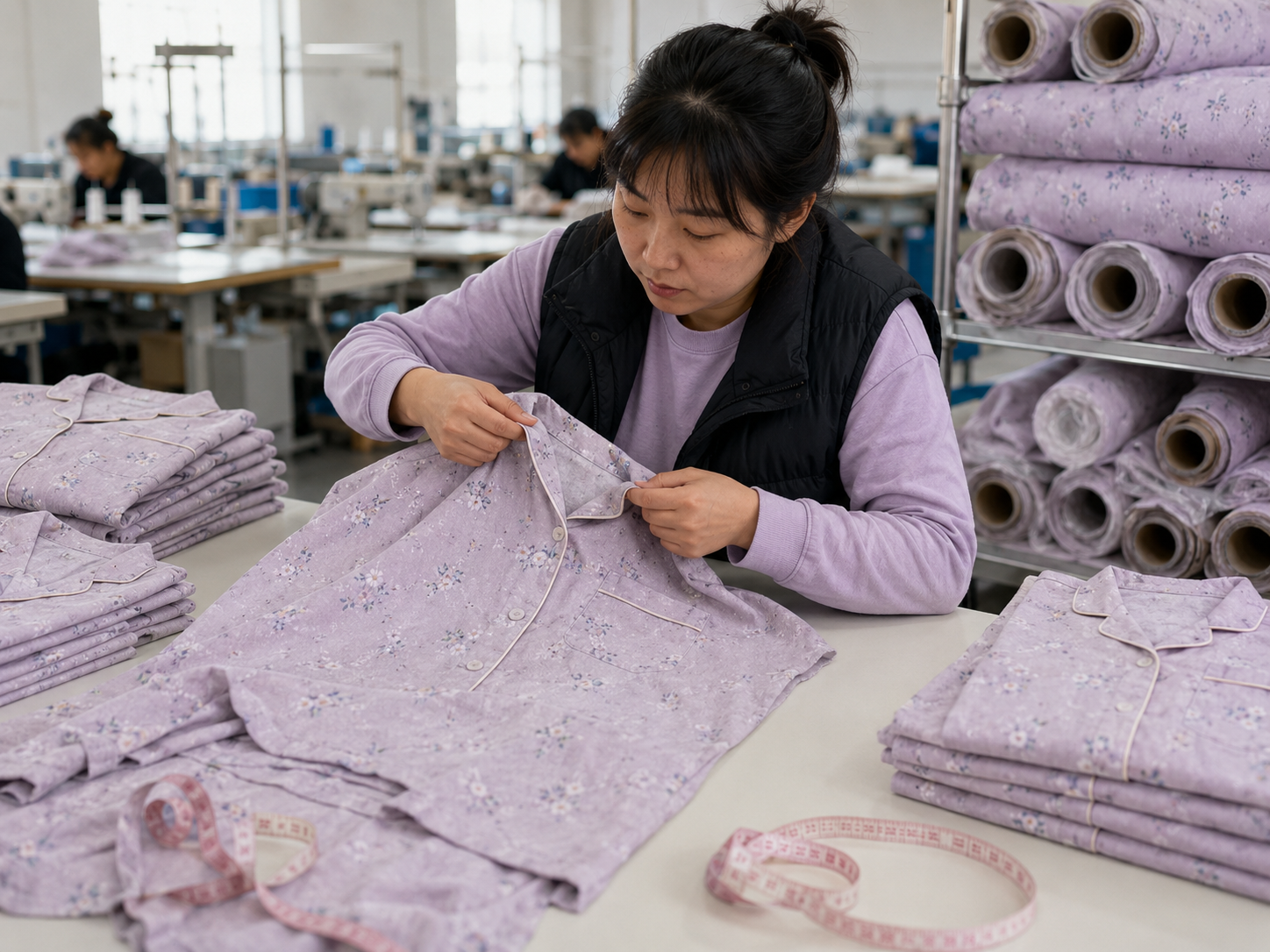
Step 5: Inline Quality Checks During Production
Waiting until the very end to inspect a completed order can create unnecessary risk. For this reason, quality control should also happen during production.
During the manufacturing process, KoalaPurr's team reviewed key points while garments were still being sewn and assembled. The purpose of inline inspection was to identify issues before they became repeated across a large quantity.
Checks could include:
- Stitching appearance
- Seam quality
- Piping alignment
- Button placement
- Collar shape
- Garment measurements
- Fabric handling
- General workmanship
If a repeated issue is discovered early, the production team can correct the process before the entire order is affected. This is particularly valuable when moving a newly developed style into bulk production for the first time.
Step 6: Checking Garment Measurements
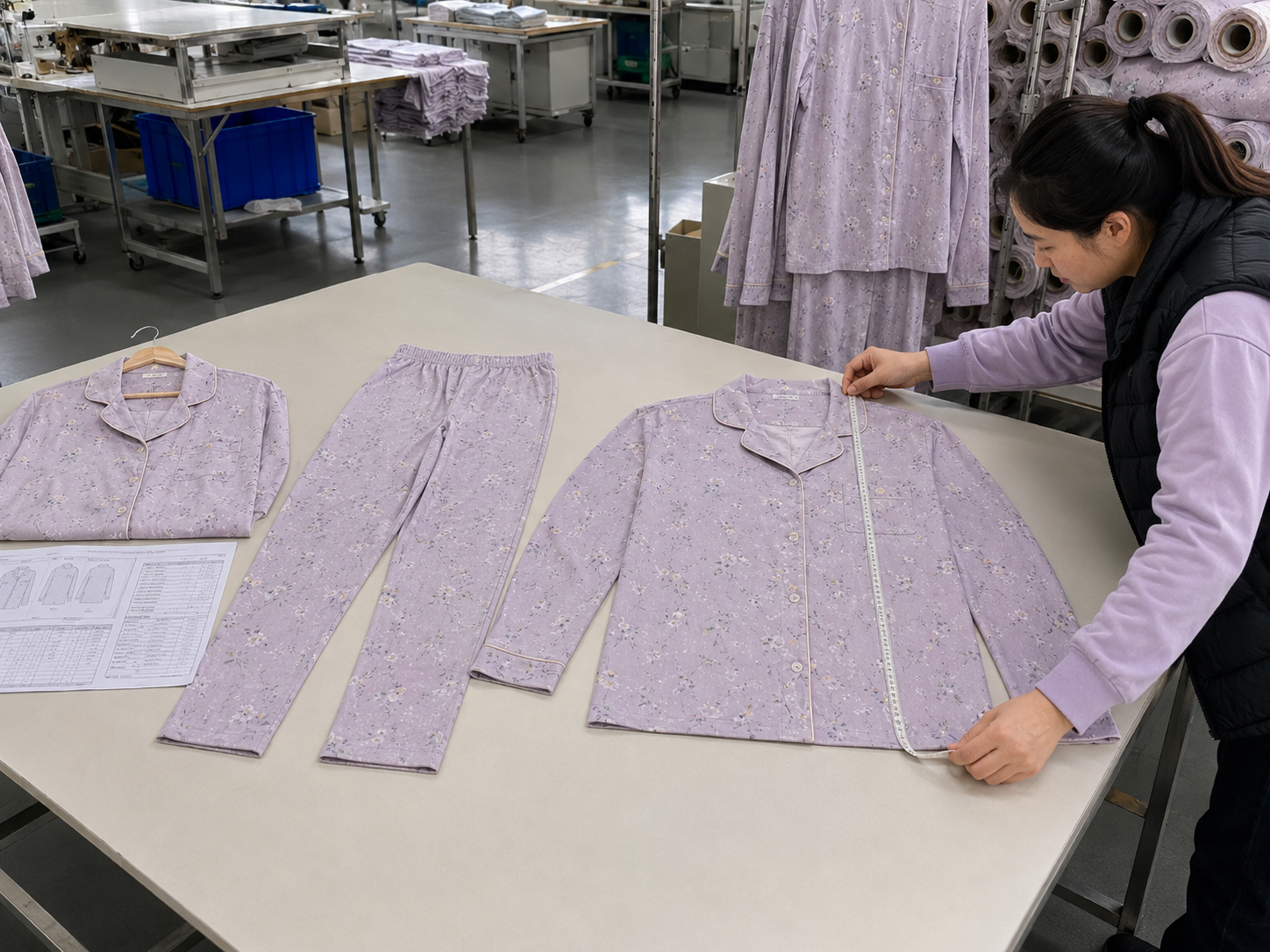
One of the client's main concerns was maintaining the approved fit in bulk production. That meant measurement control could not be treated as an afterthought.
Finished and semi-finished garments were checked against the approved specifications at relevant stages.
For the pajama top, important areas included:
- Chest width
- Body length
- Shoulder width
- Sleeve length
- Sleeve opening
For the pajama pants, the team focused on areas such as:
- Waist
- Hip
- Front rise
- Back rise
- Inseam
- Leg opening
- Total length
The purpose was not to expect every garment to be mathematically identical. Garment manufacturing involves reasonable production tolerances.
The goal was to make sure that the bulk garments remained within the approved standard and maintained the intended fit across the size range.
Step 7: Reviewing Color and Overall Appearance
A pajama garment can meet measurement specifications and still look inconsistent if color, finishing, or pressing varies too much. The final appearance of the product was therefore reviewed as a complete garment.
The team checked:
- Overall color consistency
- Fabric surface appearance
- Garment symmetry
- Collar presentation
- Piping appearance
- Button alignment
- Seam quality
- Pressing and finishing
- Loose threads
- Visible defects
For private label sleepwear, these details directly influence how the end customer perceives quality. A bulk order should not simply pass technical inspection. It should also maintain the visual character of the product that the brand originally approved.
Step 8: Labels, Branding, and Packaging
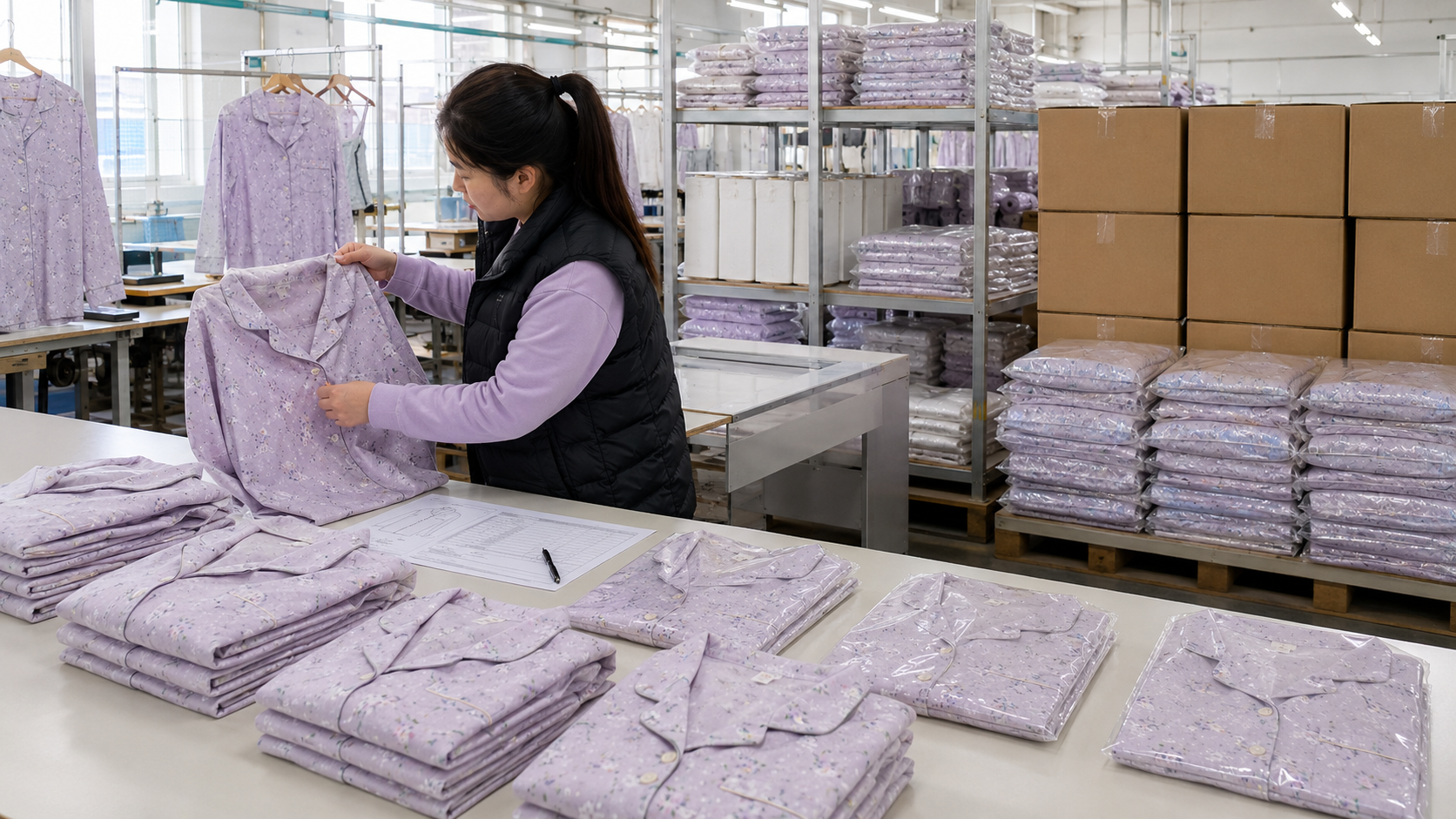
For private label brands, quality control does not stop when the garment is finished. The product also needs to arrive with the correct branding and presentation.
Before packing, the project included checks around:
- Main labels
- Size labels
- Care labels
- Hangtags
- Label placement
- Folding
- Size stickers
- Individual packaging
- Packing assortment
This stage is easy to underestimate. A well-made pajama garment with the wrong size label, incorrect packaging, or inconsistent folding can still create problems for the brand when products arrive at the warehouse.
For that reason, packaging and labeling were treated as part of the production standard rather than a separate cosmetic step. To understand realistic planning for a first order, brands can review custom pajama MOQ and lead time guidance.
Step 9: Final Inspection Before Shipment
Once production and finishing were complete, the order moved into final inspection. The purpose of this stage was to review the finished goods before shipment and confirm that the order met the agreed production requirements.
Final checks focused on areas such as:
- Workmanship
- Measurements
- Fabric appearance
- Color
- Labels
- Size identification
- Packaging
- General product consistency
Any issues identified during inspection could then be reviewed before shipment. This final stage provided the client with greater confidence that the bulk order reflected the product that had originally been developed and approved.
Why Sample-to-Bulk Consistency Matters
For a sleepwear brand, the approved sample represents an expectation. The bulk order needs to reproduce that expectation as consistently as possible.
If the sample has the right fit but bulk garments become wider, longer, or shorter, the customer experience changes. If the sample has clean piping but bulk production has uneven piping, the perceived value of the product changes.
If the approved fabric feels soft but the final order feels noticeably different, the brand may face customer complaints even if the fabric technically has the same composition.
This is why bulk production should be managed as a continuation of product development rather than as a completely separate stage. The approved sample, specifications, materials, and quality expectations need to remain connected throughout manufacturing.
The Result
By managing the transition from sample approval through production preparation, sewing, inspection, and packaging, the pajama style moved successfully into bulk manufacturing with a clearer and more controlled production standard.
The project helped the client achieve:
- Better consistency between the approved sample and bulk garments
- More stable garment measurements
- Controlled sewing and finishing details
- Clearer quality checkpoints during production
- More consistent private label presentation
- Organized labeling and packaging
- Greater confidence before shipment
Most importantly, the client was able to move beyond the development stage and turn an approved pajama sample into a commercial product ready for the next stage of the brand's business.
What Sleepwear Brands Can Learn From This Project
1. Sample Approval Is the Start of Bulk Production Control
An approved sample provides the standard, but the production process still needs to reproduce it carefully.
2. Final Specifications Should Be Clear Before Cutting
Measurements, materials, trims, labels, and construction details should be confirmed before bulk production begins.
3. Fabric Should Be Reviewed Before Full Production
Fabric differences can influence color, hand feel, fit, and garment appearance. Finding issues before cutting reduces risk.
4. Inline Inspection Helps Prevent Repeated Problems
Quality control during sewing makes it easier to identify and correct issues before they affect the full order.
5. Measurements Need to Be Controlled Across Sizes
The approved fit should translate consistently through the required size range.
6. Packaging Is Part of Product Quality
Labels, folding, packaging, and size identification affect the client's warehouse operation and the final customer experience.
7. The Approved Sample Should Remain a Key Reference
Bulk manufacturing is more reliable when the production team continues comparing finished garments with the approved standard.
Conclusion
Moving from an approved sample to bulk pajama production requires more than simply increasing quantity. It requires coordination between fabric preparation, cutting, sewing, measurement control, quality inspection, branding, and packaging.
In this project, KoalaPurr helped a sleepwear brand manage that transition by using the approved sample and finalized specifications as key production references throughout the manufacturing process.
The result was a more controlled path from product development to commercial production and a stronger foundation for future repeat orders.
For sleepwear brands, reliable bulk manufacturing is not only about production capacity. It is about reproducing the approved product consistently, order after order.
Ready to Move Your Pajama Sample Into Bulk Production?
If your sleepwear sample is already approved, KoalaPurr can support the next stage with production preparation, fabric and trim coordination, bulk manufacturing, quality control, private labeling, packaging, and shipment preparation.
Plan Your Bulk Production
Are you looking for a reliable sleepwear manufacturer for your brand?
From product development to bulk production, we provide custom sleepwear solutions with professional support for global brands.