
How We Improved Pajama Fit Through Sample Development
How We Improved Pajama Fit Through Sample Development
A sleepwear brand brought a pajama design that looked good on paper to KoalaPurr, but it still needed fit refinement before production. Through sample review, measurement comparison, and repeated wear testing, we improved the balance between the top and the pants, optimized comfort and mobility, and helped the original design evolve into a more mature, production-ready pajama set.
Client Background
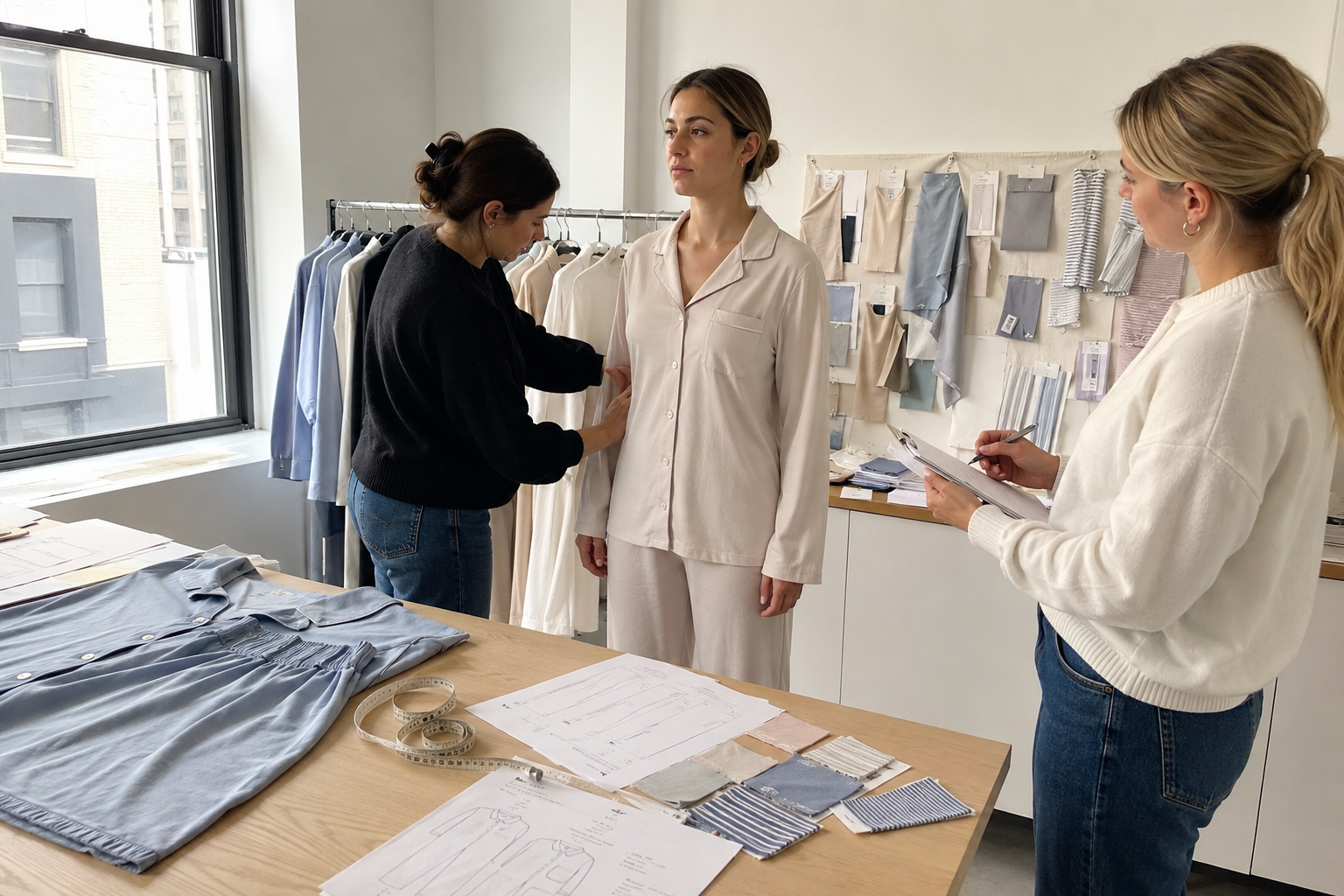
A sleepwear brand approached KoalaPurr while developing its new season women's pajama set.
The overall design direction was already established. The brand wanted a classic long-sleeve pajama set with a relaxed look, comfortable movement, and a clean silhouette for everyday sleepwear.
The initial concept included the main design elements the client wanted:
- Button-front pajama top
- Relaxed long sleeves
- Full-length pajama pants
- Comfortable elastic waistband
- Soft pajama fabric
- Clean private label presentation
However, when the first physical sample was reviewed, the client realized that several proportions were not as balanced as expected.
There was no fundamental problem with the design itself. The challenge was that small fit issues affected the look and comfort of the whole garment.
This is a common stage in pajama product development. Technical drawings or measurement charts can provide a foundation, but the true behavior of a fabric only becomes visible when fabric, pattern, sewing technique, and the human body come together in a physical sample.
The Main Fit Challenges
In the first sample review, the team focused on how the pajama set looked and performed when worn, rather than evaluating each measurement one by one.
Several areas needed improvement.
The pajama top felt slightly too loose in some areas, while the sleeve and shoulder proportions needed better balance. The pants also needed adjustment so they did not look unnecessarily oversized while keeping a relaxed sleepwear silhouette.
At the same time, the client did not want the fit to become too fitted.
This distinction matters. Sleepwear should allow comfortable movement for sleeping and lounging. Improving fit does not mean making pajamas tighter; it means creating better proportion, balance, and mobility while keeping the intended relaxed silhouette.
The development team therefore evaluated the garment as a complete system, rather than simply reducing every size.
Step 1: Reviewing the Pajama as a Complete Garment
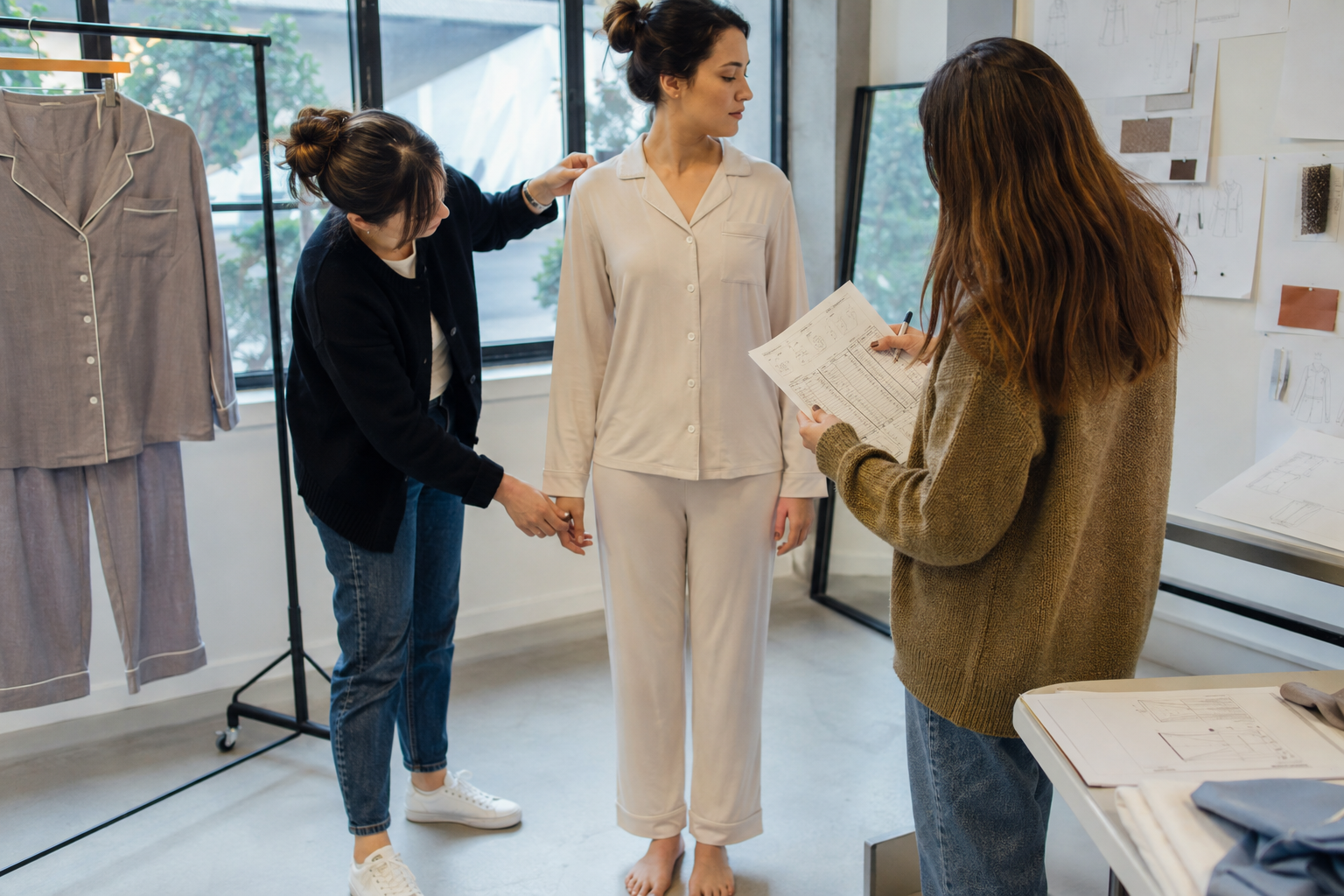
The first step was not to change the pattern immediately. Instead, KoalaPurr's product development team evaluated how the whole pajama set performed on the body.
We looked at the following areas:
- Shoulder position
- Chest ease
- Body width
- Garment length
- Sleeve length
- Arm movement
- Waist comfort
- Front and back rise
- Hip ease
- Leg width
- Pants length
Every measurement can influence other parts of the garment. For example, simply reducing chest width may make a top look neater when standing, but it can also reduce comfort when the wearer sits, stretches, or sleeps. Similarly, narrowing the pants without considering hip ease and rise will change how the garment moves.
The goal was to make the silhouette look more considered while keeping the comfortable characteristics of sleepwear.
Step 2: Comparing the Sample With the Measurement Specification
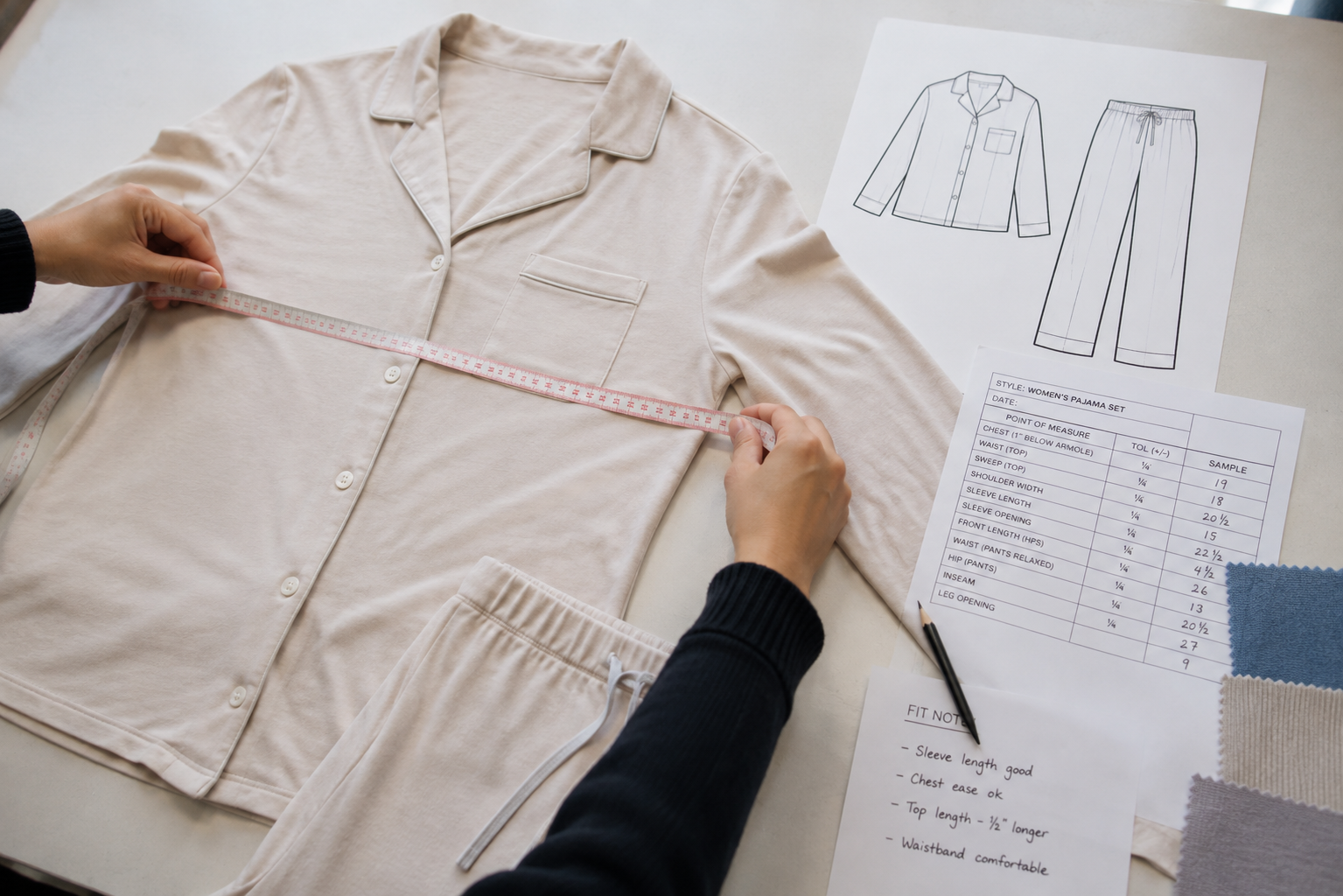
After the visual fit review, the physical garment was compared with the measurement specification.
This helps distinguish two different types of issues:
- Measurement execution issue - the garment does not match the established specification.
- Pattern or specification issue - the garment matches the original measurements, but the final fit still needs improvement.
This distinction is important in product development. A factory can produce a sample exactly to specification, and the garment may still need changes. That does not necessarily mean the sewing or pattern work was wrong; it may simply mean the original specification needs iteration after the first wear test.
In this project, the team reviewed the original measurements together with the client's desired silhouette and identified which areas should stay the same and which should be improved.
Step 3: Adjusting the Pajama Top
The top needed several subtle improvements rather than one major redesign. The team reviewed the relationship between the shoulder, body width, sleeves, and overall garment length.
The goal was to achieve a silhouette that still looked relaxed but felt more balanced when worn.
Shoulder Balance
Shoulder position strongly influences how a pajama top drapes. If the shoulder line extends too far, a relaxed pajama can start to look oversized rather than intentionally loose. If it is too narrow, comfort and mobility can suffer. The shoulder line was therefore reviewed together with the sleeve shape, not as an isolated measurement.
Chest and Body Ease
Sleepwear needs enough ease for sitting, sleeping, and natural movement. The team evaluated whether the body width provided the necessary comfort or whether excess fabric affected the appearance. The focus was on creating a cleaner drape without changing the relaxed nature of the product.
Sleeve Proportion
Sleeve length and width were checked while the fit model moved naturally. This helped confirm that the sleeve proportions looked coordinated when the arms were relaxed, bent, and slightly raised.
Garment Length
The pajama top needed to coordinate visually with the pants. A top that is slightly too long or too short changes the balance of the whole set, even when every other detail is correct. Garment length was therefore reviewed as part of the complete outfit.
Step 4: Improving the Pajama Pants Fit
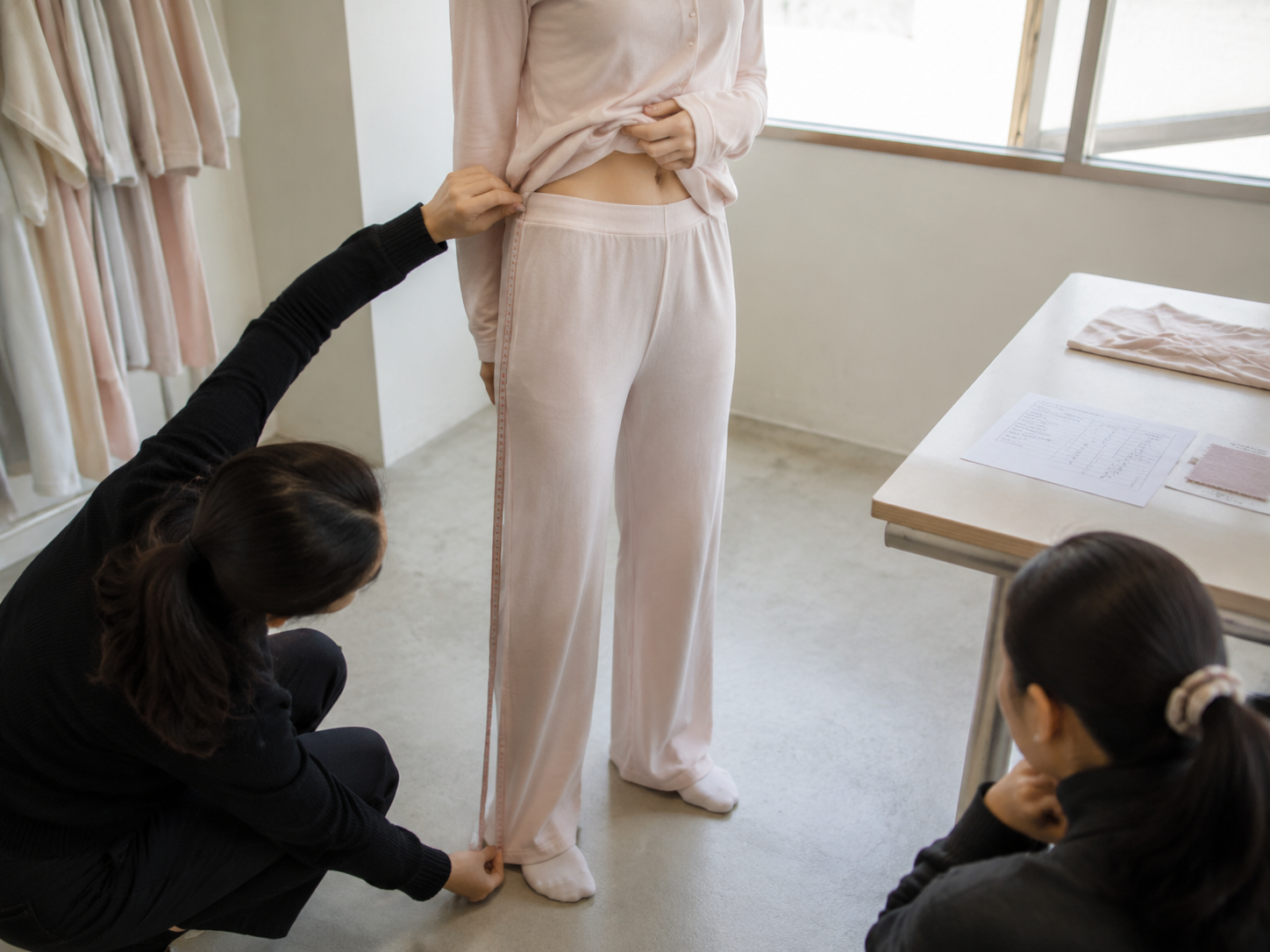
The pants also needed a balance between comfort and appearance. The goal was not to create a slim leg, but to improve how the pants drape from the waist to the hem while keeping comfortable sleepwear ease.
Several areas were reviewed:
Waist and Elastic Comfort
The waistband needed to feel secure without being restrictive. The team checked the finished waist measurement and how the elastic performed when worn.
Front and Back Rise
Rise is especially important in pajamas because customers wear them while sitting, relaxing, and sleeping. A rise that looks acceptable when standing can still feel uncomfortable during movement. The sample was therefore reviewed in natural body positions, not only in a static standing pose.
Hip and Thigh Ease
The hip and upper thigh must keep enough room. Instead of simply narrowing the pants, the development team considered which areas could reduce ease while maintaining comfortable mobility.
Leg Shape and Length
The leg line was refined to create a cleaner silhouette. Pant length was checked together with the leg opening to ensure the finished garment did not look too heavy at the ankle.
Step 5: Testing Comfort Through Movement
Fit cannot be evaluated only while a model is standing. Pajamas are functional garments designed for movement and relaxation, so the revised sample also had to be assessed in natural positions.
During the fit review, the garment was evaluated while the wearer:
- Raised and moved her arms
- Sitting down
- Walking naturally
- Bending the knees
- Adjusting her sitting position
- Moving the upper body
This helped identify whether the revised measurements kept enough ease throughout the garment. It also helped the team check whether the fabric caused pulling, twisting, or excessive tension in specific areas.
This stage is especially important for soft knit sleepwear, because elasticity and drape make the garment behave very differently from structured woven clothing. A technically correct measurement chart still needs to be tested through real movement.
Step 6: Developing the Revised Sample
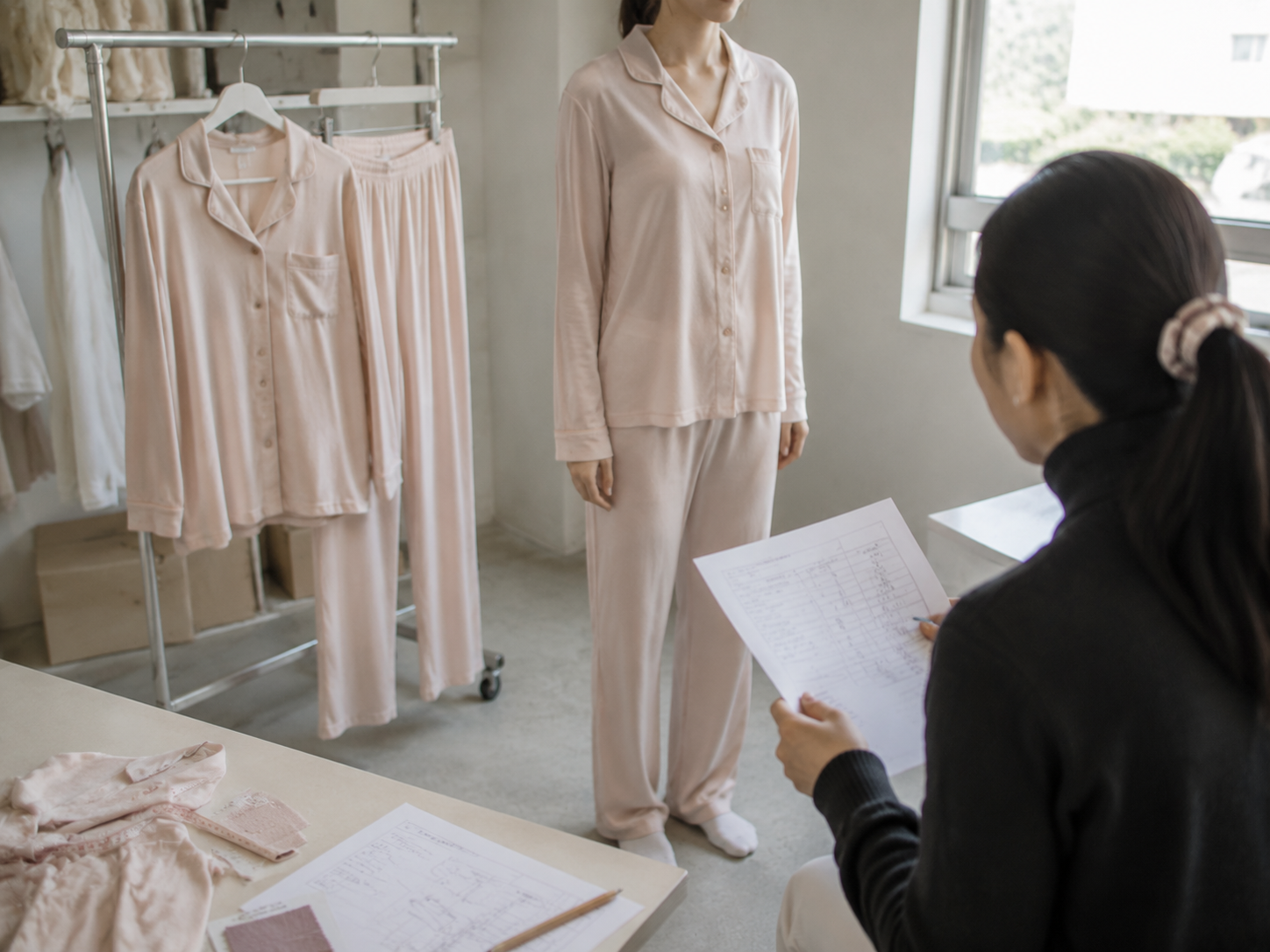
Once the first fit review was complete, the agreed changes were fed back into the development process. The pattern and measurement specification were updated according to the approved adjustments.
A revised sample was then made for another round of evaluation. The second sample provided an opportunity to confirm that the changes worked together as intended.
The development team checked:
- Overall silhouette
- Shoulder balance
- Sleeve position
- Body ease
- Top and pants proportion
- Waist comfort
- Rise and hip movement
- Pant shape
- Garment length
The revised version delivered a more balanced look while keeping the comfortable, relaxed feel the client wanted. Importantly, the improvement came from a series of controlled adjustments rather than a radical change to the original design.
Why Small Fit Adjustments Matter in Sleepwear
Fit issues are not always dramatic. In many cases, a pajama sample can look acceptable at first glance. However, several small issues combined can make the finished product feel less refined.
Slightly too-wide shoulders, excess body ease, an unbalanced rise, or unnecessary pant width can all affect how customers perceive quality. This is especially important for private label brands.
Customers may not consciously identify every measurement issue, but they can often feel the difference between a carefully refined garment and one produced directly from an initial pattern.
Solid fit development helps create:
- Better garment balance
- More natural mobility
- Cleaner product photography
- More consistent sizing
- Better customer comfort
- Stronger perceived product quality
For brands building long-term collections, an approved fit also becomes a valuable reference for future products.
Creating a Reliable Fit Standard for Future Styles
One of the most valuable outcomes of this project was more than one improved pajama set. The development process also helped the client establish a clearer fit direction for future collections.
Once a brand defines its preferred ease, body proportions, sleeve balance, pant shape, and overall silhouette, these decisions can guide subsequent product development.
For example, the same fit philosophy can apply to:
- Short pajama sets
- Seasonal color updates
- Printed pajama collections
- Different fabric versions
- Loungewear sets
- Related sleepwear styles
This is why sample development should not be viewed as an isolated cost. For an emerging or growing sleepwear brand, one well-developed core style can become part of a broader product development system.
Preparing the Pajama Set for Production
Once the fit direction was confirmed, the next step was to make sure the approved changes were properly documented. A successful sample is only useful for bulk production if the final specification is clear.
Before moving to the next stage, the development information should reflect the approved garment, including:
- Final measurements
- Pattern updates
- Construction details
- Fabric information
- Trim specifications
- Care label placement
- Color information
- Approved fit annotations
This provides a clearer reference for production and quality control. KoalaPurr normally uses the approved sample and final specification as an important reference when preparing a style for bulk production.
Actual sampling and production timelines may vary depending on fabric, construction, order quantity, special processes, and approval speed. To understand realistic planning, brands can review custom pajama MOQ and lead time guidance.
The Result
Through structured sample development, the pajama set evolved from an initial design with several proportion issues into a more balanced, production-ready fit direction.
The final development outcomes included:
- Better balance between the pajama top and pants
- More controlled body ease
- Improved shoulder and sleeve proportions
- More comfortable pant mobility
- A cleaner overall silhouette
- A clearer sizing standard for future development
Equally important, the client gained a deeper understanding of how to evaluate pajama fit. Instead of making changes based only on visual preference, the brand now connects design intent with measurements, pattern behavior, fabric characteristics, and real movement.
This created a stronger foundation for future product development.
What Sleepwear Brands Can Learn From This Project
This case offers several important lessons for brands developing custom pajamas.
1. The First Sample Does Not Need to Be the Final Sample
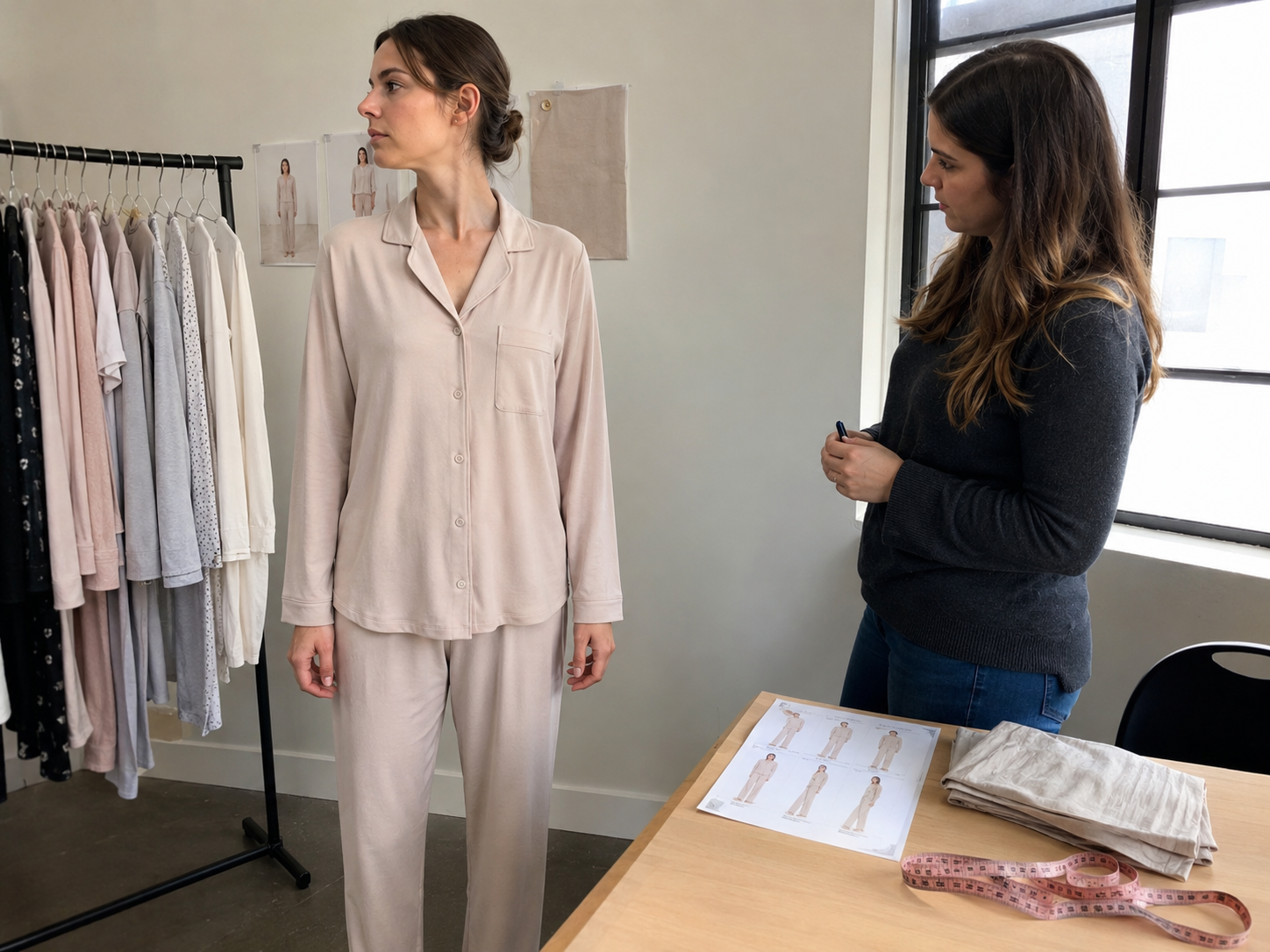
The first sample is part of the development process. Its purpose is to help a brand evaluate the garment physically and identify what needs to improve before production.
2. Relaxed Fit Does Not Mean Oversized Everywhere
Good sleepwear needs comfort and ease, but too much ease in the wrong areas can make a product look unbalanced.
3. Fit Should Be Evaluated During Movement
Measurements taken only while standing cannot show how pajamas perform when sitting, walking, stretching, and sleeping. Real fit review matters.
4. Fabric and Fit Must Be Developed Together
Measurement specifications cannot be separated from fabric behavior. Elasticity, drape, thickness, recovery, and finishing all affect how the same pattern fits.
5. Small Adjustments Can Make a Major Difference
Product development does not always require redesigning the whole garment. Careful modifications to proportions can significantly improve the finished product.
6. An Approved Fit Can Support Future Collections
Once a brand establishes a strong core pajama fit, it can serve as an important reference for new colors, fabrics, prints, and related sleepwear products.
Conclusion
Good pajama fit is not simply a product of a measurement chart. It comes from combining the intended silhouette, fabric characteristics, pattern development, real wear testing, movement evaluation, and clear technical adjustments.
In this project, KoalaPurr helped a sleepwear brand refine its pajama set through a structured sample development process. By carefully reviewing the first sample, adjusting key proportions, testing comfort, and developing a revised version, the project moved toward a more balanced and production-ready result.
For sleepwear brands, sample development is not just a stage between design and bulk production. It is one of the most important opportunities to define how the finished product looks, feels, and performs.
Need Help Improving the Fit of Your Pajama Samples?
Whether you are developing a new sleepwear style or refining an existing design, KoalaPurr can support you with fabric review, pattern development, sampling, fit adjustment, private label details, and bulk production preparation.
Discuss Your Fit Development Project
Are you looking for a reliable sleepwear manufacturer for your brand?
From product development to bulk production, we provide custom sleepwear solutions with professional support for global brands.