How to Choose a Reliable Sleepwear Manufacturer for Your Clothing Brand
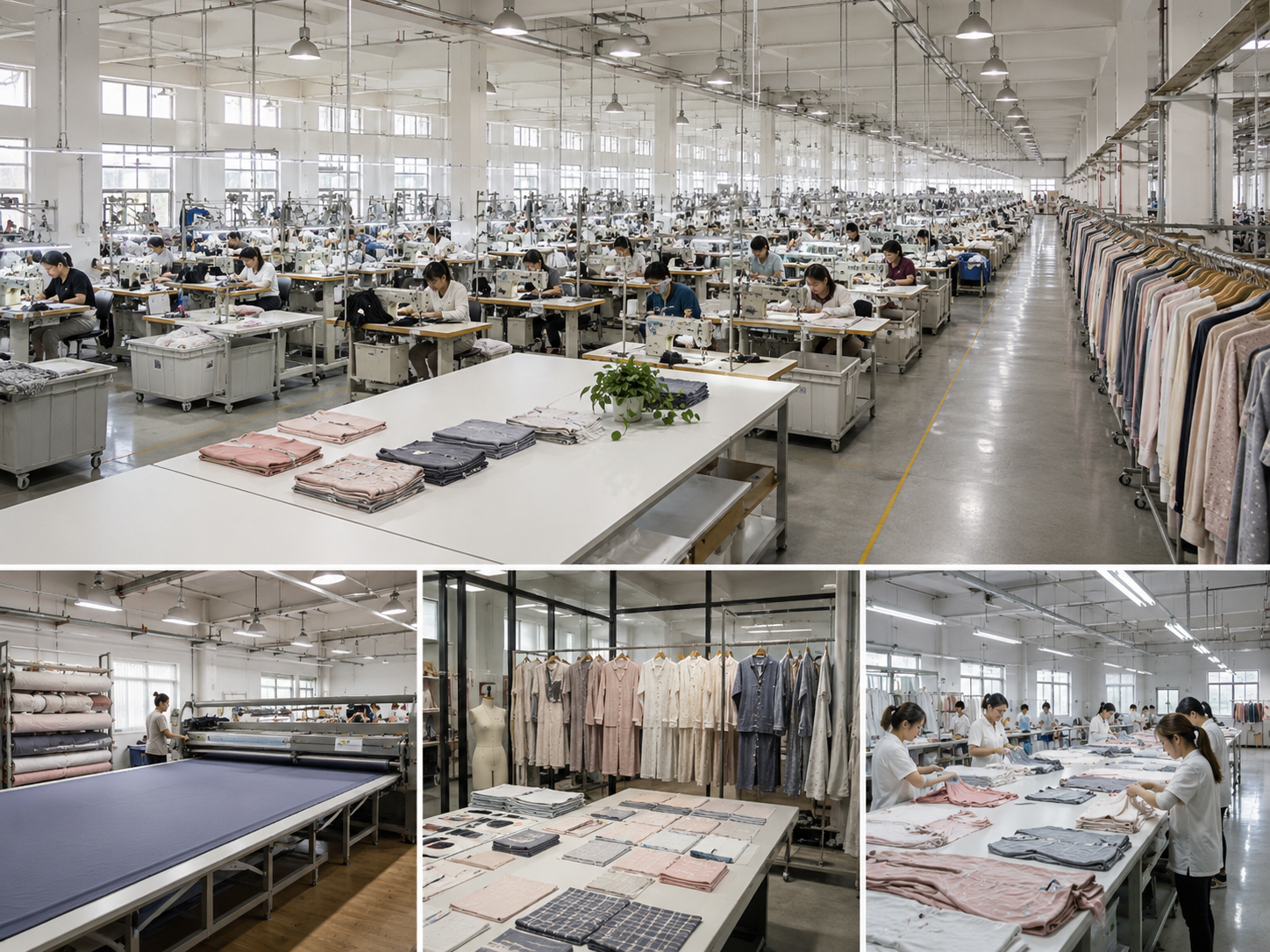
How Brands Can Find the Right Sleepwear Manufacturing Partner
The global sleepwear market continues to expand as consumers increasingly focus on comfort, wellness, and lifestyle products. According to IMARC Group, the global sleepwear market reached USD 14.7 billion in 2025 and is projected to reach USD 25.0 billion by 2034, growing at a CAGR of 5.89% during 2026-2034. The broader sleepwear and loungewear market is estimated at USD 53.9 billion in 2025, with expectations to reach USD 108.2 billion by 2032 at a CAGR of 10.5%. Technavio forecasts the market will grow by USD 36.46 billion from 2025 to 2029, accelerating at a CAGR of 10.4%.
For fashion brands, launching a successful pajama or loungewear collection requires more than a good design - it requires a reliable manufacturing partner who understands fabrics, production processes, and market expectations.
A professional sleepwear manufacturer helps brands transform ideas into finished products through:
- Fabric selection and sourcing
- Product development and sampling
- Production management and scheduling
- Quality control throughout the process
- Custom branding and packaging support
Choosing the right supplier can directly influence product quality, delivery time, customer satisfaction, and long-term brand growth.
Supply Chain Challenges Are Reshaping Sourcing Decisions
In 2026, the sleepwear industry is grappling with significant supply pressures that make manufacturer selection more critical than ever.
The rising cost of raw materials and supply chain instability present major obstacles to market expansion, directly impacting the production of premium and sustainable garments. Supply chain disruptions - including regional airspace closures, elevated war-risk insurance premiums, and suspended carrier services - have driven freight costs up by as much as 400% compared to pre-crisis levels in some regions. Packaging inflation has reached 15-20%, and rising input material costs are compressing retailer and brand margins.
Polyester prices have surged by 20-25% amid rising oil costs and geopolitical tensions, putting additional pressure on synthetic textile production. Industry experts project that recent tariff packages could raise apparel prices by as much as 38% in the short term, with clothing costs remaining roughly 17% higher over the long run if supply chains do not adjust.
Sleepwear brands relying on fragmented supplier networks often face production delays exceeding 25% compared to integrated supply models.
For brands, this means choosing a manufacturing partner with supply chain stability, vertical integration, and flexible production capacity is more critical than ever.
1. Evaluate the Manufacturer's Sleepwear Production Experience
Not every apparel factory specializes in sleepwear.
Sleepwear requires specific expertise because products need to provide:
- Skin-friendly comfort for extended wear
- Soft fabric performance against sensitive skin
- Precise fitting for comfort during sleep
- Comfortable construction with minimal seams and irritation
- Durable finishing that maintains quality through repeated washing
A reliable sleepwear manufacturer should demonstrate experience across different sleepwear categories, including:
- Women's pajamas and nightgowns
- Men's sleepwear and loungewear
- Kids sleepwear and family collections
- Robes and dressing gowns
- Lounge sets and casual comfort wear
Brands should review the manufacturer's portfolio, request references from previous international clients, and assess their understanding of different market requirements - what works for the North American market may differ from European or Asian consumer preferences.
2.Assess Vertical Integration and Production Capacity
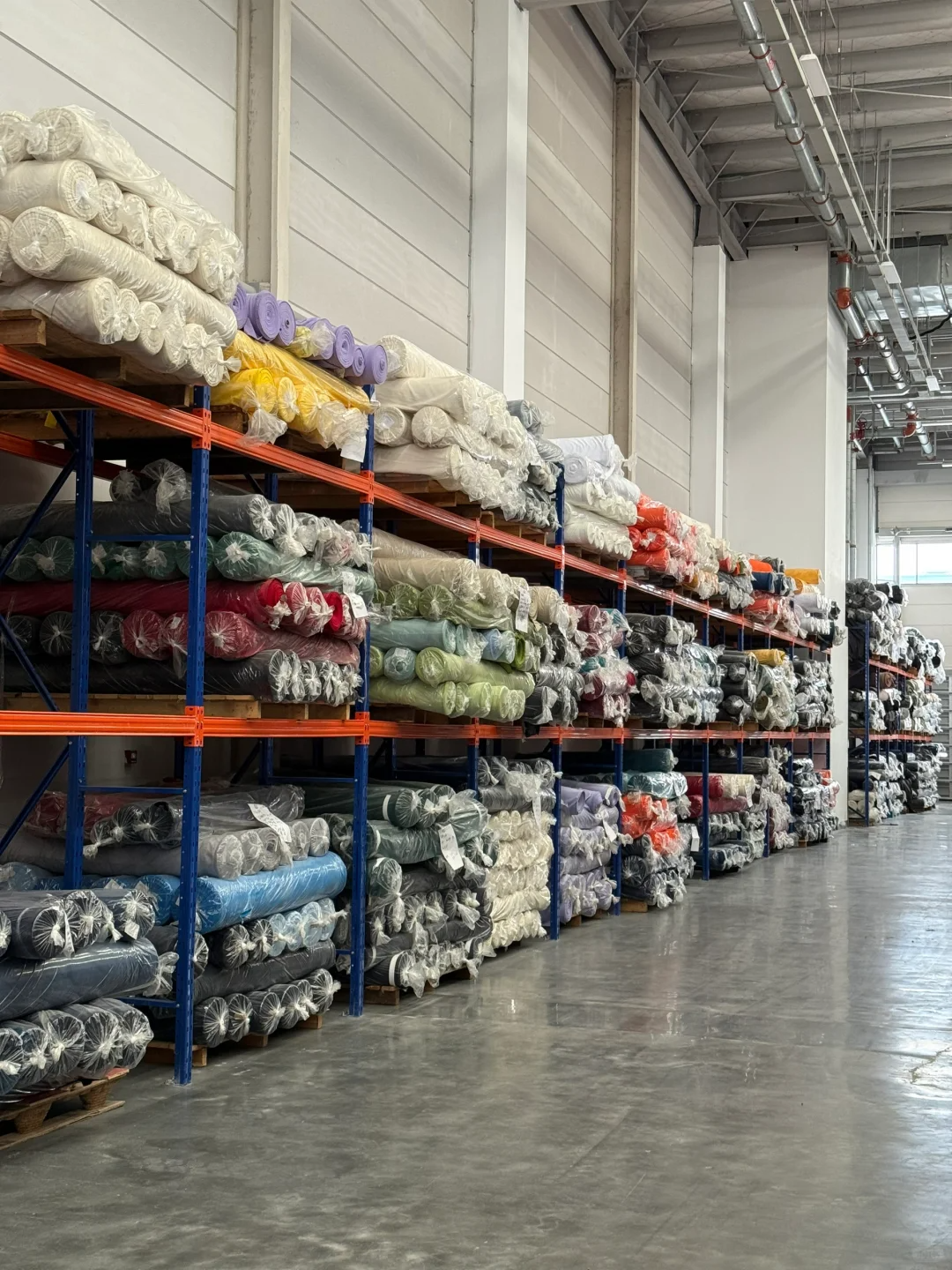
Manufacturers with in-house production capabilities typically offer superior control over scheduling, quality assurance, and customization.
Vertically integrated factories can manage the entire process - from fabric development and dyeing to cutting, sewing, and packaging - enabling faster turnaround times and more consistent quality.
When evaluating a potential manufacturing partner, ask about:
- Own production lines: Does the factory own its cutting, sewing, and finishing equipment, or does it outsource to subcontractors?
- In-house fabric capabilities: Can they source and develop fabrics internally, or do they rely on external suppliers?
- Production capacity: What is their monthly output? Can they scale with your brand's growth?
- Lead times: What is their typical turnaround from sample approval to bulk production?
Brands relying on fragmented supplier networks often experience production delays exceeding 25% compared to those working with integrated manufacturing partners. Vertical integration is particularly valuable during supply chain disruptions, as it reduces dependency on external vendors and provides greater control over production timelines.
3.Check Fabric Expertise and Material Selection Capability
Fabric is one of the most important factors determining sleepwear quality.
Different markets and product positions require different fabric solutions. A professional sleepwear manufacturer should understand the unique properties of various materials and recommend options based on target customers, climate conditions, price positioning, and product requirements.
Common sleepwear fabrics include:
Bamboo Fabric - Popular for sustainable sleepwear collections because of:
- Exceptionally soft hand feel
- Breathability and moisture management
- Natural temperature regulation
- Antibacterial and hypoallergenic properties
Modal Fabric - Often selected for premium pajamas because of:
- Smooth, silky texture
- Lightweight, draping quality
- Excellent color retention
- Superior softness compared to cotton
Cotton Fabric - A classic choice valued for:
- Durability and easy care
- Breathable comfort
- Versatility across price points
- Wide availability and consumer familiarity
A professional custom sleepwear manufacturer should provide fabric recommendations based on:
- Target customer demographics and preferences
- Climate and seasonal considerations
- Price positioning and margin requirements
- Sustainability goals and certification needs
4. Confirm Custom Development and Private Label Capabilities
For brands building their own identity, manufacturing is about more than producing existing products. A capable OEM partner should support:
Design and Development:
- Custom designs and pattern development
- Color customization and dyeing
- Fabric selection and sourcing
Branding and Finishing:
- Printing and embroidery
- Custom labels and hang tags
- Branded packaging solutions
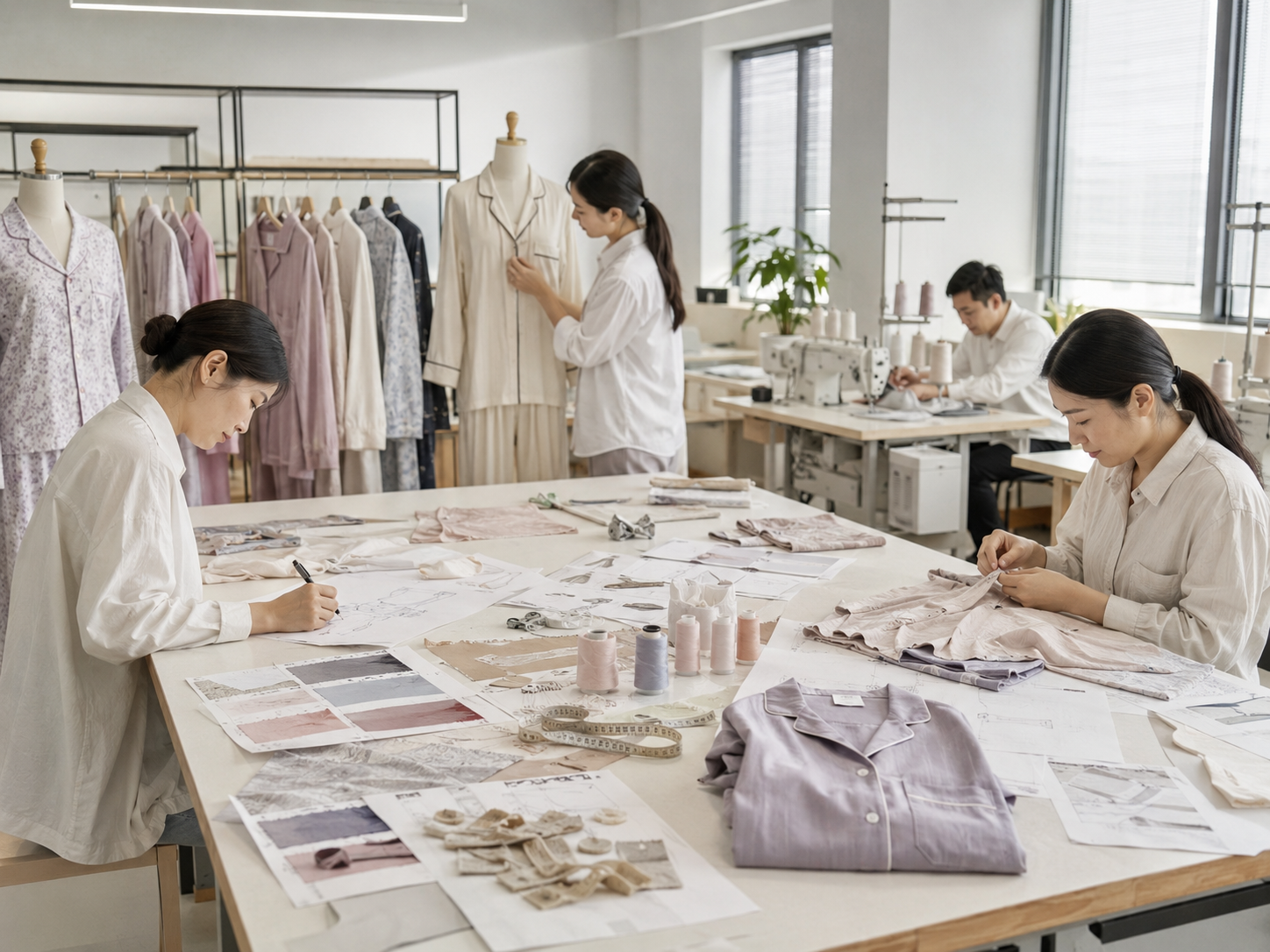
Private label pajama brands especially need a manufacturer who can support the entire development process - from initial concept through sampling, production, and final delivery.
5.Review Sample Development Process
Before bulk production, sample development is a critical step that can make or break a collection.
A reliable manufacturer should provide:
Product Development Support:
- Design discussion and feasibility assessment
- Fabric confirmation and sourcing
- Pattern making and grading
- Sample adjustments based on feedback
- Final approval before production
Quality Sample Evaluation:
Brands should carefully assess:
- Fit accuracy against specifications
- Sewing quality and stitch consistency
- Fabric performance and hand feel
- Color consistency across pieces
- Detail finishing and overall craftsmanship
A professional sampling process reduces production risks and helps brands launch products with confidence. Brands should expect multiple sample rounds - typically 2-3 iterations - before final approval.
6. Understand MOQ and Production Flexibility
Minimum order quantity (MOQ) is an important consideration, especially for:
- New and emerging brands
- Startup fashion companies
- Seasonal or test collections
- Brands expanding into new product categories
A flexible sleepwear manufacturer can help brands reduce inventory risk through reasonable production quantities.
KoalaPurr supports:
- First order: 50 pcs/color/style
- Standard production: 100 pcs/color/style
Flexible MOQ allows brands to test new designs, validate markets, and gradually expand successful collections without excessive upfront investment. This is particularly valuable for brands navigating uncertain market conditions or testing new product categories.
7.Check Quality Control Standards
Quality consistency is essential for building customer trust and brand reputation.
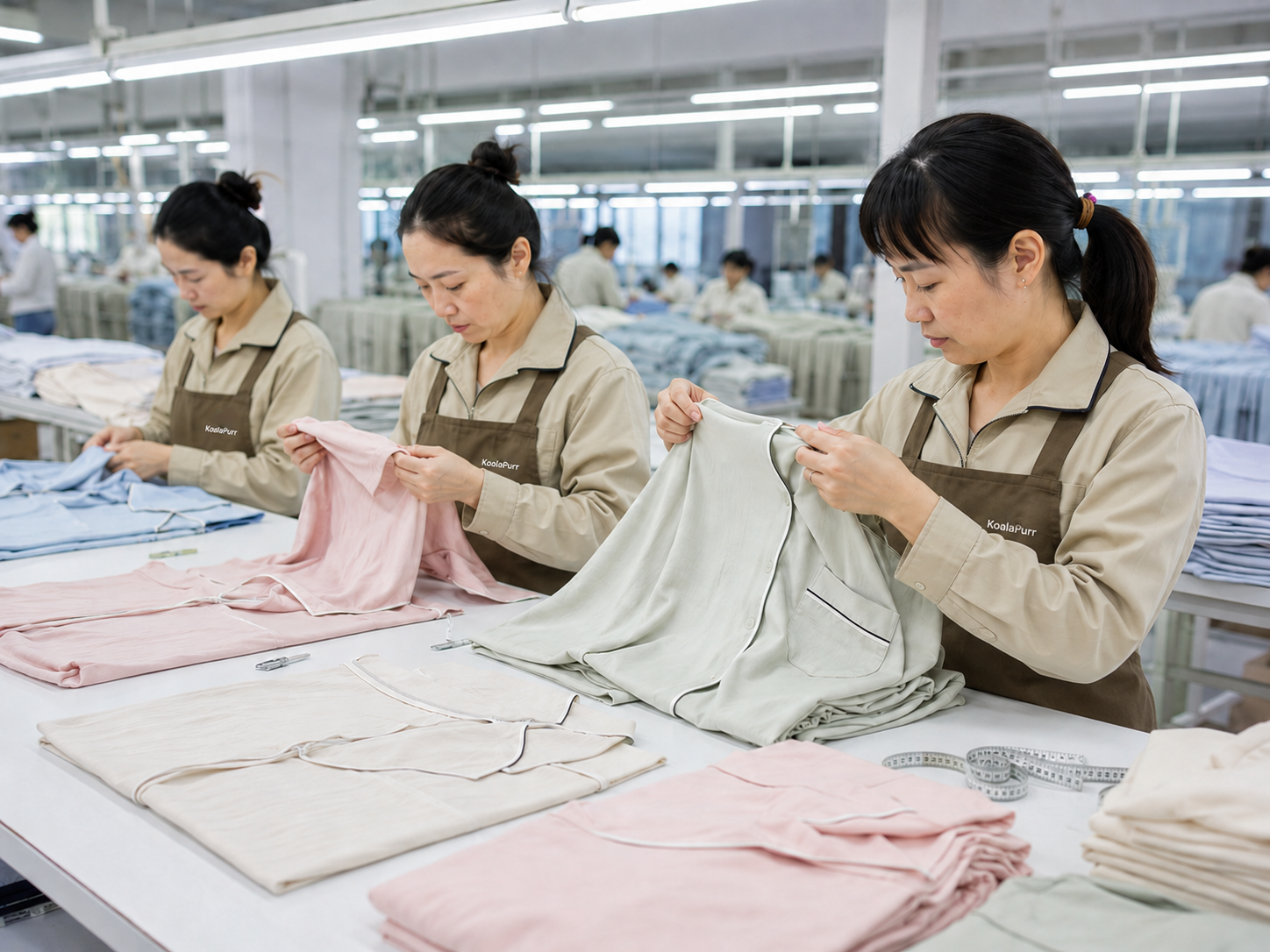
A professional sleepwear factory should have a complete quality management process with clearly defined inspection stages.
Fabric Inspection - Checking:
- Fabric defects and irregularities
- Color accuracy against approved standards
- Material consistency across rolls
- Weight and width specifications
Production Inspection - Monitoring throughout manufacturing:
- Cutting accuracy and marker efficiency
- Sewing quality and stitch density
- Construction details and seam strength
- Trim and finish quality
Final Inspection - Before shipment:
- Finished garment appearance and measurements
- Packaging requirements and presentation
- Labeling and branding accuracy
- Random sampling for quality verification
Professional sleepwear manufacturers should adhere to established quality benchmarks. For example, stitch density tests should aim for at least 12 stitches per inch, and seam strength should meet standardized testing requirements. For children's sleepwear, manufacturers must comply with 16 CFR Part 1615 and 1616 flammability standards in the U.S. market.
A reliable manufacturer should provide clear quality control documentation and inspection reports before shipment.
8. Consider Certifications and Sustainable Manufacturing Practices
For brands targeting international markets, certifications demonstrate manufacturing reliability and commitment to responsible production.
Key certifications for sleepwear include:
- OEKO-TEX Standard 100: The globally recognized product-level certification that tests textiles for harmful substances. Over its 30-year history, OEKO-TEX has issued more than 235,000 certificates globally, trusted by over 100,000 companies worldwide. In 2025, OEKO-TEX issued more than 57,000 certificates and labels.
- GOTS (Global Organic Textile Standard): Verifies organic content throughout the entire supply chain, from fiber to finished garment. Note that as of April 2025, OEKO-TEX Standard 100 certificates no longer include "organic" claims - products made with organic cotton now require separate OEKO-TEX ORGANIC COTTON certification.
- GRS (Global Recycled Standard): Certifies recycled content in textiles, often combined with OEKO-TEX Standard 100 to address both circular economy and product safety.
- MADE IN GREEN by OEKO-TEX: A consumer-facing label combining Standard 100 and STeP certification, celebrating its 10th anniversary in 2025.
For sustainable sleepwear brands, supply chain transparency and responsible production are becoming increasingly important purchasing factors. Certifications help communicate this commitment to consumers and retail partners.
9. Communication and Long-Term Partnership Matter
Many production problems come from poor communication rather than manufacturing ability.
A reliable sleepwear partner should provide:
- Fast response times to inquiries and concerns
- Clear, regular production updates and status reports
- Professional recommendations based on experience
- Problem-solving ability when challenges arise
- Transparency about timelines, costs, and capabilities
For global brands, effective communication helps ensure that product expectations are accurately transferred from design concepts to finished garments. Language barriers, time zone differences, and cultural differences can all impact the quality of communication - a manufacturer with experience serving international markets will have systems in place to address these challenges.
Look for manufacturers who assign dedicated account managers or project coordinators to guide you through the entire process, from initial inquiry to final shipment.
How KoalaPurr Supports Global Sleepwear Brands
At KoalaPurr, we specialize exclusively in sleepwear manufacturing, with years of experience serving brands across North America, Europe, and Asia-Pacific.
Unlike general apparel factories, we understand the specific requirements of sleepwear - from fabric hand-feel and fit to safety compliance and packaging. Our vertically integrated production enables rapid sampling and consistent quality control.
Our support includes:
- Sustainable fabric sourcing and development
- Sleepwear product design and development
- Custom designs and pattern making
- Private labeling and custom branding
- Rigorous quality control at every stage
- Flexible production with low MOQ options
From bamboo pajamas and modal sleepwear to custom lounge collections, we help brands create comfortable, market-ready products for global consumers.
Our MOQ:
- First order: 50 pcs/color/style
- Standard production: 100 pcs/color/style
We believe in building long-term partnerships with brands at every stage - from emerging startups to established retailers - by providing reliable manufacturing, transparent communication, and consistent quality.
Final Thoughts: Choosing the Right Sleepwear Manufacturer
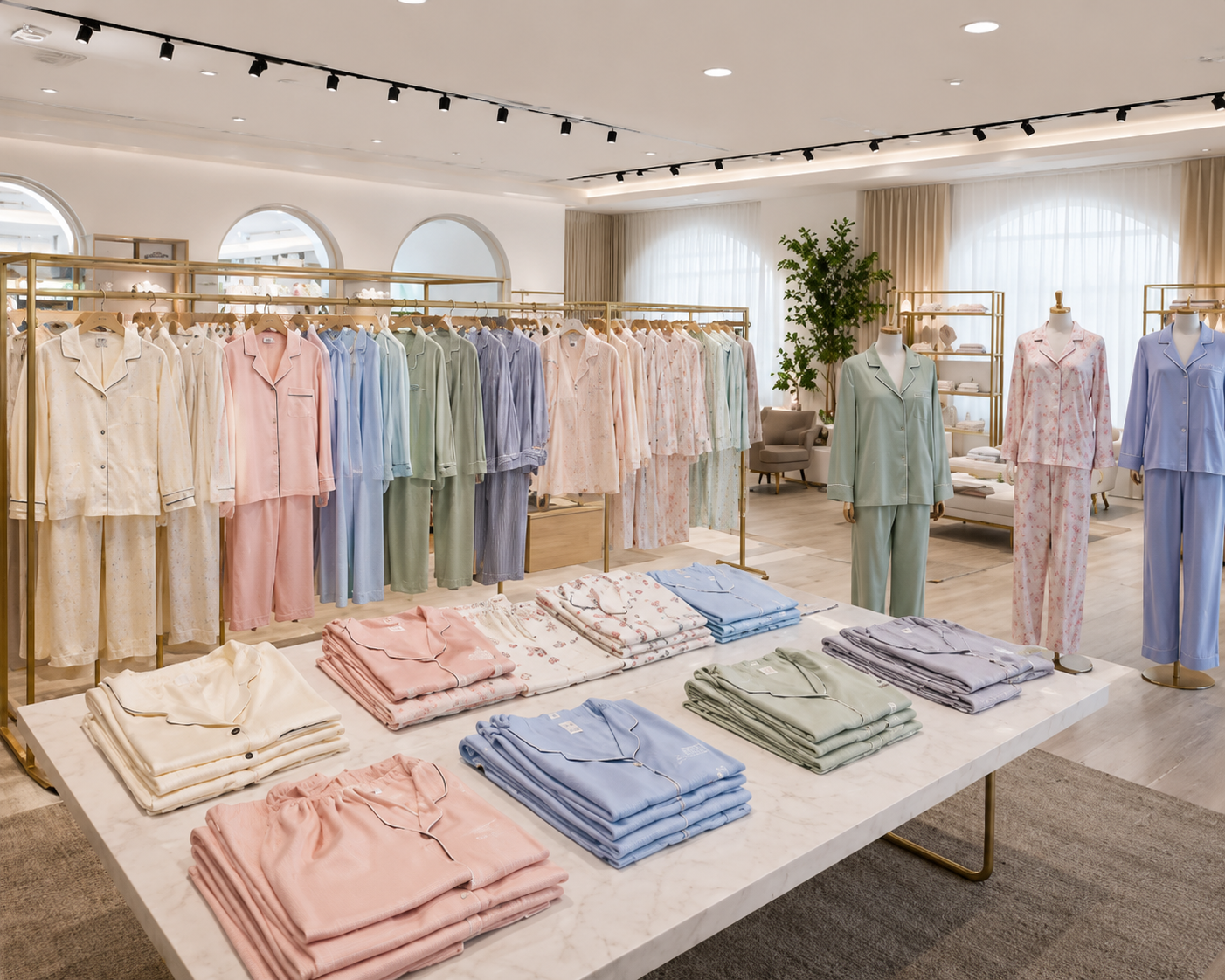
Selecting a manufacturing partner is a long-term decision that affects every aspect of your brand - product quality, customer satisfaction, operational efficiency, and growth potential.
The best supplier is not always the lowest-cost factory. A reliable partner should combine:
- Manufacturing experience in sleepwear specifically
- Fabric knowledge and material sourcing capability
- Product development and customization support
- Quality management and certification standards
- Flexible production and reasonable MOQ
- Transparent communication and partnership focus
By choosing the right sleepwear manufacturer, brands can build stronger collections, reduce production risks, and create products that meet customer expectations.
Ready to start your sleepwear collection? Contact KoalaPurr today to discuss your project - whether you're launching a new brand, expanding into sleepwear, or looking for a reliable private label partner.