Home / All / Pajama Fabric Guide / Cotton vs Modal Pajamas: Which Fabric Is Better for a Sleepwear Brand?

Cotton vs Modal Pajamas: Which Fabric Is Better for a Sleepwear Brand?

Aug 19,2026

Cotton and modal can both work well for pajamas, but they create different products. Cotton is highly versatile and can be developed into both knitted and woven sleepwear, while modal is especially useful when a brand wants a softer, smoother and more fluid fabric direction.

For most sleepwear brands, the better choice depends on the intended silhouette, fabric construction, GSM, stretch, hand feel, drape, care requirements, price position and target customer—not simply the fiber name.

If you are developing a classic woven pajama set, cotton may offer more suitable construction options. If you are developing a soft, draped knit lounge set, modal or a modal blend may be worth considering.

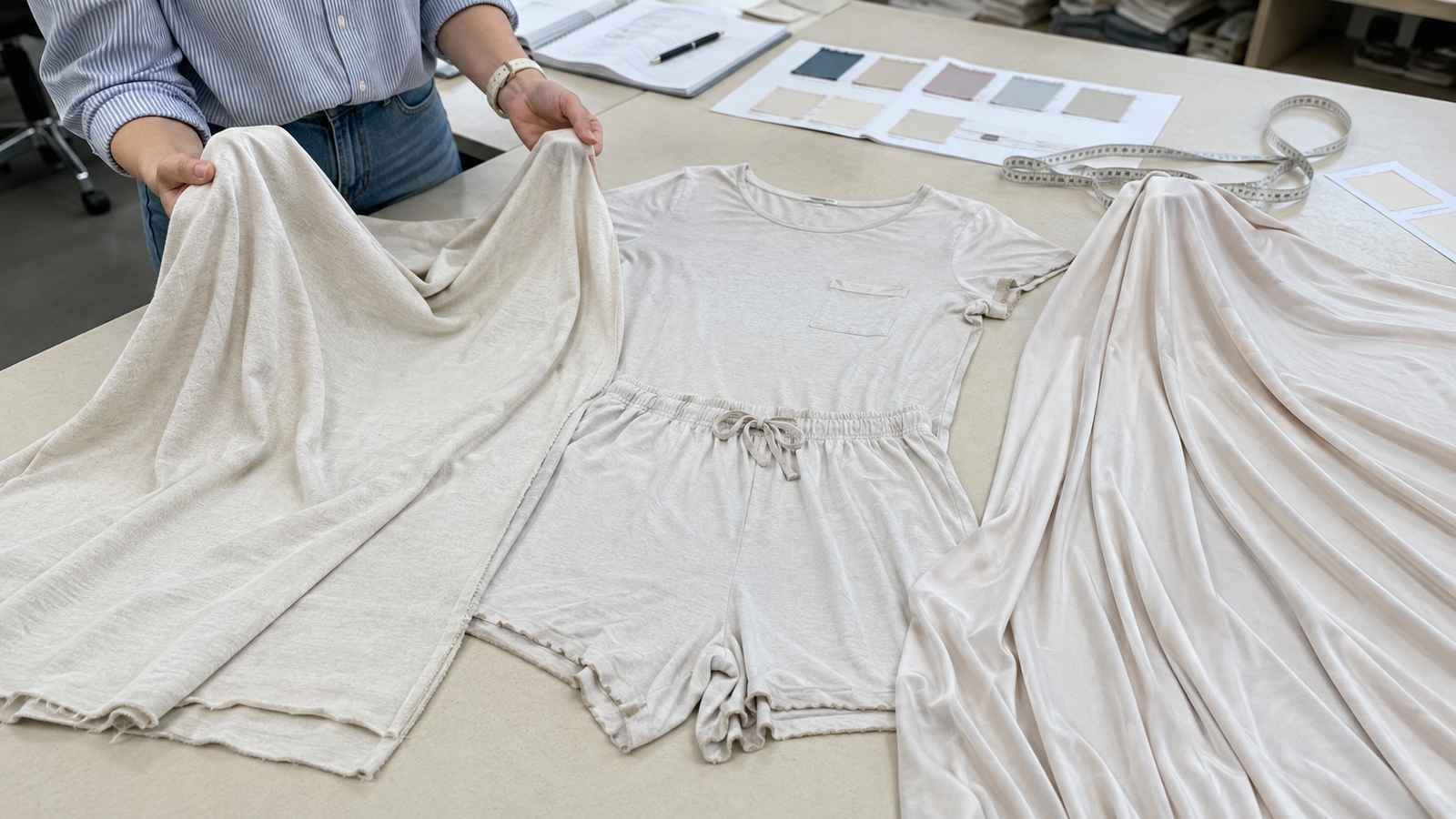
Cotton jersey and modal knit fabrics compared for custom pajama and sleepwear development

Quick Answer: Cotton vs Modal for Pajamas

FactorCottonModal
Fiber TypeNatural plant fiberMan-made cellulosic fiber
Typical Sleepwear FeelNatural, softSmooth, very soft
Common ConstructionKnit and wovenOften used in soft knit sleepwear
DrapeDepends strongly on constructionOften fluid in lightweight knit constructions
StretchDepends on knit/blendOften blended with elastane for stretch
Product RangeVery broadParticularly suited to soft loungewear
Classic Woven PajamasStrong optionLess common direction
Soft Knit Lounge SetsStrong optionStrong option
Main Development QuestionWhich cotton construction?Which modal construction, GSM and blend?

The correct comparison is therefore not simply:

Cotton vs Modal

but:

cotton construction vs modal construction for a specific pajama design.

To compare materials side by side during this process, browse our sleepwear fabric library.

What Is Cotton Pajama Fabric?

Cotton is a natural plant fiber used across a wide variety of woven and knitted fabrics.

For pajama development, this versatility is one of its biggest advantages.

A brand can use cotton in very different forms, including:

  • Cotton jersey
  • Cotton interlock
  • Cotton rib
  • Cotton poplin
  • Cotton flannel
  • Double gauze
  • Other woven or knitted constructions

CottonWorks describes jersey and interlock as different knit structures, with interlock providing a smoother and more stable construction than jersey. (CottonWorks)

This means that saying:

"I want cotton pajamas"

does not yet define the product.

A cotton jersey lounge set and a woven cotton button-front pajama set may both contain cotton but have very different:

  • Stretch
  • Structure
  • Drape
  • Weight
  • Fit
  • Appearance

Manufacturer's Note

For custom pajama development, fiber composition should never replace fabric construction in the specification.

Instead of approving:

100% Cotton

a more useful fabric specification should eventually include information such as:

Fiber composition
Knit or woven structure
Specific construction
Fabric weight/GSM
Color
Finishing
Shrinkage requirements
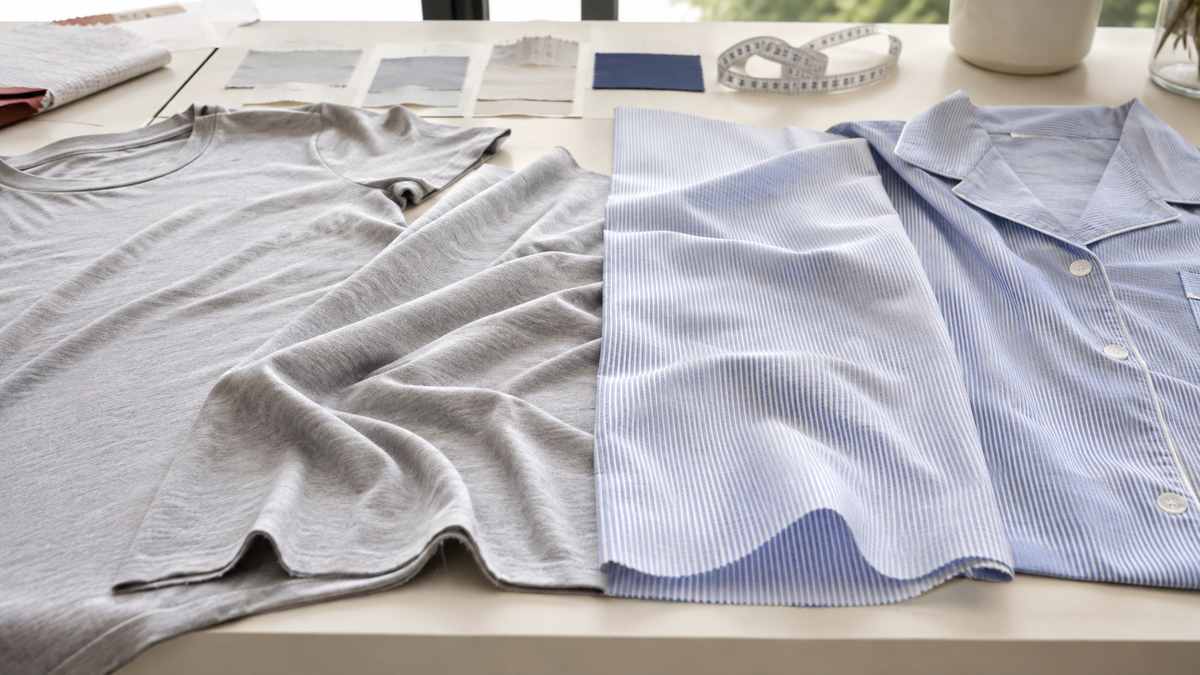
Cotton knit jersey and woven cotton compared for different custom pajama constructions

What Is Modal Pajama Fabric?

Modal is a man-made cellulosic fiber. Textile Exchange groups modal with other regenerated cellulosic fibers such as viscose and lyocell, which are produced from cellulosic raw materials processed into pulp and regenerated into fiber. (Textile Exchange)

In sleepwear, modal is often considered when brands want:

  • A very soft hand feel
  • Smooth surface
  • Fluid drape
  • Comfortable knit loungewear
  • Stretch when combined with elastane
  • A more relaxed, body-following silhouette

For example, Lenzing states that its branded TENCEL™ Modal fibers support moisture regulation and long-lasting softness through repeated washing and drying. Those claims apply specifically to Lenzing's TENCEL™ Modal product and should not automatically be applied to every generic modal fabric. (Lenzing)

Modal is commonly considered for:

  • Women's lounge sets
  • Long-sleeve knit pajama sets
  • Short-sleeve pajama sets
  • Nightgowns
  • Sleep dresses
  • Camisole sets
  • Maternity sleepwear
  • Soft loungewear

Manufacturer's Note

Do not choose modal simply because a supplier describes it as "premium soft fabric."

Ask for the actual specification and physical swatch.

A lightweight modal jersey and a heavier modal interlock can produce noticeably different sleepwear even when their fiber composition is similar.

For a broader comparison of pajama materials, see our guide to the best fabrics for custom pajamas.

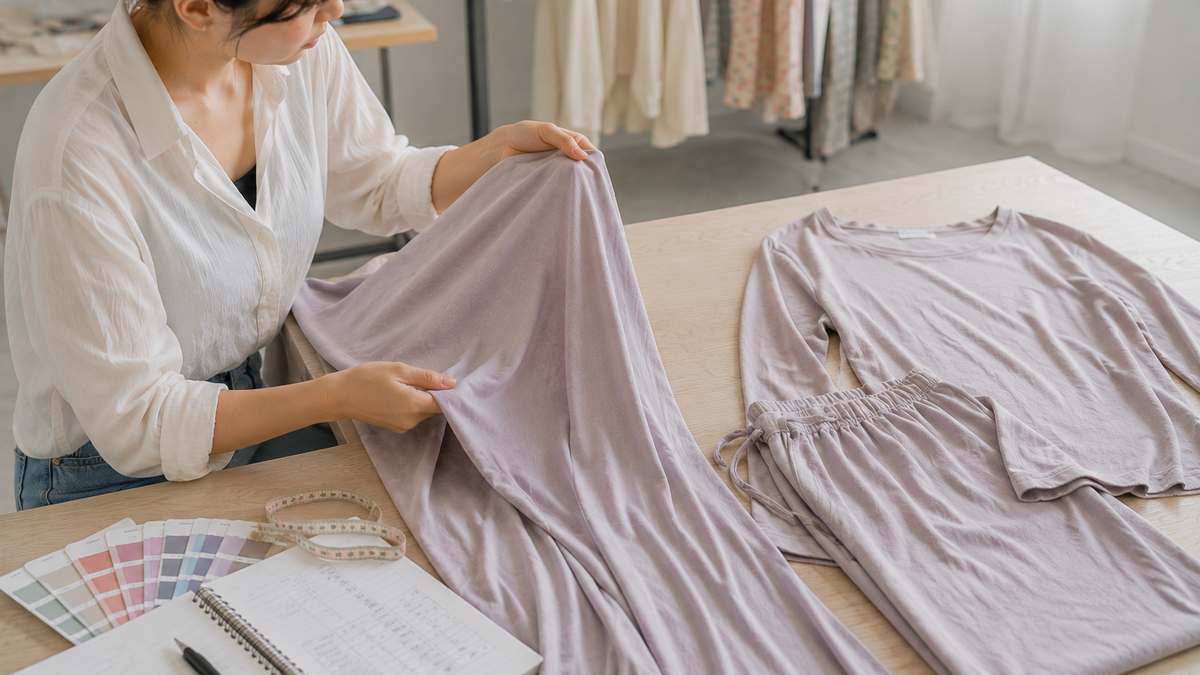
Soft modal knit fabric reviewed for drape and stretch in women's pajama development

Cotton vs Modal: Which Feels Softer?

Modal is often selected when very smooth, soft hand feel is one of the main product priorities, while cotton can range from naturally soft to more structured depending on construction and finishing.

Lenzing specifically promotes long-lasting softness as a characteristic of its TENCEL™ Modal fibers. (Lenzing)

However, a brand should not compare fiber names in isolation.

Cotton softness can vary with:

  • Yarn quality
  • Knit or woven construction
  • GSM
  • Brushing
  • Washing
  • Finishing

Modal softness can also vary with:

  • Fiber quality
  • Yarn
  • Knit construction
  • GSM
  • Elastane percentage
  • Finishing

So:

Modal does not automatically mean every modal fabric is softer than every cotton fabric.

Physical swatch comparison remains more useful than a fiber-name comparison.

Which Has Better Drape: Cotton or Modal?

For soft knitted sleepwear, modal is often selected when brands want a more fluid, body-following appearance.

But again, construction matters.

Consider these two products:

Product A

Loose women's lounge set

Soft silhouette

Wide-leg pants

Fluid movement

A modal-based knit may fit the design direction well.

Product B

Classic button-front pajama shirt

Defined collar

Contrast piping

Structured pocket

A woven cotton fabric may be more suitable because the product benefits from more visible structure.

The question should therefore be:

How much structure or fluidity does this garment need?

not:

Which fiber has the best drape?

Which Is More Breathable for Pajamas?

Both cotton and modal can be used to develop comfortable sleepwear, but breathability and moisture behavior depend on the complete fabric—not only the fiber.

CottonWorks describes cotton as breathable and discusses its ability to allow humidity to move through fabric, although actual performance still depends on the textile construction and finishing. (CottonWorks)

Lenzing describes moisture absorption and release as a characteristic of its TENCEL™ Modal fibers, supporting moisture regulation in the finished textile. (Lenzing)

For product development, brands should therefore avoid claims such as:

"Modal is always cooler."

or:

"Cotton is always more breathable."

A lightweight cotton jersey can behave very differently from a dense cotton interlock.

Likewise, a lightweight modal jersey can behave differently from a heavier modal blend.

Better Question

Instead of asking:

Which fiber is more breathable?

ask your manufacturer:

Which finished fabric gives this pajama design the weight, air permeability, moisture behavior and hand feel we want?

Cotton vs Modal for Summer Pajamas

Both can be considered for warm-weather sleepwear.

Consider Cotton When You Want:

  • Lightweight woven pajama sets
  • Cotton shorts sets
  • Classic button-front styles
  • Casual T-shirt pajamas
  • A natural-fiber product story

Consider Modal When You Want:

  • Lightweight knit lounge sets
  • Fluid sleep dresses
  • Soft camisole sets
  • Relaxed knit pajamas
  • A smooth hand feel

The final choice should still be based on the actual fabric weight and construction.

A lightweight fabric is generally more relevant to a summer collection than simply choosing one fiber name and assuming it will be cool.

Cotton vs Modal for Winter Pajamas

Neither fiber automatically defines a winter fabric.

A winter pajama depends more heavily on:

  • Fabric weight
  • Construction
  • Brushing
  • Layering
  • Garment silhouette

Cotton, for example, can be developed into woven flannel or heavier knit structures.

Modal can also be used in more substantial knit constructions or blended fabrics.

Therefore:

season should be specified at fabric level, not only fiber level.

For genuinely cold-weather collections, brands should compare actual heavier fabric options instead of assuming modal or cotton alone determines warmth.

Which Fabric Is Better for Knit Pajama Sets?

Both cotton and modal are strong options.

Cotton Knit Pajamas

Cotton jersey can work well for:

  • Basic pajama sets
  • T-shirt sleepwear
  • Casual lounge sets
  • Shorts
  • Everyday products

Cotton interlock can provide a smoother, more stable construction than single jersey. CottonWorks notes that knit structure itself affects fabric weight and productivity, reinforcing why construction needs to be considered alongside fiber. (CottonWorks)

Modal Knit Pajamas

Modal-based jersey or other modal knit constructions are often selected for:

  • Soft lounge sets
  • Fluid silhouettes
  • Women's sleepwear
  • Stretch pajamas
  • Nightdresses

Modal is also frequently combined with elastane when stretch and recovery are part of the product requirement.

Which Should You Choose?

Choose based on the product objective:

Natural, versatile everyday direction → consider cotton

Very soft, smooth, fluid knit direction → consider modal

Then compare actual swatches before deciding.

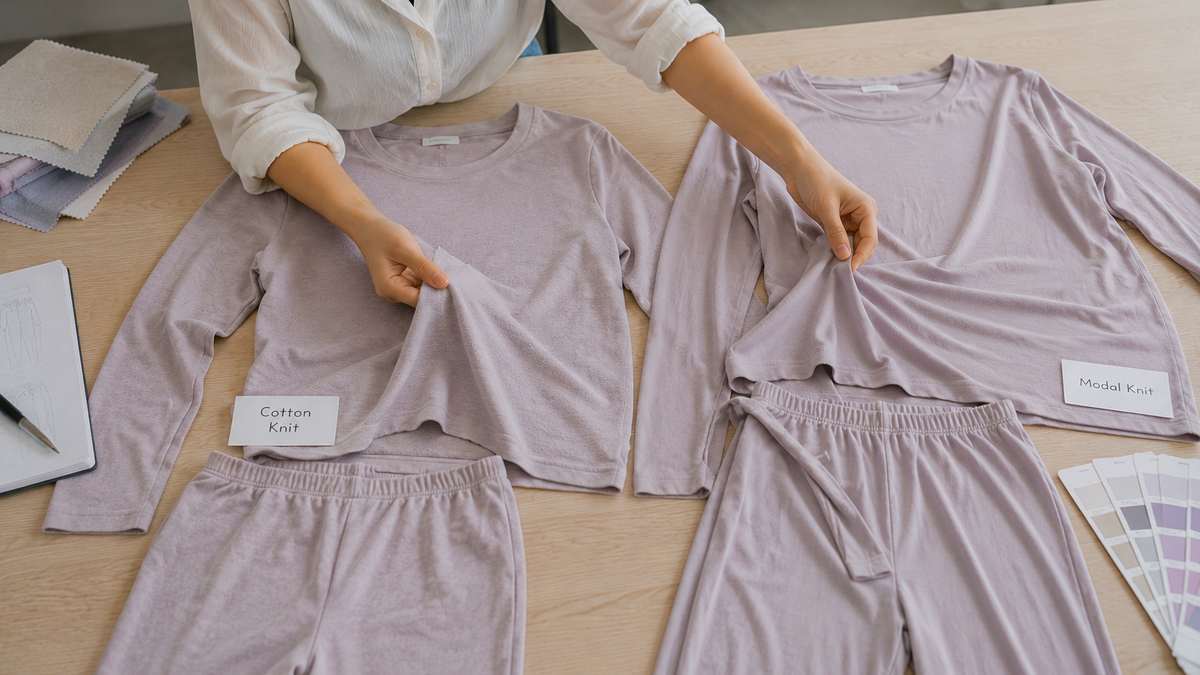
Cotton and modal pajama samples compared for hand feel drape and garment silhouette

Which Fabric Is Better for Classic Button-Front Pajamas?

For a classic pajama shirt and pants set with features such as:

  • Collar
  • Front buttons
  • Chest pocket
  • Contrast piping
  • Cuffs

woven cotton is often a strong development direction.

It can provide the more defined shape many classic pajama silhouettes require.

Modal can still be used depending on construction, but a very fluid knit modal produces a different visual result.

This illustrates why copying the same pajama design into another fabric may require:

  • Pattern adjustment
  • Construction changes
  • Fit review
  • New sampling

The product should be developed around the fabric rather than treating fabric as a last-minute substitution. For the full development flow, see how custom pajama sampling works.

Which Fabric Is Better for Loungewear?

For very soft and fluid women's loungewear, modal is often worth considering.

For more casual or versatile everyday lounge products, cotton knit is also highly suitable.

For example:

Product DirectionFabric Direction to Consider
Basic T-shirt Lounge SetCotton Jersey
Soft Premium Lounge SetModal Knit
Stable Knit Pajama SetCotton or Modal Interlock
Fluid Wide-Leg Lounge SetModal / Modal Blend
Casual Shorts SetCotton Jersey
Classic Button Pajama SetWoven Cotton

These are product-development starting points rather than fixed rules.

Cotton vs Modal: What About Stretch?

Fiber and stretch are two different things.

A fabric can gain stretch from:

  • Knitted construction
  • Elastane/spandex
  • Mechanical structure
  • Combination of these factors

Therefore:

Cotton does not automatically mean non-stretch.

and:

Modal does not automatically mean stretch.

A cotton jersey can naturally extend because of its knitted structure.

A modal fabric may be blended with elastane to provide additional stretch and recovery.

When evaluating pajama fabric, ask for:

  • Fiber composition
  • Stretch percentage
  • Stretch direction
  • Recovery
  • Finished GSM

Stretch without adequate recovery can result in a garment losing its intended shape during wear.

Cotton vs Modal: What About Shrinkage?

Shrinkage should be evaluated on the actual finished fabric rather than assumed from fiber name alone.

CottonWorks' technical guidance on cotton shrinkage shows that knitted cotton constructions such as jersey and interlock can behave differently during relaxation and laundering. (CottonWorks)

For both cotton and modal pajamas, manufacturers should consider:

  • Fabric construction
  • Finishing
  • Dyeing
  • Washing
  • Garment pattern
  • Care method

before finalizing measurements.

Manufacturer's Note

Do not ask only:

"Does this fabric shrink?"

Ask:

"What shrinkage result are we working with for this specific finished fabric, and has that been considered in the pattern?"

That information is much more useful during sampling.

Which Is Easier to Print: Cotton or Modal?

There is no universal winner.

Print compatibility depends on:

  • Fiber composition
  • Fabric construction
  • Dye chemistry
  • Surface finish
  • Desired artwork
  • Print method

Before approving a custom pajama print, the brand should confirm the selected printing process with the actual fabric.

This is especially important for:

  • All-over prints
  • Dark backgrounds
  • Fine-line artwork
  • Large repeats
  • Multiple colorways

For more detail on production methods, review our sleepwear printing and customization techniques.

Manufacturer's Note

A print that performs well on one cotton fabric cannot automatically be transferred to a different modal fabric with identical results.

Whenever the base fabric changes substantially, the printing approach and physical result should be reviewed again.

Which Is Better for Custom Colors?

Both cotton and modal can be produced in different colors, but custom color development depends on the fabric supply chain and dyeing process.

For the brand, the important questions are:

  • Is the fabric available in stock colors?
  • Does custom dyeing have an MOQ?
  • Is a lab dip required?
  • How will color be approved?
  • Does bulk shade need tolerance control?
  • How does custom color affect lead time?

Therefore, the difference in custom-color practicality may depend more on your manufacturer's fabric sourcing options than on choosing cotton or modal alone. For guidance on order planning, see our guide to custom pajama MOQ.

Cotton vs Modal: Which Is More Durable?

Avoid making a universal durability ranking based only on fiber.

Finished garment durability depends on:

  • Yarn
  • Construction
  • GSM
  • Fabric finishing
  • Sewing
  • Care
  • Abrasion
  • Pilling
  • Stretch recovery

A heavier, well-constructed fabric may perform differently from a lightweight fabric of the same fiber.

For this reason, brands developing repeat programs should consider appropriate testing based on their product requirements instead of assuming durability from the fiber name.

Which Fabric Is Easier to Care For?

Care instructions should be based on the actual finished garment.

Do not assume:

all cotton pajamas use one care instruction

or:

all modal pajamas use another.

The final care method may depend on:

  • Fiber blend
  • Dye
  • Print
  • Elastic
  • Trims
  • Construction
  • Finishing

For private label production, the care label should reflect the final garment specification rather than a generic fabric assumption.

Is Modal More Sustainable Than Cotton?

A brand should not make this comparison based only on the words "modal" and "cotton."

Textile Exchange notes that the environmental impact of man-made cellulosic fibers depends significantly on how their cellulose raw material is sourced and produced. (Textile Exchange)

Likewise, cotton can come from different production systems and sourcing programs.

Individual fiber producers may provide specific environmental claims. For example, Lenzing publishes sourcing and environmental information for its branded TENCEL™ fibers, but those claims should not automatically be generalized to all modal fibers. (TENCEL)

For brands making sustainability claims, confirm:

  • Exact fiber producer
  • Certification
  • Chain of custody where relevant
  • Supplier documentation
  • Scope of the environmental claim

Avoid using:

"Modal is sustainable"

as a blanket marketing statement without supporting information.

Is Modal More Expensive Than Cotton?

It can be, but there is no reliable universal rule for finished pajama fabric pricing.

Price depends on:

  • Fiber source
  • Yarn
  • Construction
  • GSM
  • Finish
  • Quantity
  • Color
  • Fabric supplier
  • Certification
  • Market conditions

A basic cotton jersey and premium cotton construction are not the same price.

Likewise, generic modal and branded modal fiber fabrics may have different cost structures.

The correct way to compare them is to obtain quotations for fabrics that meet the same product requirements.

Does Fabric Choice Affect Pajama MOQ?

Yes, because garment MOQ and fabric MOQ are not always the same.

A manufacturer may accept a certain garment quantity while the selected fabric supplier requires a different minimum for:

  • Custom knitting
  • Custom weaving
  • Dyeing
  • Special finishing
  • Custom color

This means brands should confirm both:

Garment MOQ

and:

Fabric MOQ

before finalizing a cotton or modal pajama program.

For KoalaPurr projects, the standard starting garment MOQ is generally 100 pieces per style per color, while actual requirements may vary depending on the fabric, customization and project conditions.

If you are still deciding between development models, compare OEM vs ODM sleepwear manufacturing for your project.

Cotton vs Modal: Which Is Better for Different Pajama Products?

ProductCottonModalSuggested Direction
Classic Button Pajama SetExcellent option in woven constructionPossible, depending on constructionCotton often suits structured designs
T-Shirt Pajama SetStrong optionStrong optionCompare hand feel and price
Soft Women's Lounge SetStrong optionVery strong optionModal for fluid softness
Wide-Leg Lounge SetPossibleStrong optionModal for draped silhouette
Pajama Shorts SetStrong optionStrong optionDepends on style
NightgownStrong optionStrong optionModal for fluid knit styles
Winter PajamasFlannel/heavier cotton optionsHeavier constructions possibleCompare actual fabric weight
Summer PajamasLightweight knit or wovenLightweight knitBoth can work
Premium Soft LoungewearPremium cotton possibleStrong modal directionCompare physical swatches

The table should be used as a development guide, not a rigid formula.

When Should a Sleepwear Brand Choose Cotton?

Consider cotton when you want:

A Natural-Fiber Product Direction

Cotton gives the brand a familiar natural-fiber story.

Greater Construction Variety

Cotton can support both:

  • Knit lounge products
  • Woven classic pajamas

Classic Pajama Styling

Woven cotton works naturally with button-front sets, piping and more defined silhouettes.

Casual Everyday Sleepwear

Cotton jersey is a useful direction for accessible, casual pajama programs.

Flannel or Gauze Products

Cotton can also support specific seasonal or textured constructions.

When Should a Sleepwear Brand Choose Modal?

Consider modal when you want:

Very Soft Knit Sleepwear

Modal is frequently selected for products where soft hand feel is central to positioning.

Fluid Drape

Useful for:

  • Wide-leg lounge pants
  • Sleep dresses
  • Relaxed sets

Smooth Women's Loungewear

Especially when the collection needs a soft and polished feel without using a woven satin construction.

Stretch Blends

Modal combined with elastane is common where stretch and recovery are required.

A Different Hand Feel From Basic Cotton Jersey

Modal can help distinguish a softer lounge-oriented program from standard cotton basics.

Can You Blend Cotton and Modal?

Yes. Cotton and modal can be blended, although the suitability of a particular blend depends on the required fabric and supplier capability.

A blend may be developed to balance characteristics such as:

  • Hand feel
  • Drape
  • Structure
  • Stretch
  • Cost

But a blend should not be assumed to automatically provide "the best of both."

The result still depends on:

  • Blend ratio
  • Yarn
  • Construction
  • GSM
  • Finishing

Evaluate the actual fabric rather than selecting a blend only from its composition.

How Should Brands Compare Cotton and Modal Samples?

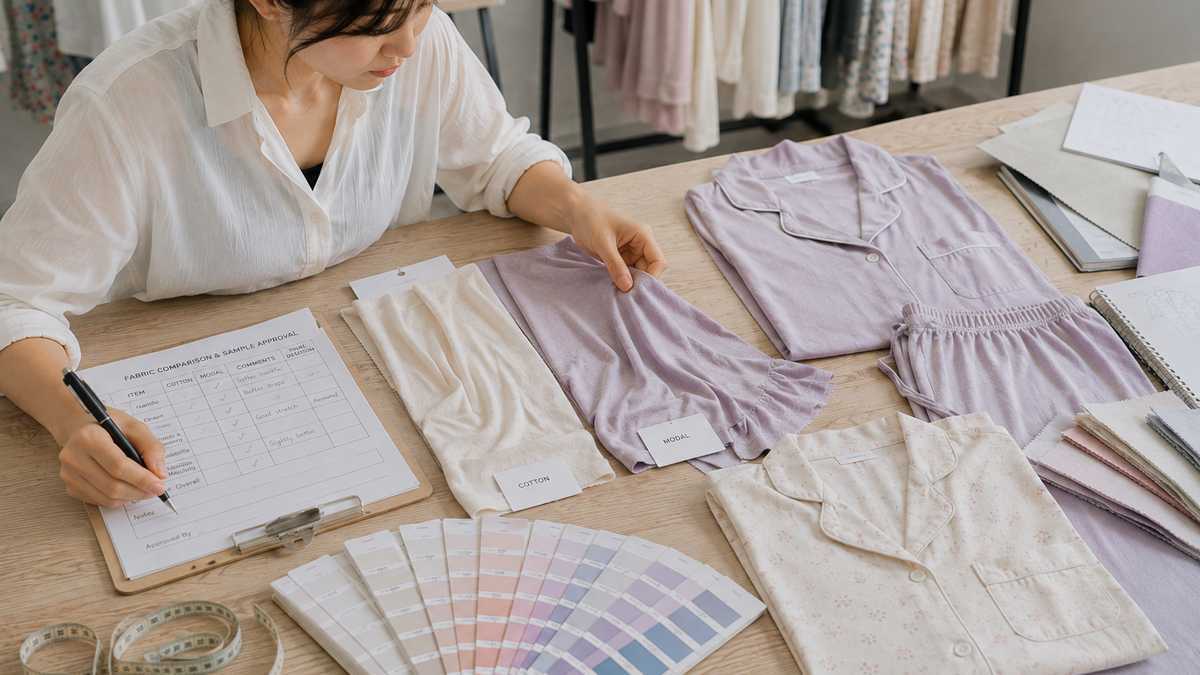
When your supplier presents both options, compare them using the same checklist.

Hand Feel

Which better matches the intended customer and price positioning?

GSM

Are you comparing fabrics of similar weight?

Construction

Is the comparison:

jersey vs jersey

or accidentally:

cotton interlock vs modal jersey?

Drape

Place the materials on the garment or mannequin rather than viewing them only flat.

Stretch and Recovery

Check whether the finished product needs stretch.

Opacity

Particularly important for lightweight or light-colored sleepwear.

Shrinkage

Confirm expected dimensional behavior.

Color

Compare actual approved colors.

Print Compatibility

Evaluate if artwork is involved.

Price and MOQ

Check the full fabric requirement.

Final Garment Result

Whenever possible, use the sample to make the final decision.

Sleepwear product developer comparing cotton and modal fabrics before approving a pajama sample

Manufacturer's Decision Framework

Use this simple sequence:

  1. Step 1 — Define the pajama silhouette: Structured or fluid?
  2. Step 2 — Decide knit or woven: This immediately narrows the choices.
  3. Step 3 — Define desired hand feel: Natural, smooth, soft, crisp or brushed?
  4. Step 4 — Define the season: Lightweight summer or heavier cold-weather product?
  5. Step 5 — Define stretch requirements: Does the design need elastane or knit stretch?
  6. Step 6 — Compare physical fabrics: Do not choose from names alone.
  7. Step 7 — Make the sample: Confirm how the selected fabric works with the actual pattern.
  8. Step 8 — Approve before bulk production: Record the final fabric specification with the approved garment.

If you need structured support through this process, a sleepwear product development service can help from fabric selection to sample approval.

Common Cotton vs Modal Selection Mistakes

Assuming Fiber Determines the Entire Product

It does not.

Construction and finishing matter.

Comparing Fabrics With Very Different GSM

A fair comparison should consider weight.

Assuming Modal Always Means Premium

Fiber name alone does not determine quality.

Assuming Cotton Always Means Basic

Cotton can be developed into many different premium and technical fabric constructions.

Choosing Modal Only Because It Feels Soft on a Swatch

Check stretch, recovery, opacity, pilling and finished-garment behavior.

Switching From Cotton to Modal After Fit Approval

A substantial fabric change may alter drape and fit and should be reviewed again.

Making Unsupported Sustainability Claims

Verify the exact material, supplier and documentation before making environmental marketing claims.

Frequently Asked Questions About Cotton vs Modal Pajamas

Is cotton or modal better for pajamas?

Neither is universally better. Cotton is highly versatile across knit and woven pajamas, while modal is particularly suitable for very soft, smooth and fluid knit sleepwear. Choose according to the actual garment design.

Is modal softer than cotton?

Modal is often selected for its very smooth and soft hand feel, and Lenzing specifically identifies long-lasting softness as a characteristic of its TENCEL™ Modal fibers. However, finished fabric softness depends on construction, yarn and finishing as well as fiber.

Is cotton or modal better for summer pajamas?

Both can work. Lightweight woven or knitted cotton and lightweight modal knit fabrics are possible summer directions. Fabric construction and weight matter more than relying only on the fiber name.

Is modal breathable?

Lenzing states that TENCEL™ Modal fiber structure supports moisture absorption and release in finished textiles. Generic fabric performance still depends on construction and finishing.

Is cotton breathable?

CottonWorks describes cotton textiles as breathable and discusses humidity transfer through cotton fabric, although the performance of an actual pajama depends on its construction and finish.

Is modal suitable for stretch pajamas?

It can be. Modal fabrics are often blended with elastane when additional stretch and recovery are required. The exact blend and construction should be reviewed for the product.

Is cotton or modal better for a button-front pajama set?

Woven cotton is often a strong choice for a classic structured button-front design. Modal may be more appropriate when the intended product is softer and more fluid.

Is modal more expensive than cotton?

Not necessarily in every case. Price depends on the exact fiber, yarn, GSM, construction, finishing, quantity, supplier and certification rather than fiber name alone.

Can cotton and modal use the same pajama pattern?

Sometimes, but not automatically. If the fabrics have substantially different stretch, weight or drape, the pattern and fit may need to be reviewed again.

Should I order fabric swatches before choosing between cotton and modal?

Yes. A physical swatch provides information about weight, hand feel, stretch, opacity, surface and drape that cannot be determined reliably from the fiber name alone.

About KoalaPurr Product Development Team

This guide was written by the KoalaPurr Product Development Team and reviewed by the KoalaPurr Sleepwear Manufacturing Team. Last updated: August 2026.

KoalaPurr is an OEM, ODM and private label sleepwear manufacturer producing women's sleepwear, robes, men's sleepwear, kids' pajamas and maternity wear for brands in North America, Europe and beyond. Our team handles the full development cycle, from fabric sourcing, pattern and fit development and sampling to bulk production, quality inspection and packaging.

In-house capabilities include:

  • Fabric development across cotton, modal, viscose, satin, flannel, bamboo and blended materials
  • Fabric comparison and swatch review before sampling
  • Tech pack review and sample development, typically 7–14 days
  • Bulk production from 100 pieces per style per color, commonly 24–30 days after approval
  • Four-stage quality control: material review, in-line checks, finished garment and packing inspection

Every guide in this series is based on our daily production experience with real brands. If you are choosing between cotton and modal for your own collection, share your project with our team and we will help you compare fabric options against your garment design before sampling.

Which Fabric Should Your Sleepwear Brand Choose?

Choose cotton when your collection needs versatility, natural-fiber positioning, classic woven pajama options or casual everyday knit sleepwear.

Choose modal when the design prioritizes a very soft, smooth and fluid knit direction, particularly for women's lounge sets, nightwear and comfort-focused sleepwear.

But do not approve either fabric based only on its fiber name.

The final decision should consider:

fiber + construction + GSM + stretch + drape + finishing + color + print + MOQ + garment design

As a custom sleepwear manufacturer, KoalaPurr can help review cotton, modal and other sleepwear fabric options together with your product design before sampling and bulk production.

To review your project, contact our sleepwear development team.

Explore Our Sleepwear Fabric Library Learn How Custom Pajama Sampling Works Discuss Your Custom Pajama Project

Are you looking for a reliable sleepwear manufacturer for your brand?

From product development to bulk production, we provide custom sleepwear solutions with professional support for global brands.