Home / All / Sleepwear Manufacturing Guide / What Is the MOQ for Custom Pajamas? A Guide for Sleepwear Brands

What Is the MOQ for Custom Pajamas? A Guide for Sleepwear Brands

Aug 19,2026

There is no single industry-wide MOQ for custom pajamas. The minimum order quantity depends on the manufacturer, fabric availability, number of colors, printing method, custom trims, packaging and how the order is structured.

For sleepwear brands, the most important question is not simply:

"What is your MOQ?"

A better question is:

"What is the MOQ for this specific pajama style, fabric, color and customization?"

At KoalaPurr, our standard starting MOQ is 100 pieces per style per color. The actual requirement may vary depending on fabric, printing, trims, customization and project conditions.

Understanding how MOQ works can help brands develop collections that are realistic to manufacture without creating unnecessary inventory.

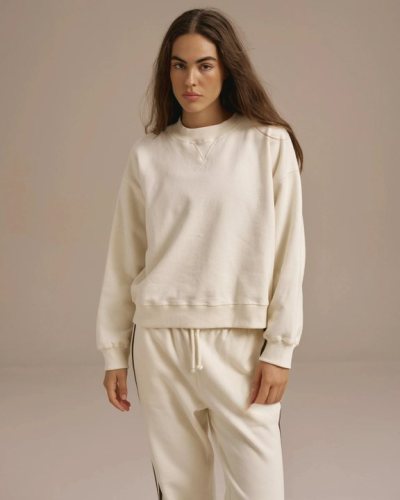
Custom pajama MOQ planning with sleepwear samples fabric colors and production quantity review

Quick Answer: What Affects Custom Pajama MOQ?

The main factors that influence custom pajama MOQ include:

FactorHow It Can Affect MOQ
Number of StylesEach style may have its own production minimum
Number of ColorsMOQ is often calculated per style per color
Fabric AvailabilityStock fabrics can simplify smaller production runs
Custom FabricDyeing or fabric development may have separate minimums
PrintingCustom printing may require its own fabric or print minimum
Custom TrimsButtons, elastic, lace or hardware can have supplier MOQs
Labels & PackagingCustom branding components may have separate minimums
Size BreakdownUsually divided within the approved style/color quantity
Product ComplexityMore processes may create additional production requirements

MOQ should therefore be evaluated as part of the complete product-development plan, not as an isolated number.

What Does MOQ Mean in Pajama Manufacturing?

MOQ stands for Minimum Order Quantity.

It is the minimum quantity a manufacturer or supplier is prepared to produce under a particular set of specifications.

For custom pajamas, an MOQ may be defined as:

  • Per style
  • Per color
  • Per fabric
  • Per print
  • Per custom material
  • Per order

For example:

A manufacturer may quote:

100 pieces per style per color

If you order one pajama style in two colors, the production quantity may therefore become:

100 pieces × 2 colors = 200 pieces total

The size breakdown can normally be distributed within each color according to the agreed production plan.

Manufacturer's Note

Always clarify what the MOQ applies to.

"MOQ 100 pcs" is incomplete information if the supplier does not explain whether it means:

100 pcs total
100 pcs per style
100 pcs per color
100 pcs per fabric

These can create very different order quantities.

Why Do Pajama Manufacturers Have MOQs?

Custom garment production contains preparation work that exists whether the order is relatively small or large.

Before bulk production begins, the manufacturing process may involve:

  • Fabric sourcing
  • Pattern preparation
  • Sample approval
  • Cutting preparation
  • Print setup
  • Embroidery setup
  • Trim sourcing
  • Label production
  • Sewing line preparation
  • Quality-control setup
  • Packaging preparation

Many of these activities involve fixed preparation work.

If a brand orders an extremely small quantity, those preparation requirements are spread across fewer garments.

MOQ therefore helps manufacturers balance:

production setup + material purchasing + labor efficiency + supplier requirements

This is different from buying ready-made inventory.

With stocked products, the goods may already exist.

With custom pajamas, the product normally has to be prepared specifically for the brand.

What Is KoalaPurr's MOQ for Custom Pajamas?

For standard KoalaPurr projects, the starting MOQ is generally:

100 pieces per style per color

For example:

1 style × 1 color
= starting from 100 pieces

1 style × 2 colors
= starting from approximately 200 pieces

2 styles × 2 colors
= starting from approximately 400 pieces

However, this should be treated as the garment production MOQ, not a guarantee that every possible custom material or trim can also be produced at the same minimum.

Actual project requirements may change according to:

  • Fabric
  • Custom dyeing
  • Printing
  • Special trims
  • Labels
  • Packaging
  • Number of colors
  • Production complexity

This is why we recommend reviewing the complete product specification before confirming the final MOQ.

Does Fabric Affect Pajama MOQ?

Yes. Fabric is often one of the biggest factors affecting custom pajama MOQ.

There is an important difference between:

Stock or Available Fabric

The fabric already exists or is regularly available from the supplier.

This can make lower-volume development easier because the brand does not need to initiate a new fabric production run.

Custom Fabric

The material needs to be:

  • Specially knitted or woven
  • Custom dyed
  • Custom finished
  • Specially developed
  • Produced to a particular specification

The fabric mill may then have its own minimum production requirement.

That MOQ can be different from the garment manufacturer's sewing MOQ.

Example

Suppose a garment manufacturer can produce:

100 pajama sets

but the selected custom-dyed fabric requires a larger minimum from the textile supplier.

The project cannot automatically proceed at 100 pieces simply because the sewing factory accepts that quantity.

This is why brands should ask both:

What is the garment MOQ?

and:

Does this fabric have a separate MOQ?

For a comparison of available materials, browse our sleepwear fabric library.

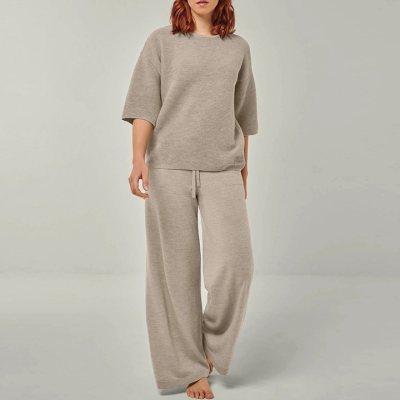
Stock and custom pajama fabrics reviewed for minimum order quantity and sleepwear production planning

Can Stock Fabric Help Reduce MOQ?

In many cases, using an available fabric can make a lower-volume order easier to execute.

A stock-supported fabric may already have:

  • Existing production
  • Available colors
  • Known construction
  • Established sourcing

This can reduce the need to initiate a custom material run.

For new sleepwear brands, stock or regularly available fabrics can therefore be useful when testing:

  • New silhouettes
  • New categories
  • Initial market demand
  • Small seasonal collections

However, stock fabric also has limitations.

Brands may have less control over:

  • Exact color
  • Custom fiber blend
  • Custom GSM
  • Surface finishing
  • Long-term availability

So the decision should not be:

stock fabric = good
custom fabric = bad

The correct decision depends on the collection strategy.

Does Custom Color Affect MOQ?

It can.

There is a major difference between:

Choosing an Existing Fabric Color

The color is already available.

Custom Dyeing

The fabric must be specially dyed according to an approved color standard.

Custom dyeing may create additional:

  • Fabric minimums
  • Color-development work
  • Lab dip approval
  • Lead time
  • Material commitment

This becomes especially important when a brand wants many colors.

For example:

A collection containing:

  • Dusty pink
  • Light blue
  • Sage
  • Cream
  • Burgundy

may look attractive on a range plan.

But if every color requires its own minimum, the total production quantity can increase quickly.

Manufacturer's Note

For an early-stage collection, fewer well-chosen colors can sometimes create a more manageable production plan than launching many colors at very small quantities.

MOQ should therefore be considered during collection planning, not only after the design has been finalized.

Sleepwear brand reviewing pajama color options when planning MOQ for custom production

Does Custom Printing Increase Pajama MOQ?

It can, depending on the printing method and fabric.

Custom pajamas may use:

  • All-over printing
  • Digital printing
  • Screen printing
  • Sublimation
  • Placement printing
  • Other textile printing processes

Each process can have different material and setup requirements.

For example, an all-over print may require fabric to be printed before cutting.

That means the relevant minimum may be based partly on:

printed fabric quantity

rather than only the number of finished pajama sets.

Brands should confirm:

  • Printing method
  • Fabric compatibility
  • Print setup requirements
  • Minimum printed fabric quantity
  • Number of print colorways
  • Sampling requirements

before finalizing the production quantity.

For more detail on production methods, review our sleepwear printing and customization techniques.

Manufacturer's Note

Changing one pajama design from a solid color into several different all-over prints can significantly change the order structure.

From a manufacturing perspective:

one style with four prints may behave more like four separate production colorways than one simple style.

This should be considered before the collection is finalized.

Custom printed pajama fabric and colorways reviewed when calculating production MOQ

Do Custom Labels and Packaging Have Their Own MOQs?

Sometimes.

Custom branding components are usually sourced separately from the garment fabric.

These may include:

  • Woven labels
  • Printed labels
  • Care labels
  • Size labels
  • Hangtags
  • Stickers
  • Polybags
  • Printed boxes
  • Custom cartons
  • Tissue paper
  • Branded packaging

A label supplier may have one MOQ, while a custom packaging supplier has another.

For example, your pajama production may start from 100 pieces, while a particular custom packaging component may require a larger production quantity.

This does not necessarily mean the entire garment order must increase.

In some cases, brands may produce extra packaging or labels and hold them for future repeat orders.

The best solution depends on:

  • Branding requirements
  • Storage
  • Future reorder plans
  • Packaging cost
  • Supplier minimums

Do Custom Buttons, Lace or Trims Affect MOQ?

They can.

Special trims may include:

  • Custom buttons
  • Logo buttons
  • Lace
  • Decorative elastic
  • Custom drawcord
  • Metal hardware
  • Special zippers
  • Branded accessories

If a trim is available from stock, the effect may be limited.

If it needs to be developed specifically for your brand, the trim supplier may impose a separate minimum.

This is one reason why two visually similar pajama designs can have very different MOQ requirements.

Is MOQ Calculated by Size?

Usually, the more important minimum is the style and color quantity, while sizes are distributed within that production quantity.

For example, a 100-piece order might be divided among:

  • XS
  • S
  • M
  • L
  • XL

according to the agreed size ratio.

However, the exact rules depend on the manufacturer and production setup.

Extremely fragmented size ratios can sometimes make cutting or production less efficient.

For this reason, the size breakdown should be confirmed before bulk production.

Does a Larger MOQ Lower the Pajama Unit Price?

Often, higher production quantities can improve unit-cost efficiency, but the relationship is not perfectly linear.

Some costs are distributed across the order, including:

  • Sample development
  • Pattern preparation
  • Printing setup
  • Material ordering
  • Production preparation
  • Quality-control preparation

When the same setup is spread over more garments, the average cost per garment may improve.

However, increasing quantity does not automatically reduce every cost component.

Fabric type, printing, trims, packaging and labor still matter.

Therefore, brands should compare actual quotations rather than assuming:

1,000 pieces will always cost exactly half as much per piece as 100 pieces.

Low MOQ vs Low Price: Can You Have Both?

This is one of the most common misunderstandings in custom apparel sourcing.

Brands often want:

Low MOQ
Fully custom fabric
Several colors
Custom print
Custom labels
Premium packaging
Lowest possible unit price

These requirements can conflict with one another.

Low MOQ reduces inventory risk for the brand, but custom material and production setup still need to be covered.

A more realistic product-development question is:

Which customization elements are most important for the first production run?

For example, an early-stage brand might choose:

  • Available fabric
  • Two colors instead of five
  • Custom labels
  • Custom print
  • Standard packaging

and invest in more custom materials after sales volume is proven.

This approach can preserve the parts of the product that matter most to the brand while keeping the first order more manageable.

What Is a Good MOQ for a New Sleepwear Brand?

There is no universal ideal number.

The right first order should reflect:

  • Expected sales
  • Number of styles
  • Number of colors
  • Size range
  • Launch strategy
  • Inventory budget
  • Reorder capability
  • Product-development complexity

A very low MOQ is not automatically better if it creates:

  • Higher unit costs
  • Limited material choices
  • Reduced customization
  • More expensive freight per garment

At the same time, ordering too much inventory simply to obtain a lower unit price can create unnecessary stock risk.

The objective should be:

a production quantity that is commercially realistic for both the brand and the supply chain.

How Should Brands Plan MOQ Across a Pajama Collection?

Instead of evaluating each style separately, look at the entire collection.

For structured support from concept to collection, a sleepwear product development service can help plan styles, colors and quantities together.

Imagine a new sleepwear brand planning:

  • 3 pajama sets
  • 4 colors per style

If each style/color combination requires 100 pieces, the total order can quickly reach:

3 × 4 × 100 = 1,200 pieces

That may be much larger than expected.

A more focused launch might use:

  • 2 core styles
  • 2 colors each

Result:

2 × 2 × 100 = 400 pieces

The brand still launches variety but reduces inventory fragmentation.

A Better Collection Planning Question

Instead of asking:

"How many designs can we launch?"

ask:

"Which styles and colors deserve enough inventory to test the market properly?"

This is particularly useful for newer brands.

Sleepwear brand planning styles colors and order quantities for a custom pajama collection

How Can Brands Reduce MOQ Pressure?

There are several practical ways to make an initial production plan more manageable.

1. Reduce the Number of Colors

Five colors create more minimum requirements than two.

2. Use Available Fabrics

Avoid unnecessary custom fabric development on the first order when an appropriate existing material is available.

3. Use One Fabric Across Multiple Products

For example, the same modal jersey might potentially support:

  • Pajama set
  • Lounge top
  • Lounge pants

depending on design and production feasibility.

This can simplify sourcing.

4. Simplify Custom Trims

Use available buttons or trims where custom hardware does not add meaningful brand value.

5. Focus on Core Styles

Launch fewer products and collect actual sales data before expanding.

6. Plan Repeat Orders

A manufacturer may better understand your project when there is a realistic reorder strategy rather than a one-time experimental assortment.

Can Different Pajama Styles Share the Same MOQ?

Not automatically.

Even when two products use similar fabrics, they may still be separate styles.

For example:

  • Button-front pajama set
  • Camisole pajama set
  • Nightgown

are different products with different patterns, construction and production preparation.

However, using shared fabrics, colors or trims across a collection may help simplify material sourcing.

This is another reason collection planning should happen before requesting final quotations.

Does OEM or ODM Change the MOQ?

Not necessarily.

The difference between OEM and ODM mainly relates to how the product is developed, while MOQ is usually influenced more directly by:

  • Materials
  • Colors
  • Printing
  • Trims
  • Production setup

An OEM style using custom fabric can have a higher MOQ than an ODM style using available fabric.

Likewise, an ODM development using a special custom print may introduce additional minimum requirements.

For brands developing from a concept, ODM sleepwear development covers fabric, fit, sampling and MOQ planning support.

For brands ready to move an approved design into production, OEM sleepwear production works from the final specification and approved sample.

Do not assume:

OEM = high MOQ
ODM = low MOQ

or the reverse.

Ask for the MOQ based on the actual product specification.

If you are still deciding between development models, compare OEM vs ODM sleepwear manufacturing for your project.

What Should You Ask a Pajama Manufacturer About MOQ?

If you are still evaluating which factory to work with, our guide on how to choose a pajama manufacturer covers experience, fabric knowledge, sampling, quality control and lead time.

Before comparing suppliers, ask these questions:

  1. What is your MOQ per style?
  2. Is the MOQ calculated per color?
  3. Can different sizes be mixed within the MOQ?
  4. Does the selected fabric have a separate minimum?
  5. Does custom dyeing have a minimum?
  6. Does custom printing have a separate MOQ?
  7. Do custom labels have separate minimums?
  8. Does custom packaging have a separate MOQ?
  9. Can different styles share the same fabric?
  10. Does the sample fabric represent bulk fabric?
  11. What happens if a material MOQ is higher than the garment MOQ?
  12. How does quantity affect unit pricing?

A useful supplier should explain the MOQ structure, not simply give one number.

MOQ Comparison Checklist

Use this table when comparing quotations from multiple pajama manufacturers.

AreaSupplier ASupplier BSupplier C
Garment MOQ
MOQ Per Color
Fabric MOQ
Custom Dye MOQ
Print MOQ
Label MOQ
Packaging MOQ
Size Mixing Allowed
Sample Requirement
Unit Price at MOQ
Unit Price at Higher Qty

This creates a much clearer comparison than simply asking:

"Who has the lowest MOQ?"

Common MOQ Mistakes Sleepwear Brands Should Avoid

Comparing Only the Headline MOQ

One factory says 50 pieces. Another says 100.

That does not mean the first offer is automatically better.

Check what materials and customization are included.

Designing Too Many Colors

Every additional color can multiply the total inventory requirement.

Finalizing Custom Fabric Too Early

Before committing to custom fabric development, understand the material minimum.

Ignoring Packaging MOQ

Premium packaging can sometimes create a separate inventory commitment.

Assuming Sample Quantity Equals Bulk MOQ

Sampling and bulk manufacturing are different stages.

For a step-by-step walkthrough of the process, see how custom pajama sampling works from tech pack to approval.

Negotiating MOQ Before Defining the Product

The manufacturer cannot give a meaningful final minimum if it does not know:

  • Fabric
  • Print
  • Color
  • Trims
  • Product type

Choosing a Factory Only Because It Offers the Lowest MOQ

A low minimum has limited value if the manufacturer cannot deliver the required:

  • Fabric
  • Fit
  • Quality
  • Customization
  • Lead time

Frequently Asked Questions About Custom Pajama MOQ

What is the minimum order quantity for custom pajamas?

There is no universal industry MOQ. The minimum depends on the manufacturer, fabric, color, printing, trims and packaging. KoalaPurr's standard starting MOQ is generally 100 pieces per style per color, subject to project requirements.

Is pajama MOQ usually per color?

Many custom apparel orders are structured by style and color, but brands should confirm exactly how each manufacturer calculates its minimum.

Can I order multiple sizes within 100 pieces?

The size quantity can generally be divided across the agreed size range within the production quantity, subject to the specific project and production plan.

Can I order 100 pajamas in several different colors?

If the MOQ is 100 pieces per style per color, each color normally needs to meet its own minimum rather than dividing 100 pieces among several colors.

Does custom fabric have a higher MOQ?

It may. Custom knitting, weaving, dyeing or finishing can involve textile-mill minimums that are separate from the garment manufacturer's production MOQ.

Does custom printing affect MOQ?

It can. Printing methods and printed fabric requirements may create separate minimum quantities, especially for custom all-over prints.

Are low MOQ pajamas more expensive?

Smaller production quantities can have higher unit costs because development, material sourcing and production setup are spread across fewer garments. The actual difference depends on the product.

Can I negotiate the MOQ with a pajama manufacturer?

Sometimes project structure can be adjusted, but a meaningful discussion should focus on the reason behind the MOQ. Changing fabric, reducing colors or simplifying custom components may sometimes be more effective than simply asking the manufacturer to lower the number.

Is a low MOQ manufacturer better for a startup?

Not automatically. Startups should balance inventory risk with product quality, customization, cost and the manufacturer's ability to support repeat production.

Should I confirm MOQ before sampling?

Yes. Brands should understand the approximate garment and material minimums before investing heavily in development, although the final MOQ may only become clear once fabric, printing and customization are confirmed.

About KoalaPurr Product Development Team

This guide was written by the KoalaPurr Product Development Team and reviewed by the KoalaPurr Sleepwear Manufacturing Team. Last updated: August 2026.

KoalaPurr is an OEM, ODM and private label sleepwear manufacturer producing women's sleepwear, robes, men's sleepwear, kids' pajamas and maternity wear for brands in North America, Europe and beyond. Our team handles the full development cycle, from fabric sourcing, pattern and fit development and sampling to bulk production, quality inspection and packaging.

In-house capabilities include:

  • Standard starting MOQ of 100 pieces per style per color
  • Fabric development across cotton, modal, viscose, satin, flannel, bamboo and blended materials
  • Tech pack review and sample development, typically 7–14 days
  • Bulk production commonly 24–30 days after approval
  • Four-stage quality control: material review, in-line checks, finished garment and packing inspection
  • Transparent MOQ structure covering garment, fabric, color, print, labels and packaging

Every guide in this series is based on our daily production experience with real brands. If you are planning a custom pajama order for your own collection, share your project with our team and we will help you review the MOQ structure and production plan before you commit.

Planning a Custom Pajama Order?

MOQ should not be treated as a single number at the bottom of a quotation.

A realistic production plan considers:

style + color + fabric + print + trims + packaging + quantity

together.

At KoalaPurr, standard custom sleepwear projects generally start from 100 pieces per style per color, with actual requirements depending on the selected fabric, customization and production conditions.

If you already know your product type, estimated quantity, fabric direction and number of colors, share the project details with our team so we can review the production requirements before sampling.

Once your MOQ structure is clear, the next question is usually price. See our guide on how much it costs to manufacture custom pajamas to understand what drives a pajama factory quotation before you compare suppliers.

As a custom sleepwear manufacturer, we support projects from the first specification through bulk production.

To discuss your project directly, contact our sleepwear development team.

Discuss Your Custom Pajama Project Explore Our Custom Sleepwear Manufacturing Learn About Pajama Product Development

Are you looking for a reliable sleepwear manufacturer for your brand?

From product development to bulk production, we provide custom sleepwear solutions with professional support for global brands.