How Do You Choose a Printing Method for Pajamas?
Choosing a print is one of the enjoyable parts of developing a pajama collection. You might have a delicate floral in mind, a playful pattern for the holidays or a small graphic for a cotton top. Once you have the artwork, the next step is getting it onto fabric while keeping the pajamas soft and comfortable.
In this guide, I’ll explain the main pajama printing methods and where each works well. We’ll look at fabrics, artwork and order size, so you can narrow down the options for your own collection.
Start with the Pajama Fabric
Start with the fabric’s fiber content. Cotton, viscose, modal and bamboo viscose can be printed with reactive dyes, which bond with the fiber and allow the fabric to keep a soft feel. Pigment printing is another common option: a binder holds the color on the surface.
Polyester commonly uses disperse dyes, including for sublimation printing. For a cotton-polyester blend, pigments can be a practical choice because they color both fiber types in one system.
If you’re planning satin pajamas, look beyond the satin name. Polyester satin is often suitable for sublimation, while silk satin commonly uses acid dyes. The glossy surface tells you about the weave, so you still need the fiber composition to choose the printing process.
Common Pajama Printing Methods
You’ll come across names such as digital, screen, reactive and pigment printing when discussing your design. Digital and screen describe how the color is applied; reactive and pigment tell you what kind of colorant is used. Sublimation often starts with a digital printer too, but adds a heat-transfer step.
| Printing option | A useful starting point for | Main feature |
|---|---|---|
| Direct digital fabric printing | Detailed repeats, gradients and multicolor artwork | Prints from a digital file without making screens |
| Screen printing | Repeated designs, spot colors and larger production runs | Uses prepared screens to apply color |
| Dye-sublimation transfer | Colorful designs on light-colored polyester | Uses heat to transfer dye into the polyester |
| Film transfers, including DTF | Small graphics, lettering and localized designs | Transfers a printed ink and adhesive layer onto the garment |
Direct digital fabric printing
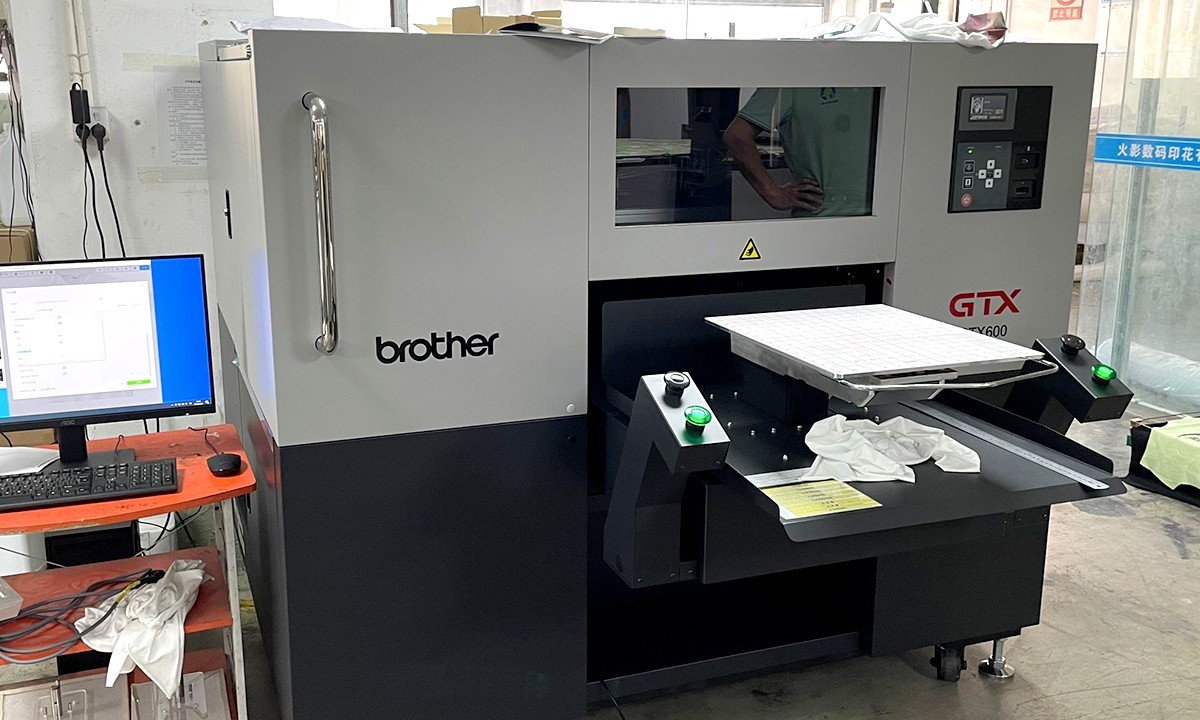
If your print has shaded flowers, fine lines or lots of colors, digital fabric printing is a useful place to start. A printer applies ink directly to the fabric from your artwork file. There are no screens to prepare for each color, so it is also convenient when you’re trying out a new design.
Digital printing can use reactive dyes or pigments. Reactive dyes need fixation and washing to remove excess dye, while pigments are held in place by a binder. A broad area of pigment color can add more surface feel than a small, scattered motif.
Screen printing
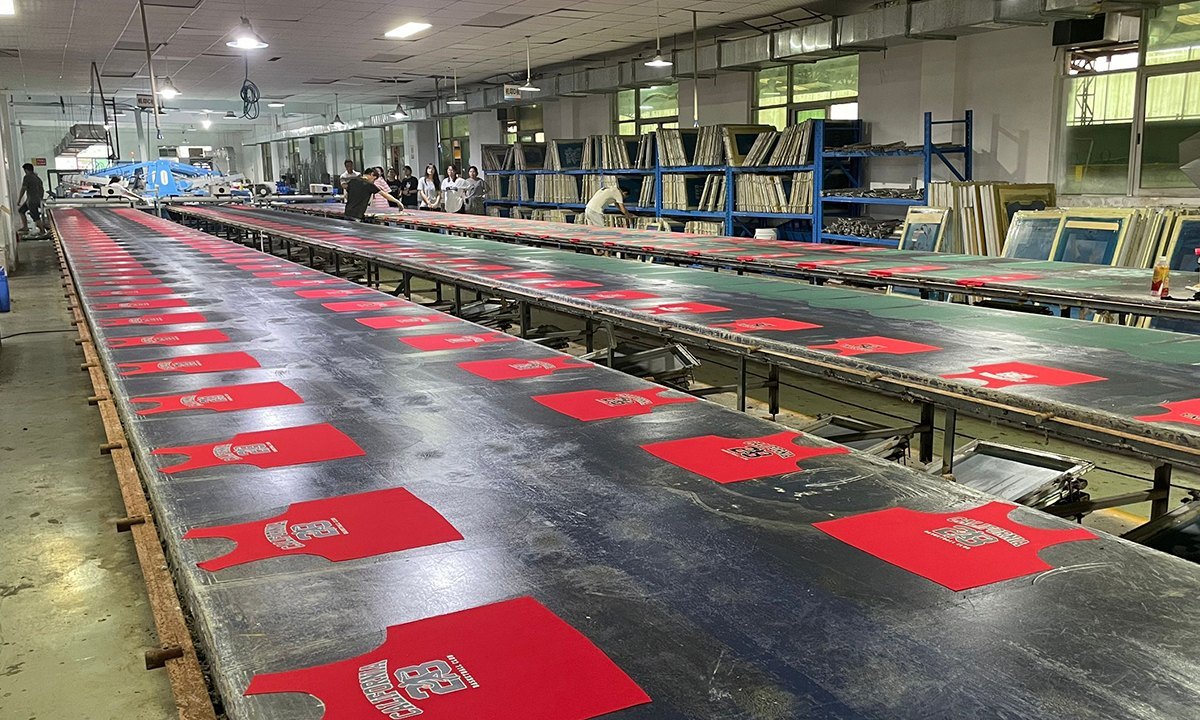
Screen printing works well for bold shapes, clear spot colors and repeating designs. Color is pushed through prepared screens onto the fabric, with a screen made for each color separation. Flatbed and rotary screens are used for printed fabric, while garment screen printing can put a graphic onto a pajama top.
A simple star or fruit pattern is an easy example to picture. When the same design runs across a larger length of fabric, rotary screen printing can be an efficient way to repeat it.
Dye-sublimation printing
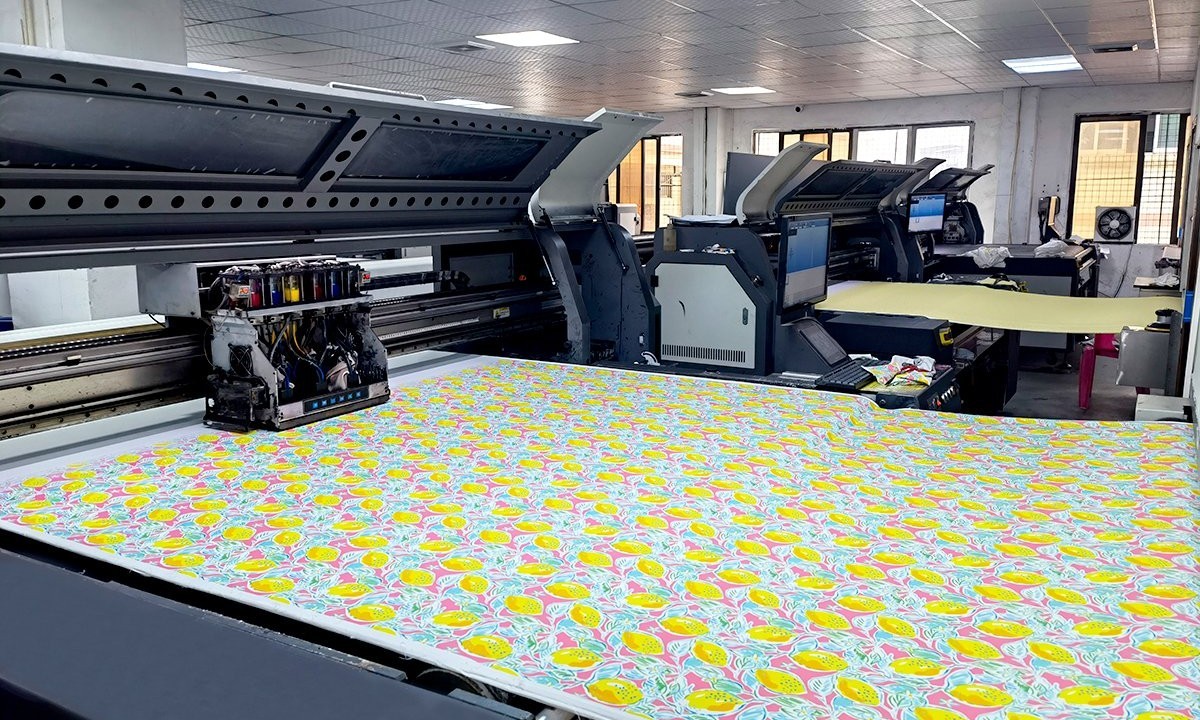
For a colorful design on polyester pajamas, sublimation is worth considering. The artwork is printed onto transfer paper, then heat transfers the dye into the polyester. The print adds very little surface feel, which is useful when you want a smooth satin or a soft jersey to keep its original touch.
Conventional sublimation works best on white or light-colored polyester. Ordinary untreated cotton needs a different printing route; specialized cotton-primer systems involve additional preparation.
Film transfers, including DTF
For a name, a small illustration or a chest graphic, you may be offered direct-to-film printing, usually called DTF. The design is printed onto a carrier film, adhesive is added, and a heat press transfers it onto the garment. The carrier is then peeled away.
An ink and adhesive layer stays on the fabric, so you can feel the printed area. A small design keeps that area limited; a large solid graphic will be more noticeable against the body.
All-Over Print or Placement Print?
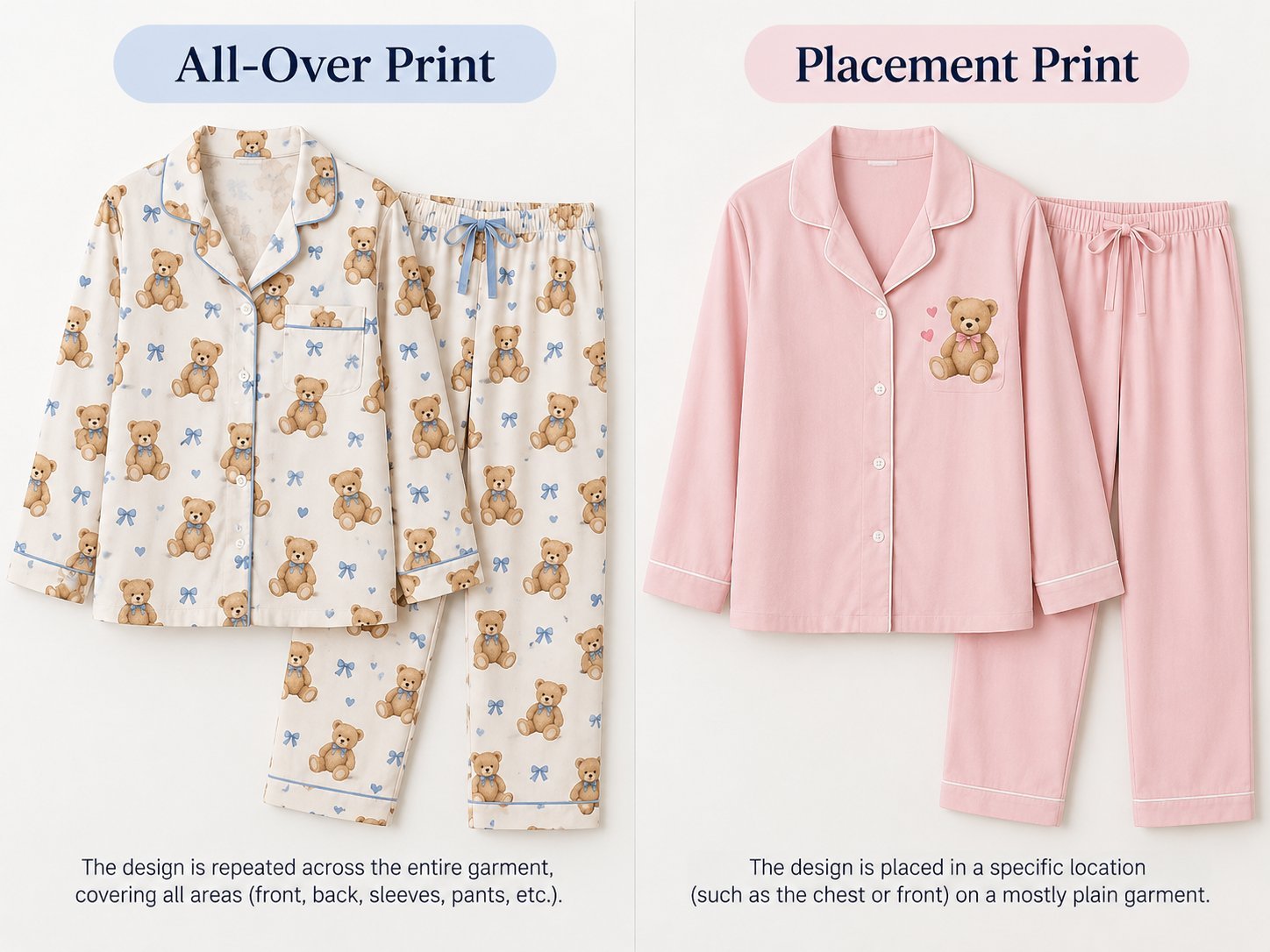
An all-over print covers the fabric with a design, often in a repeat. Think of little flowers or scattered fruit across a matching top and trousers. The fabric is usually printed before cutting and sewing, so the pattern continues across the garment pieces, with breaks at seams.
A placement print goes in a chosen spot, such as the center of the chest or near a trouser hem. It can be applied to a cut panel or a finished garment. These names describe the layout: an all-over floral could use digital or screen printing, while a chest graphic could be screen printed or transferred.
How Artwork and Order Size Affect the Choice
For a first collection with several detailed prints, I’d compare digital printing options early. You can explore different artwork without paying to make a set of screens for every design. For a larger order of a simple two-color repeat, screen printing becomes worth comparing because the setup cost is spread across more fabric.
Print coverage affects the quote too. A dark background covering most of the fabric uses more color than a few small motifs on white. Ask for prices using the same fabric, artwork and quantity, and include the repeat dimensions so the printer knows the scale you want.
What to Check in a Printed Pajama Sample
A strike-off is a small piece of fabric printed with your design. It lets you see the colors and detail and feel the printed surface before a larger run. The complete pajama sample comes next, showing how the pattern looks around the collar, pockets and seams.
- Color and pattern scale: Are the colors close to your approved reference? Fine lines should stay clear, the repeat should join cleanly, and the motif should be the size you intended.
- Softness and movement: Feel the printed area beside the plain fabric. If the pajamas use jersey, gently stretch it to see how the print moves.
- Appearance after care: Review a sample after washing as intended, looking for fading, cracking, peeling or bleeding. Rubbing checks can also reveal whether color transfers onto other fabrics.
Keep the approved strike-off as the color reference for production. You can read more about reviewing the complete garment in our guide to how custom pajama sampling works.
FAQs
Can satin pajamas be printed?
Yes. Printed satin is used for pajama sets, nightdresses and robes. Its sheen catches the light, so it’s useful to look at a printed swatch both flat and hanging in folds when reviewing the color.
Why can print colors look different from the screen?
Your screen lights up the artwork, while fabric reflects the light around it. The fabric’s base color and your screen settings also affect what you see. Use a physical strike-off to approve the printed color.
Can the same artwork be used on different pajama fabrics?
Yes, you can often keep the same artwork. If you move it from smooth poplin to a textured or stretchy fabric, small details may need adjusting, along with the color settings. Review a printed swatch for each fabric version.
Conclusion
You can start with a favorite pattern or a fabric you already love. Bring the two together in a printed swatch, and it becomes much easier to see whether the idea is ready for a complete pajama sample.
Have a print in mind for your next collection? Send KoalaPurr your artwork or reference images, fabric preference and planned quantity. We can help you explore a suitable printing approach and develop your samples.