What Is a Clothing Tech Pack? A Practical Guide for Apparel Brands
If you are developing a clothing collection, you may already have sketches, reference images, fabric ideas, or a clear picture of how you want the finished product to look.
Then you contact a manufacturer and they ask, “Do you have a tech pack?”
If you have never worked with one before, the term can sound more technical than it really is. A clothing tech pack is simply a way to organize the important details of a garment so that you and your manufacturer are working from the same information.
In this guide, we’ll look at what a clothing tech pack is, what usually goes into one, and how much information you actually need before starting product development.
What Is a Clothing Tech Pack?
A clothing tech pack, short for technical package, is a document that explains how a garment should be made.
Think of it as the working file behind the design. A fashion sketch may show the overall look, but the tech pack fills in the details that are harder to understand from an image alone.
This is why you may also hear terms such as garment tech pack or apparel tech pack. In practice, they are usually referring to the same type of production document.
Why Is a Tech Pack Important?
A design can look very clear to the person who created it, but the manufacturer still has to turn that idea into an actual garment.
A sketch cannot answer every question.
What fabric should be used? How loose should the fit be? What type of elastic goes into the waistband? How wide is the piping? Where exactly should the pocket sit?
A tech pack helps answer those questions before too many assumptions are made.
It also gives the manufacturer a better starting point for quotation. Two pajama sets may look similar in a drawing, but the cost can change depending on the fabric, trims, print, embroidery or construction.
Once sampling begins, the tech pack becomes a useful reference for checking measurements and recording changes. If a sleeve is shortened or a waistband is changed after the first sample, those updates can be added so the latest version stays clear.
What Should Be Included in a Clothing Tech Pack?
There is no single tech pack format that every clothing brand has to follow.
Some are very detailed. Others are much simpler.
What matters is that the manufacturer can understand the product clearly enough to develop it without having to guess the important details.
Technical Sketches and Design Details
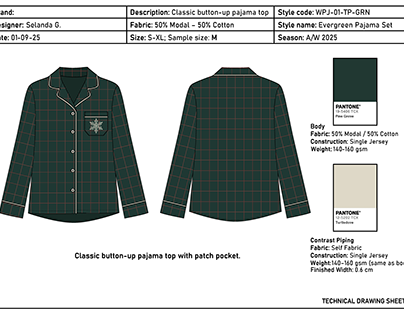
Most tech packs start with technical sketches, often called technical flats.
These usually show the front and back of the garment and focus on the actual construction rather than styling or poses.
Details such as collars, cuffs, pockets, waistbands, seams, piping and button placement should be easy to see.
For a pajama shirt, for example, you may want to show the collar shape, chest pocket, piping placement and front button layout. If a detail is difficult to understand from the main drawing, a small close-up can help.
Measurements and Sizing
Measurements tell the sample maker what size and fit you are trying to achieve.
A tech pack may include the sample size, points of measurement and a measurement chart. If the brand already has a complete size range, grading information can also be included.
This is one area where clear numbers are much more useful than general descriptions.
“Relaxed fit” can mean different things to different people. A finished chest width or inseam measurement is much easier to work from.
For a loungewear tech pack, the important measurements may include garment length, chest, sleeve length, waist, hip, rise and inseam, depending on the style.
Fabric, Trims and Construction
Fabric information should be as clear as possible.
Instead of writing only “soft cotton,” it is more useful to specify the fiber composition, fabric type, approximate weight, stretch and color if you already know them.
This matters because fabrics that look similar in a product photo can behave very differently.
Cotton poplin, modal jersey, bamboo viscose jersey and satin, for example, all have different drape, stretch and sewing requirements.
The same applies to trims.
Buttons, elastic, drawcords, lace, zippers and piping can all affect the final look and cost of the garment, so it helps to show which type you want.
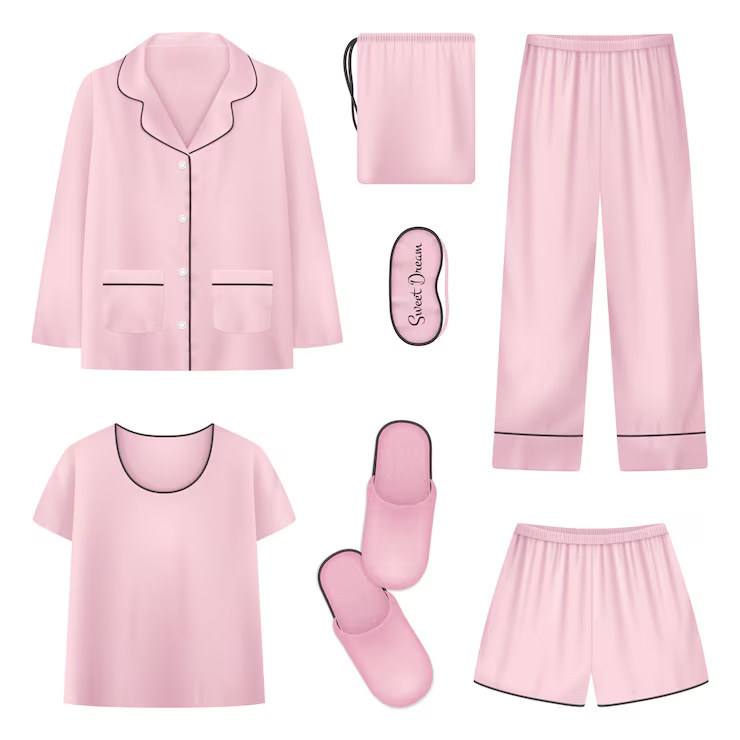
Construction notes can also be added where needed. These may explain details such as the waistband construction, hem finish, seam type, binding or piping width.
Branding, Artwork and Packaging
If the garment includes branding, the tech pack can show where it goes.
This may include the main label, size label, care label, logo embroidery, print placement or other brand details.
For printed pajamas, it is also useful to include the artwork itself rather than only a mockup of how the print should look on the garment.
The manufacturer may need information such as repeat size, placement dimensions or color references before production starts.
Packaging can be included too if you already have specific requirements, such as hangtags, belly bands, polybags, folding instructions or gift boxes.
How Detailed Does a Tech Pack Need to Be?
A tech pack does not need to be long just to look professional.
A simple garment may only need a relatively straightforward document. A more complicated style with custom trims, multiple fabrics, embroidery or detailed construction will naturally need more information.
The main question is simple:
Can the manufacturer understand the product without making too many assumptions?
If the answer is yes, the tech pack is probably doing its job.
For example, a basic pajama set may only need clear sketches, measurements, fabric details, button information and label placement. A more complex loungewear style may need additional notes about ribbing, stretch, panels, trims or embroidery.
More pages do not automatically make a better tech pack. Clear and consistent information matters more.
Do You Need a Tech Pack Before Contacting a Manufacturer?
Not always.
Many new clothing brands contact manufacturers before they have a complete tech pack.
You may only have a sketch, some reference images, a fabric direction and a few key measurements. That can still be enough to start an initial conversation and see whether the manufacturer can develop the product you have in mind.
As the project moves closer to sampling, however, more details will need to be confirmed.
Some manufacturers can help work through fabric, construction or measurement details during product development. Others expect the brand to provide a more complete tech pack from the beginning.
So if you do not have one yet, it does not necessarily mean you need to stop the project. Start by organizing the information you already have and make the missing details clear during the development process.
Common Tech Pack Mistakes
One of the most common problems is being too vague.
Descriptions such as “soft fabric,” “premium quality” or “loose fit” may describe the idea, but they do not give the sample room much technical information to work from.
Missing measurements can create the same problem. A style may look simple in a sketch, but the sample maker still needs to decide the actual proportions.
Conflicting information is another issue. You might have one pocket position in the sketch and another in the written notes, or one color listed on one page and a different color somewhere else.
It is also easy to forget to update the tech pack after a sample revision.
If the first sample changes but the document stays the same, the old information can create confusion later. Keeping the latest version updated is often just as important as creating the original tech pack.
From Tech Pack to First Sample
Once the manufacturer receives your tech pack or design information, they can review the style and check the fabric, construction, measurements and trims.
From there, the project can move into quotation, material confirmation and sample development.
The first sample may still need adjustments. A sleeve may need to be shorter, the fit may need to be looser, or a trim may need to be changed.
Those comments should be recorded clearly so the next sample follows the latest decisions.
This is why a tech pack is not always a document that is finished once and never touched again. In many projects, it develops together with the sample until the final specifications are confirmed.
Final Thoughts
A good clothing tech pack does not need to be complicated.
Its job is simply to help you explain the garment clearly enough that your manufacturer understands what you want to make.
For pajamas, sleepwear and loungewear, that usually means getting the fabric, measurements, construction, trims, artwork and branding details clear before production goes too far.
And if you are still at the beginning and do not have a complete tech pack yet, you can still start with what you have. A clear sketch, good references and a well-organized product idea are often enough to begin the conversation.
FAQ
What is the difference between a tech pack and a spec sheet?
A spec sheet usually focuses mainly on garment measurements and sizing. A tech pack normally includes a wider set of information, such as sketches, fabric, construction, trims, branding and measurements.
Can a clothing manufacturer help create a tech pack?
Some manufacturers can help complete or clarify technical details during product development. Others may ask you to provide a finished tech pack before sampling begins, so it depends on how the manufacturer works.
What format should a clothing tech pack be in?
PDF is commonly used because it is easy to review and share. Logos, prints and other artwork can usually be supplied separately in editable formats when needed.