What Types of Clothing Labels Can You Customize for Your Sleepwear Brand?
Private label manufacturing lets you develop pajamas, loungewear and robes under your own name. You can customize the garment and its labels together, which gives you a chance to see how the branding works on the finished piece. A logo that looks right on screen might need a smaller label to fit neatly inside a narrow pajama collar.
Start with what each label needs to say. From there, you can choose a material, finish and placement that work with the garment.
What Types of Labels Can You Customize for Sleepwear?
Brand Labels
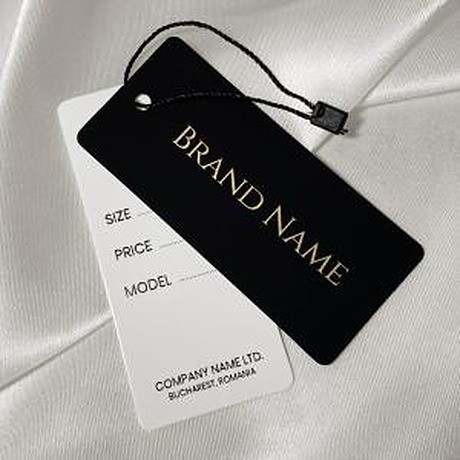
The brand label, sometimes called the main label, carries your name, logo or both. You can customize the artwork, colors and size to suit the garment. A label inside the back neck makes the brand easy to find. If you prefer a smaller branding detail on the outside, a flag label at the side seam or hem is another option.
Size Labels
A size label helps customers identify the garment at a glance. You can use a separate size tab or add the size to the main label. If you sell pajama tops and bottoms as separates, it helps to identify the size on each piece so it stays easy to find after unpacking.
Care Labels
Care labels explain how to wash, dry and otherwise care for the finished garment. Build the instructions around the actual product, including its trims and finishes. If you need several languages, leave enough space for the text to be legible at the finished label size.
Fabric Composition Labels
A composition label lists the fibers in the garment and their percentages. The fabric name you use in product copy may tell customers how the material looks or feels, while the composition tells them what it’s made of. For instance, “satin” describes the weave. The fiber content comes from the fabric specification. If the top and bottoms use different fabrics, flag that in your label brief so the wording can be checked for each piece.
Hang Tags
A hang tag is the removable card customers see before wearing the garment. It can carry a collection name, a short brand story, a style code, a barcode or a link to your website. You can customize the card stock, shape, printing and cord. If the front will stay the same across the range, leaving a space on the back for a product sticker gives you room to handle different styles and sizes.
These five functions can be covered with fewer physical labels. A brand label can include the size, and a single printed label can carry both care instructions and fiber composition.
What Materials and Production Methods Can You Choose?
- Woven labels form the logo or lettering with yarn, giving the artwork a visible textile texture. If your logo includes fine lettering, review it at the finished scale. A simple wordmark may read more clearly on a small label than the full logo with its tagline.
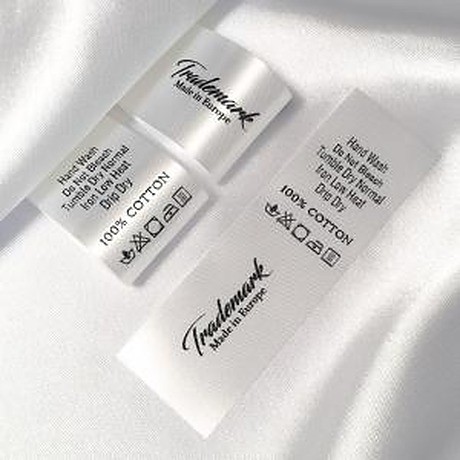
- Printed fabric labels put the design on a separate fabric tape. Satin tape gives the label a smooth, slightly glossy surface. Cotton tape gives it a more matte, textile finish. Printed labels are worth considering when you need to include care symbols or several lines of text.
- Heat transfer labels apply the design directly to the garment fabric, leaving no separate fabric tag at that spot. A transfer can work for a logo and size at the inside neckline. The result depends on how the transfer behaves on the specific fabric and finish.
Where and How Can Labels Be Attached?
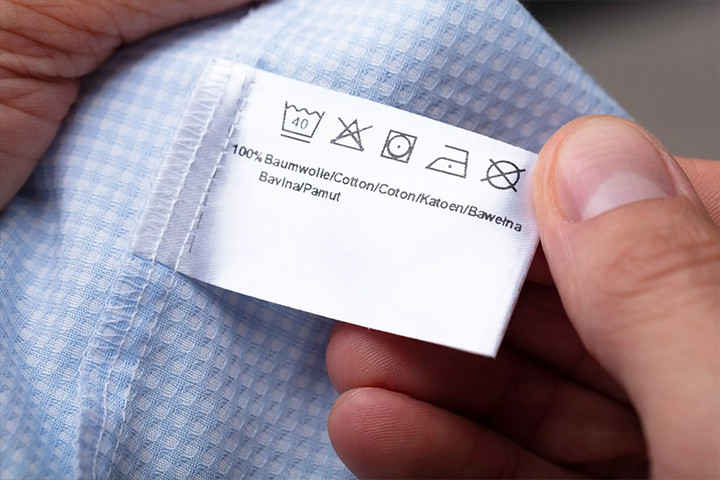
For a sewn label, the fold affects which edges sit against the garment and how much room there is for the artwork.
| Label construction | How it fits into the garment |
|---|---|
| Flat or straight cut | The label sits flat against the fabric. It can be stitched at the edges that suit the garment construction. |
| Center fold | The label folds in half and the two open ends can be caught together in a seam. Both faces can carry information, which is useful for a small side-seam label. |
| End fold | The two ends turn under and are stitched down. This suits a horizontal brand name placed inside the back neck or on a robe facing. |
Folded labels need space for the folds and stitching. When you share artwork, specify the finished visible dimensions and ask to see where the stitch line falls. That makes it easier to keep the logo clear of the edges.
Which Label Options Suit Your Sleepwear Collection?
Treat these combinations as starting points for sampling. The sample can help you see how the label behaves during wear, washing or packing.
| Product | A combination to try | What to look at on the sample |
|---|---|---|
| Cotton button-front pajamas | A woven brand label inside the back neck and a printed care and composition label at the side seam. | Try the top on and check whether the neck label sits flat when the collar moves. |
| Stretch modal knit pajamas | A heat transfer for the logo and size at the inside back neck, plus a separate care and composition label. | Stretch the neckline as you would when taking the top off. Check the feel and look for lifting or cracking after washing. |
| Lightweight satin pajamas | A small, lightweight printed brand label at the facing if the style has one. | Look at the garment from the outside in daylight. If you can see the label outline or stitching, try adjusting the placement or reducing the label size. |
| Gift-ready robes | A simple brand label inside the robe and a hang tag with the collection name or gift message. | Pack the robe as it will be sold and check how the tag sits once the robe is folded. |
What Should You Send Your Manufacturer Before Sampling?
A sketch or a marked-up product photo is a good start if you’re still deciding where the labels should go. Once you have a direction, put the details in your clothing tech pack or share them in a single brief.
- Artwork and copy including your logo file, exact label text and any size or language versions.
- Label specifications including the preferred construction, finished dimensions, colors and placement on each garment.
- Order details including the selling markets and quantity by style, color and size. Note which artwork stays the same and which needs a separate version.
Review the physical label on the garment before approving it. That’s when you can see whether small text is legible, whether the label sits comfortably and whether the finish holds up after the agreed wash check.
FAQs About Custom Sleepwear Labels
Can I use the same brand label across multiple styles?
Yes. If the artwork and finished size suit all the garments, you can use a shared brand label. A label with sizing or fabric information may need separate versions as those details change.
Do custom labels have a separate minimum order quantity?
Some do. Confirm the label minimum separately from the garment minimum. If the logo or background changes by color, ask whether each version has its own minimum.
Can I supply my own labels?
If you already have labels, share a sample or the specifications with your manufacturer. Confirm that the dimensions and attachment work with the garment, and agree on the quantities and delivery timing before sampling.
Plan Your Custom Labels with KoalaPurr
If you’re developing pajamas, loungewear or robes, send us your logo and a sketch, reference photo or tech pack. We can talk through the label options while developing the garment sample, so you can see how the branding looks and feels on the piece you plan to sell. Discuss your sleepwear project with KoalaPurr.