All-Over Print vs. Placement Print: What Is the Difference?
Printed fabrics can give two similar pajama sets completely different looks. One might feature small floral patterns across the entire garment, while another uses a single illustration on the chest. Both are printed designs, but the way the artwork is arranged creates a very different result.
These two approaches are known as all-over printing and placement printing. Understanding the difference can help you choose a print style that works with your clothing design, fabric, and overall collection.
What Is All-Over Print?
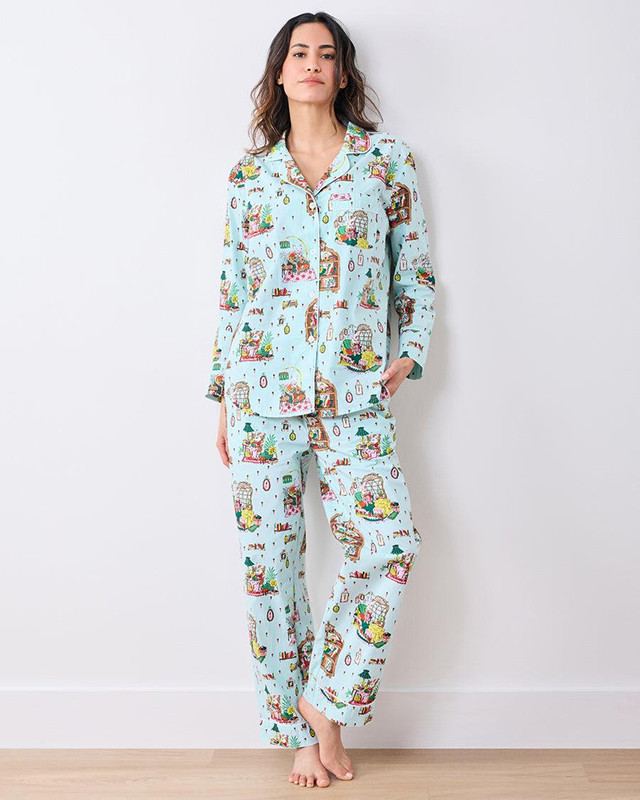
All-over print (AOP) is a design that covers most or all of the fabric or garment surface. Instead of appearing in one specific area, the pattern extends across the front, back, sleeves, and other parts of the clothing.
The designs often feature repeating elements such as flowers, stripes, geometric shapes, animal prints, or seasonal illustrations. The pattern creates a consistent appearance throughout the garment, rather than drawing attention to one particular area.
All-over prints are especially common in pajamas, nightgowns, robes, and matching loungewear sets. A classic example is a two-piece pajama set covered in small floral prints, with the same pattern appearing on both the shirt and pants.
How Is All-Over Printing Done?
A common approach is to print the design onto fabric before cutting and sewing. The printed fabric is then cut into individual garment pieces and assembled into the finished product.
Different printing methods can be used depending on the fabric. For example, polyester fabrics may be printed using dye-sublimation, while cotton and certain other cellulosic fabrics can use suitable direct-to-fabric printing methods.
The term all-over print describes the coverage of the design, not a single printing technique.
What Is Placement Print?
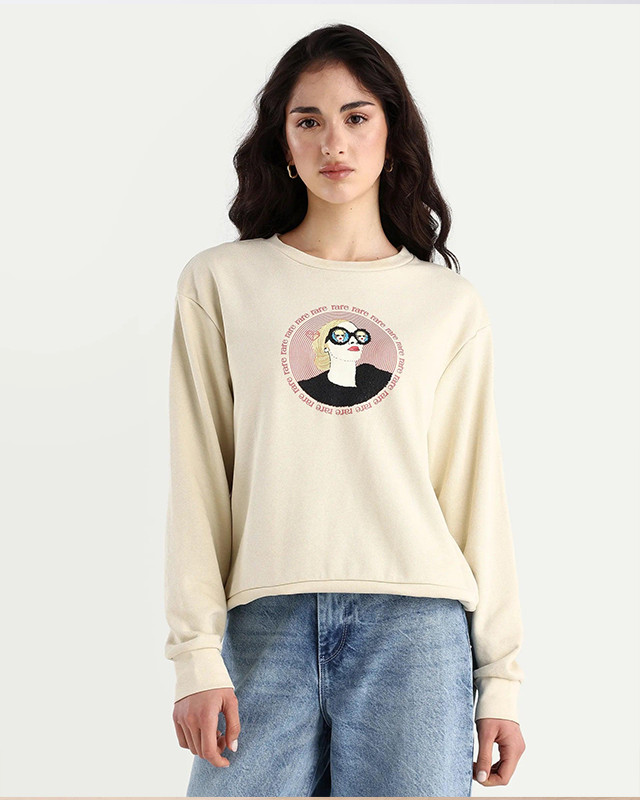
Placement print refers to a design positioned in a particular area of a garment. Unlike an all-over pattern, the artwork is placed deliberately on the chest, back, sleeves, pockets, or another selected section.
A placement print can be a small logo, a simple illustration, a phrase, or a large decorative graphic. It does not necessarily have to be small. What makes it a placement print is its intended position within the garment design.
For example, a plain cotton pajama top with a small teddy bear printed on the left chest uses placement printing. A sweatshirt featuring a large graphic across the front is another familiar example.
Placement prints are popular in T-shirts, sweatshirts, sleep shirts, and minimalist loungewear because they allow the fabric's original color and texture to remain a prominent part of the design.
How Is Placement Printing Done?
Placement prints are commonly applied to pre-cut fabric panels or finished garments. Screen printing, digital printing, and suitable heat-transfer methods can all be used, depending on the artwork and material.
The artwork is positioned according to the intended garment design. For example, a graphic might be centered on the front of a sweatshirt or placed just above the pocket of a pajama shirt.
Placement printing can also be completed before the fabric is cut when a design calls for a more carefully planned arrangement. The defining feature is the position of the artwork, rather than the stage at which it is printed.
All-Over Print vs. Placement Print: Key Differences
The main difference between all-over printing and placement printing is how the artwork is distributed across the clothing. All-over printing creates a continuous visual effect, while placement printing emphasizes a particular area or graphic.
| Feature | All-Over Print | Placement Print |
|---|---|---|
| Print coverage | Covers most or all of the fabric or garment | Appears in specific areas |
| Design type | Often repeating or continuous patterns | Individual graphics or positioned motifs |
| Visual effect | Decorative, patterned appearance | Focused, often more minimal |
| Printing stage | Commonly printed before cutting | Often printed on panels or finished garments |
| Common techniques | Fabric digital printing, screen printing, sublimation | Screen printing, digital printing, heat transfer |
| Typical products | Pajama sets, nightgowns, printed robes | T-shirts, sweatshirts, sleep shirts |
| Artwork requirements | Pattern repeat, scale, and layout | Graphic size, position, and alignment |
| Cost | Often more efficient when printed on fabric rolls | Generally higher labor costs due to individual positioning |
Neither print style is necessarily more complicated or better in every situation. A simple repeating floral pattern may be relatively straightforward to produce, while a large, carefully positioned graphic could require more preparation.
The choice is also not determined by the printing machine alone. Both styles can be created using different techniques, provided the printing process is compatible with the fabric and intended design.
Does Fabric Choice Affect All-Over and Placement Printing?
Both all-over and placement prints can be used on cotton, modal, bamboo viscose, polyester, and blended fabrics. The main difference is the printing technique rather than the print layout. For example, dye-sublimation is commonly used for all-over prints on polyester, while cotton and other cellulosic fabrics can be printed using suitable reactive or pigment printing methods.
Fabric choice can also affect the finished print's appearance and feel. Some printing methods leave a noticeable layer on the fabric, while others produce a softer finish. This is especially worth considering for pajamas and loungewear, where comfort matters.
Which Print Style Is Better for Pajamas and Loungewear?
There is no single best option for every clothing collection. All-over prints are often associated with decorative, coordinated garments, while placement prints are frequently used for simpler designs with one visual focal point.
The following examples show how the two approaches are commonly used across sleepwear and loungewear.
Pajama Sets
All-over printing is a natural choice for matching pajama sets. A repeated design can appear across the shirt, pants, collar, and sleeves, creating a coordinated look.
Floral pajamas, Christmas pajamas, animal-print sleepwear, and classic striped sets are familiar examples. Small repeating patterns can create a subtle appearance, while oversized motifs make the design more expressive.
Placement printing offers a different look. A solid-color pajama set with a small illustration on the chest can feel playful without covering the entire garment in patterns. This is especially suitable for simple sleepwear designs and themed collections.
Loungewear
Placement prints are particularly common in casual loungewear. A sweatshirt with a front graphic, a sleep shirt with a small phrase, or a lounge top with a decorative motif can create a recognizable design while keeping the rest of the garment plain.
All-over prints are also used for coordinated lounge sets, printed wide-leg pants, and matching tops. These styles create a more decorative look and can work well for collections built around a recognizable pattern.
The contrast is largely visual: placement prints emphasize a particular graphic, while all-over prints make the pattern part of the overall garment appearance.
Robes and Nightdresses
All-over floral and botanical prints are common in lightweight robes, kimono-style robes, and nightdresses. The patterns can extend across the garment and create a flowing, decorative appearance.
Placement prints can be used for a more restrained style, such as a small illustration on a sleep dress or a positioned motif on the back of a robe.
For garments with large, loose silhouettes, the size and distribution of a printed design can have a noticeable effect on the finished appearance.
Does All-Over Printing Cost More Than Placement Printing?
In our manufacturing experience, placement printing is generally more expensive than all-over printing, mainly because it requires more labor and precise positioning.
All-over patterns are typically printed on full rolls of fabric before cutting. Once the fabric is printed, it can be cut into garment pieces according to the patterns, making the process relatively efficient.
Placement printing, on the other hand, is usually done after the fabric has been cut. Each garment panel needs to be positioned and aligned individually before printing, which requires more time and manual work.
However, the final cost also depends on the printing method, fabric, design complexity, and order quantity. For similar projects, placement printing often involves higher labor costs due to the additional positioning work.
How to Choose Between All-Over and Placement Prints
The choice usually begins with the role the artwork plays in the garment.
If the pattern is intended to define the entire product, all-over printing is often the more natural approach. Floral pajama sets, seasonal sleepwear, and coordinated printed robes are good examples.
If the artwork is meant to provide a small detail or focal point, placement printing may be more suitable. This approach works well for minimalist loungewear, graphic sleep shirts, and casual tops.
Pattern size also influences the result. Small repeating motifs can create a subtle overall texture, while larger prints can make a stronger visual statement. Similarly, a small chest illustration can look understated, while a large front graphic becomes the main feature of the garment.
Fabric choice should be considered alongside the artwork. A soft modal pajama set and a structured cotton sweatshirt may call for different printing techniques, even if both use placement graphics.
A useful starting point is to consider how you want the finished garment to look: should the print cover the clothing as a continuous pattern, or should one particular graphic stand out?
Frequently Asked Questions
Is all-over printing the same as sublimation printing?
No. All-over printing describes how the artwork covers the garment, while sublimation is a specific printing method. Sublimation is commonly used for all-over designs on polyester, but other printing methods can create all-over patterns on cotton and other compatible fabrics.
Can cotton pajamas have all-over prints?
Yes. Cotton pajamas can feature all-over floral, striped, geometric, and other repeating patterns. Suitable processes include certain reactive dye, pigment, and direct-to-fabric printing methods.
Can placement prints be used on modal or bamboo viscose?
Yes. Placement prints can be applied to modal and bamboo viscose fabrics using compatible printing processes. The fabric construction, print size, and chosen technique influence the finished result.
Which print style is better for small clothing brands?
Both can work for small clothing brands. Placement printing may be a straightforward choice for a simple graphic design, while all-over printing can help create a distinctive patterned collection. The practical choice depends on the fabric, printing method, quantity, and design requirements.
Final Thoughts
All-over and placement printing offer two different ways to bring a clothing design to life. A repeating pattern can become the defining feature of a pajama set, while a carefully positioned graphic can give a simple lounge top its own character.
The better choice is the one that supports the look and feel of the finished garment, with a printing method suited to the fabric.
At KoalaPurr, we support custom sleepwear and loungewear development, including fabric sourcing, printing, sampling, and garment production. If you have a print design or reference image, you can share it with our team to discuss suitable options for your collection.