Types of Robes: Styles, Fabrics and How to Choose
A robe is a loose outer layer worn around the home, over sleepwear, or before and after bathing. The different types of robes are usually named by their design, fabric or intended use—which explains why a satin robe can also be a kimono-style robe and a bridal robe.
For a sleepwear or loungewear collection, these names are a starting point. Understanding what each one describes helps you choose products that serve different needs and explain those differences clearly to customers.
How Robe Types Are Classified
Robe names describe three main things: how the garment is made, what fabric it uses and where it is meant to be worn. A shawl collar describes a design feature, cotton terry describes a fabric, and a bathrobe describes an intended use. These categories overlap rather than compete with one another.
For example, a cotton terry robe with a shawl collar may be developed for use after bathing. Keep the same collar and change the fabric to fleece, and the product may become a cold-weather lounge robe. The collar alone does not tell you how absorbent or warm either garment will be.
“Robe” is the broad term in this article. “Bathrobe” commonly refers to a robe used around bathing, while “dressing gown” often describes a layer worn over nightwear or around the home. Everyday usage varies by market, so product descriptions should explain the intended use instead of relying on the name alone.
Common Robe Styles and Design Features
Collars, hoods and closures change how a robe sits and how it is worn. The following robe styles are useful design references, but they are not mutually exclusive: a zip-front robe can have a hood, and a belted wrap robe can have a shawl collar.
Kimono-Style Robes
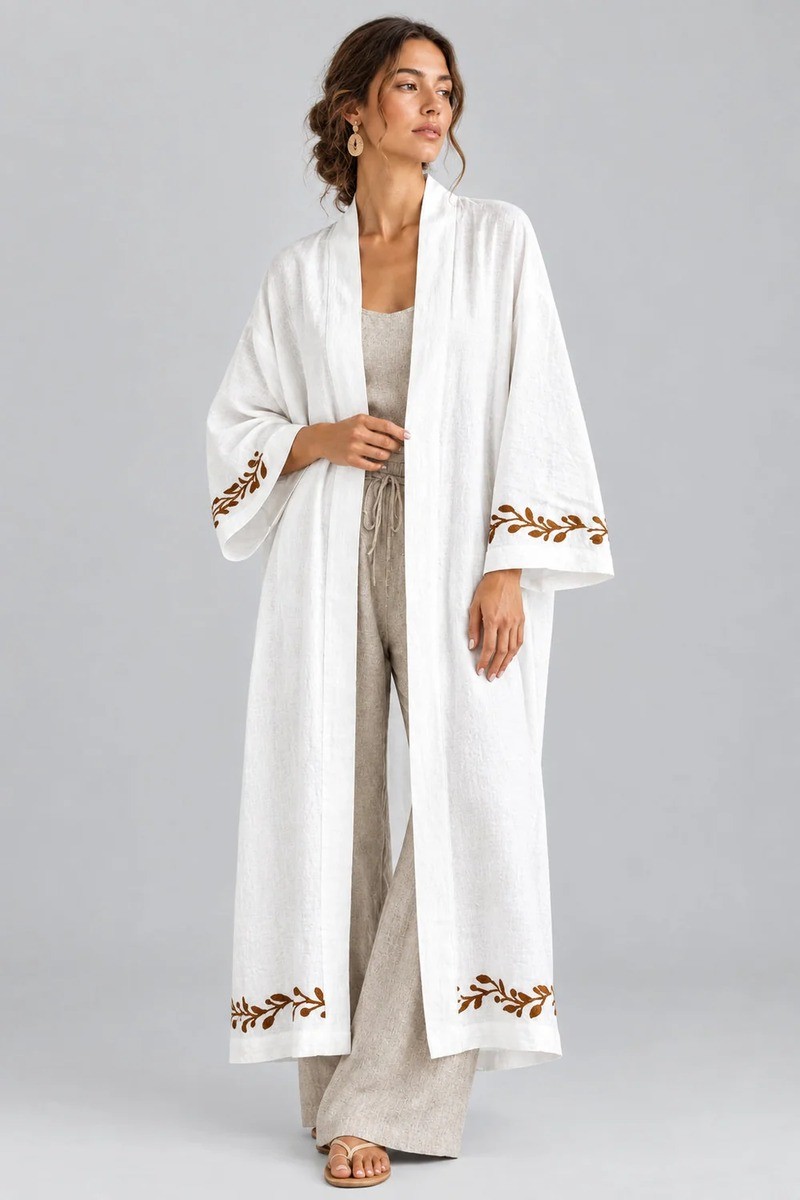
A modern kimono-style robe usually has a flat neckband, overlapping front panels and a tie belt. Sleeves may be wide and relaxed, although narrower versions are also common. The name describes a contemporary robe inspired by kimono styling, rather than a traditional Japanese kimono.
The relatively simple neckline gives this style a clean, relaxed appearance. Wider sleeves create a flowing silhouette, while narrower sleeves feel less loose around the arms during everyday tasks. Depending on the fabric, a kimono-style robe can be a light layer over pajamas, a getting-ready garment or a bathrobe.
Shawl Collar Robes
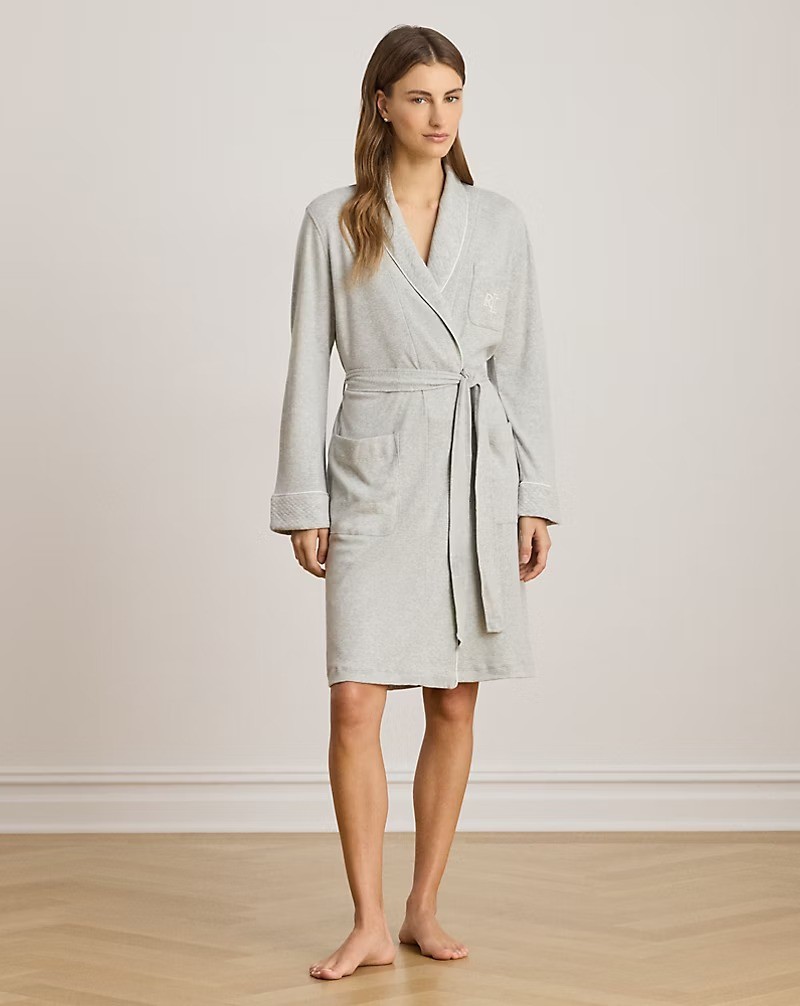
A shawl collar folds back from the neckline and continues down the front opening in a rounded line. It gives the robe a more pronounced frame around the neck and chest than a flat neckband. This creates a classic silhouette with more visual emphasis around the neckline.
A broad collar gives the robe a fuller appearance and can provide extra coverage when drawn closer around the chest. A narrower version keeps the same rounded shape with less bulk at the neck. Shawl collars appear on both bathrobes and dressing gowns, so the style can look quite different in a towel-like fabric and a smooth woven one.
Hooded Robes
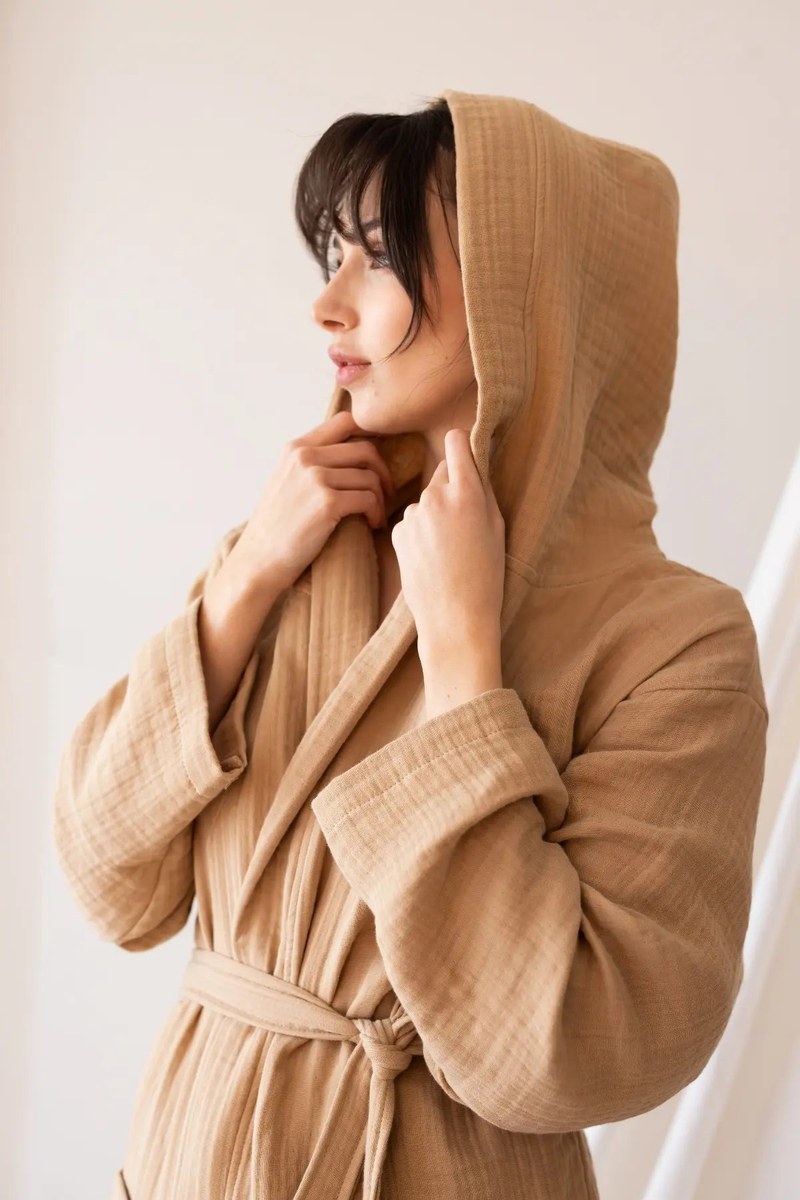
A hooded robe has a hood attached at the neckline, giving it a casual appearance and extra coverage around the head. It is often associated with post-bath routines and cozy homewear. The hood can be worn up or rest behind the shoulders when it is not needed.
The extra fabric makes a hooded robe feel fuller around the upper body than a simple flat-neck design. That can be appealing for relaxed lounging, although a hood may be less convenient when leaning against a chair or getting ready at a vanity.
Zip-Front and Button-Front Robes
Zip-front and button-front robes close through fasteners instead of relying only on an overlapping front and belt. They suit people who prefer a defined front closure or dislike retightening a waist tie. These designs are also sometimes described as housecoats, although that term varies by market.
A zipper creates a continuous opening, while a row of buttons gives the front a more segmented, shirt-like appearance. Both can offer a less draped silhouette than a belted wrap robe. Their comfort depends more on the overall cut because the wearer cannot adjust the waist as freely with a tie.
Short, Mid-Length and Long Robes
Short robes generally finish around the thigh or knee and can suit getting-ready routines or customers who prefer less fabric around their legs. Mid-length robes provide more coverage without extending to the ankle. Long robes create a fuller silhouette and may appeal to customers who want extensive coverage while lounging.
A shorter hem leaves more of the legs free and is less likely to trail around the feet. A longer hem provides more coverage when sitting, but can feel cumbersome if it reaches too close to the floor. The same garment length will also sit differently on people of different heights.
Extra length increases coverage, but it does not establish warmth by itself. A long, lightweight woven robe and a shorter fleece robe can feel very different. Length and fabric therefore describe separate aspects of the wearing experience.
Common Robe Fabrics and Constructions
Fabric names need a little care because they describe different aspects of a textile. Cotton, silk and linen are fibers; satin is a weave; jersey is a knit construction. A cotton robe may therefore be woven terry, waffle or jersey, with a different surface and wearing feel in each case.
These common fabric options give robes distinct appearances and wearing characteristics. Their names can overlap: silk satin, for example, belongs to both a fiber category and a weave category.
| Fabric or construction | Identifying features | Common uses | Wearing considerations |
|---|---|---|---|
| Cotton terry | Towel-like surface with raised loops | Absorbent bathrobes | Can feel substantial, particularly when damp |
| Waffle | Recessed, grid-like texture; available in woven and knitted forms | Bath, spa and lounge robes | Offers a textured surface; weight and absorbency vary |
| Satin | Smooth, often lustrous woven face | Dressier lounge and getting-ready robes | A flowing appearance; delicate surfaces may snag |
| Silk fabrics | Defined by silk content; may include satin or other weaves | Lounge and occasion robes | Feel and appearance depend on the weave; care requirements vary |
| Jersey knits | Knitted surface with flexibility that varies by construction | Everyday lounge robes and sleepwear coordinates | A relaxed feel with stretch that depends on the knit and blend |
| Fleece or plush | Raised or pile surface with a cozy hand feel | Cold-weather lounge robes | Fuller fabrics can feel bulky when layered |
| Lightweight woven cotton or linen | Usually a flatter surface than terry or plush | Relaxed homewear and lighter layering | A less plush appearance; some fabrics crease visibly |
A satin robe is not necessarily a silk robe. The smooth surface comes from the satin weave, while the fiber content may be silk, polyester or another material. Likewise, jersey robes can contain cotton, modal, viscose or blends, so the knit name alone does not establish their composition.
Softness, absorbency and warmth are different qualities: a plush-feeling robe is not necessarily designed to dry damp skin. Composition, construction, weight and finishing all influence the result. GSM describes fabric weight per unit area, rather than providing a complete measure of comfort or quality.
Robe Types by Intended Use
An intended use gives the design a clear purpose. It helps you decide which features deserve priority without creating another set of rigid fabric rules.
Bath and Spa Robes
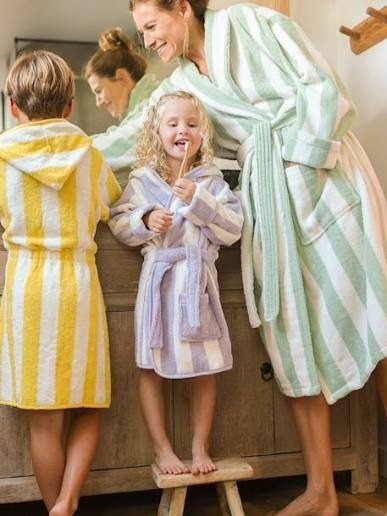
A bathrobe is commonly worn after a shower, bath or swim, when coverage and moisture absorption are useful. It offers the convenience of sleeves and a closure while the wearer dries off or gets dressed. Some people also use the same robe for lounging afterward.
A spa robe may mainly provide coverage between treatments rather than act as a towel. An easy front opening is useful when moving between changing areas and treatments. This is why bath and spa robes share many designs without always serving exactly the same purpose.
Lounge Robes and Dressing Gowns
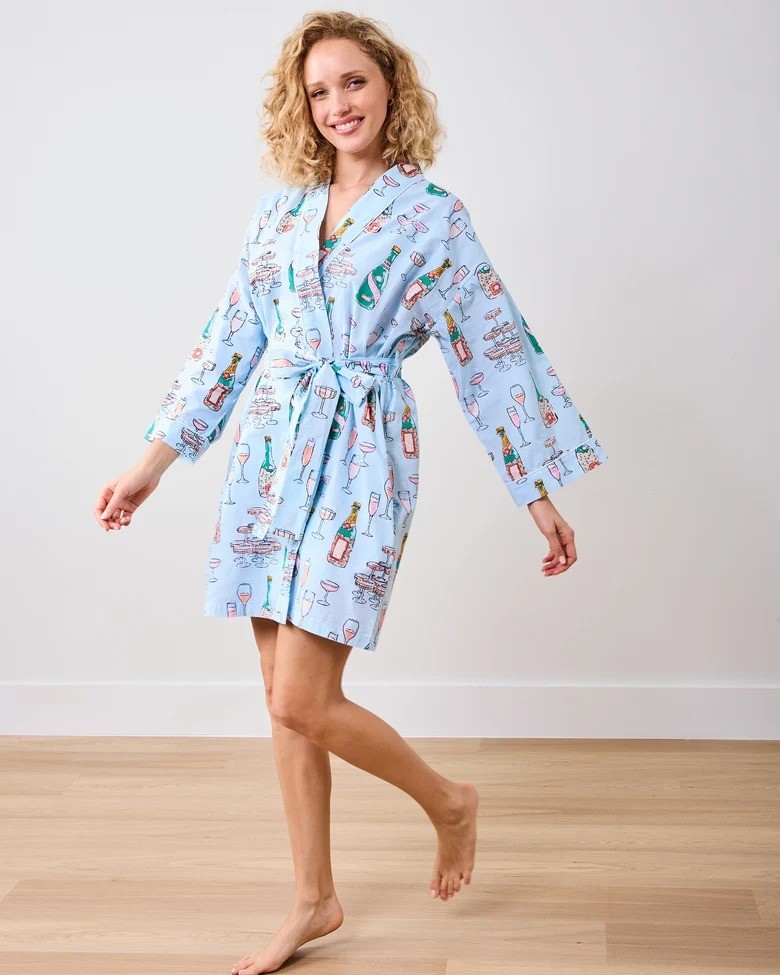
A lounge robe or dressing gown is primarily a homewear layer. Customers may wear it over a pajama set in the morning, while reading or during an evening routine. It needs to work comfortably with the clothing underneath, including room through the shoulders and sleeves.
These robes range from simple everyday layers to more decorative dressing gowns with piping, prints or contrasting cuffs. Some match a pajama set, while others are worn with several different outfits. A coordinated appearance does not require identical fabrics in every piece.
Bridal and Getting-Ready Robes
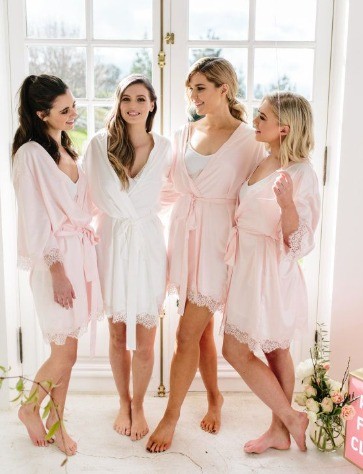
Bridal robes and getting-ready robes combine coverage with a considered appearance. They may feature coordinated colors, lace details or embroidery, but no single fabric or collar defines this category. A smooth satin design is one option, not a requirement.
Their front opening makes it possible to remove the garment without pulling it over finished hair and makeup. Shorter sleeves leave the hands freer during a beauty routine, while longer, wider sleeves create a more flowing appearance in photographs. Coverage also matters, particularly when the robe is worn around other people before the main outfit goes on.
How to Choose Robes for Your Collection
Start with the gap the new product should fill. A robe developed to accompany a lightweight pajama set has a different purpose from an absorbent bath product or a winter homewear layer. Define the intended season, wearing situation and price range before selecting additional styles; changing only the collar may not create a meaningful difference for your customer.
Then consider how the robe belongs within the range. A print or piping detail can connect it to existing pajamas, while a different fabric can give it a distinct seasonal role. The intended customer also helps guide the length, sleeve shape, closure and size offering.
Once the direction is clear, a sample can help confirm the fit, front coverage and overall feel. Keep that review tied to the intended use: an attractive getting-ready robe and a practical bathrobe do not need to deliver the same experience.
Frequently Asked Questions
Can one robe work for both bathing and lounging?
Yes, if its fabric handles moisture and the garment remains comfortable for longer wear. Consider how heavy it becomes when damp and how it dries between uses, rather than assuming that any soft robe suits both purposes.
Does a belted robe fit everyone?
No. A belt allows some waist adjustment, but shoulder fit, sleeve room and front coverage still depend on the garment's measurements. A unisex or one-size label does not guarantee the same fit on every body.
What should a brand specify beyond the robe type?
Provide a reference image or drawing, measurements, fabric composition and construction, color, and key finishing details. Where a feature is still undecided, explain the intended wearing need so the manufacturer can propose suitable options before sampling.
Final Thoughts
A useful robe collection gives customers clear reasons to choose each product. Each addition should have a purpose that is easy to explain, whether that is everyday layering, bath-time comfort or getting ready for an occasion. That creates a stronger range than adding more robe names without a meaningful difference between them.
If you are developing a robe collection, share your reference styles and intended use with KoalaPurr. Our custom robe manufacturing team can help develop the fabric and fit into a sample for review.