French Terry vs Fleece: Which Is Better for Loungewear Sets?
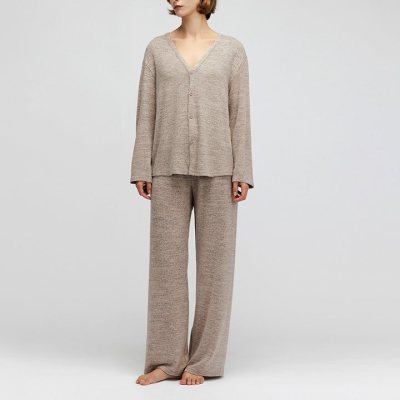
French terry and fleece can look much alike in a finished lounge set. Both can have a smooth outer face, so a reference photo may show you the cut and color without revealing the texture against the skin.
The difference becomes easier to recognize when you turn the fabric over. French terry keeps its loops on the inside, while brushed fleece has a raised, fuzzy back. These two surfaces bring different kinds of comfort to a matching top and pants.
French Terry vs Fleece: A Quick Comparison
| Feature | French terry | Brushed sweatshirt fleece |
|---|---|---|
| Inner surface | Visible, unbrushed loops | Raised, brushed fibers |
| Next-to-skin feel | Looped texture without a plush nap | Fuzzy, cushioned touch |
| Warmth emphasis | An option when a plush insulating interior is not wanted | Commonly chosen for cozy, colder-weather pieces |
| Weight and silhouette | Available in lighter and heavier versions | Available with different weights and degrees of loft |
| Starting point for a collection | Everyday loopback sweatshirt sets | Warm lounge sets with a brushed interior |
These are useful starting points for comparing samples, rather than fixed performance ratings.
What Is the Difference Between French Terry and Fleece?
French terry is a knitted fabric with a generally smooth face and loops on the reverse. Those loops remain unbrushed, giving the inside its recognizable texture.
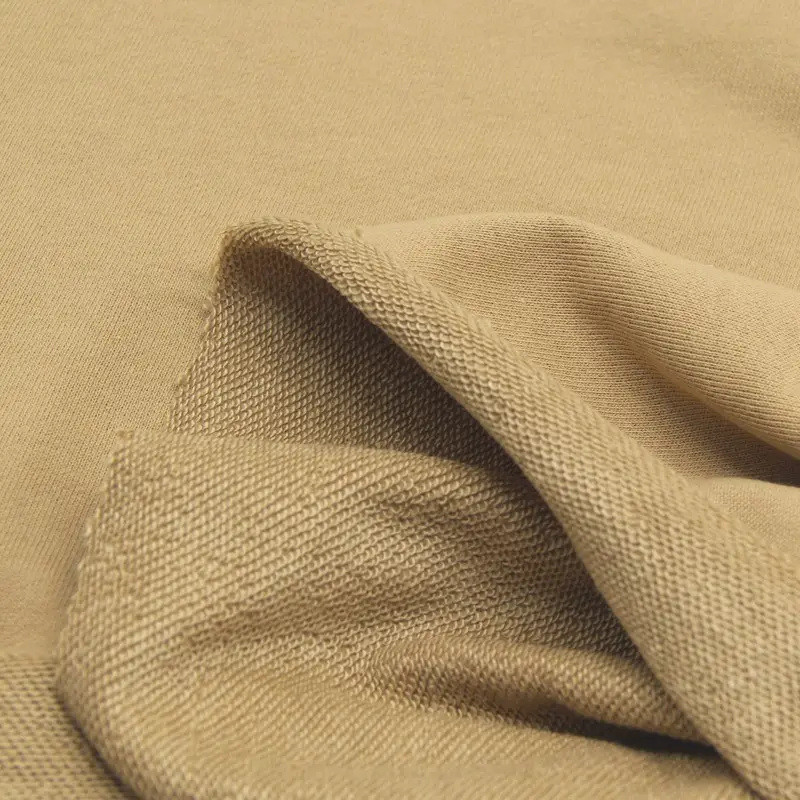
Brushed sweatshirt fleece has a raised inner surface created through brushing, also called napping. The knit structures are closely related; the treatment of the reverse side creates the clearest distinction in this comparison.
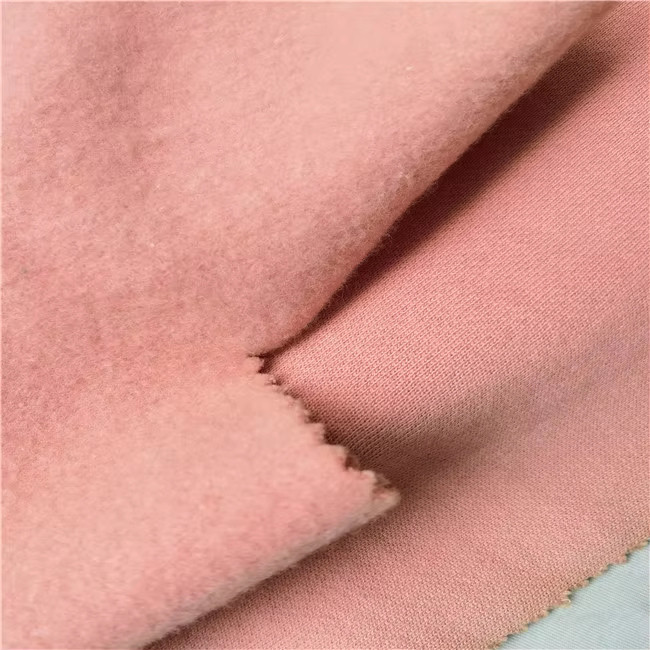
Both are familiar loungewear fabrics for sweatshirts, joggers and coordinated sets. Neither name specifies the fiber content, so a loopback-versus-brushed comparison should be kept separate from a cotton-versus-polyester comparison.
How Do They Compare in a Loungewear Set?
Warmth and Indoor Comfort
Brushing adds loft and insulation, which makes fleece a natural option for a set designed to feel cozy in cooler conditions. That warmth can be welcome in a chilly home or on a short trip outside.
For a set worn mainly in heated rooms, French terry is worth considering when a plush inner layer would feel excessive. Think about the whole outfit: a long-sleeve top and full-length pants provide a different wearing experience from a sweatshirt paired with shorts.
Breathability also deserves a separate assessment. The presence of loops or a brushed back alone does not establish how much air a finished fabric lets through. A seasonal label such as “winter loungewear” is less useful than knowing where and how the set will be worn.
Softness Against the Skin
Fleece offers a particular kind of softness: the raised fibers create a fuzzy, cushioned surface. Napping produces that plush feel, so it can be an appealing choice when the inside of the garment is part of the product's appeal.
French terry has a more noticeable looped texture. It can still feel soft, but the sensation is different from brushing your hand across a fleece interior. Someone who enjoys a plush lining may prefer fleece; someone who dislikes that fuzzy contact may find an unbrushed loopback more comfortable.
For lounge pants, this difference extends along the legs. It is worth judging the inner feel while wearing the garment, rather than choosing only by how a folded swatch feels in the hand.
Weight, Bulk and Drape
GSM means grams per square meter: it describes fabric weight per unit area. It does not directly measure thickness, warmth or drape. Two fabrics marked 300 GSM can therefore have different volume and fall differently in a garment.
This distinction becomes useful when comparing a full set. You may want a sweatshirt with a fuller outline but pants that fall cleanly from the hip. In a wide-leg style, look at how the fabric hangs; in joggers, look at the shape around the knee and cuff.
Neither construction guarantees a fluid or structured silhouette. Compare the actual fabrics through the body of the garment and at folded areas such as waistbands and pockets. An appealing sweatshirt does not automatically make an equally appealing pair of pants.
Wear and Washing
A lounge set should remain comfortable and presentable after regular wear. Pilling, surface fuzz and dimensional changes are relevant to both options, so there is no reliable durability winner based on the fabric names alone.
Washing can affect surface appearance and fit. For fleece, include changes in the brushed interior and loose-fiber shedding in the comparison. For either fabric, look at whether the pants retain unwanted stretching at the knees or seat after wear.
The coordinated appearance matters too. Compare the top and bottom after the proposed care routine: sleeve length, pant length, surface texture and color should still work together. A set is judged as an outfit, even when its pieces are also sold separately.
Which Fabric Should You Choose for Your Collection?
Start with the wearing experience you want the collection to offer:
- An everyday loopback set: French terry is a useful starting point for a crewneck-and-jogger combination or sweatshirt-and-shorts set when you want an unbrushed interior.
- A cozy cold-weather set: Brushed fleece is worth exploring when a soft, fuzzy inner surface is central to the design. Select the amount of bulk around the intended fit and wearing environment.
- A set with a particular silhouette: For wide-leg pants, cropped tops or a deliberately full sweatshirt, compare suitable versions of both fabrics. Let the finished shape guide the choice.
Once you have narrowed the options, try the top and bottom together. Sitting, walking and spending time in the full outfit will make the differences more meaningful than comparing the tops alone.
FAQs
Is French Terry Always Made from Cotton?
No. French terry describes a fabric construction, not a fixed fiber composition. Confirm the fiber content separately when selecting a loopback fabric.
Is French Terry or Fleece More Expensive?
Neither is consistently more expensive. Compare quotes for the intended composition, weight, yarn specification, finishing and order quantity; a general loopback or fleece label is not enough to establish the price difference.
Can the Same Lounge-Set Pattern Be Used for Both Fabrics?
The same design can be a starting point, but the pattern may need adjustment. Differences in stretch, recovery, thickness and drape can change the fit, so assess the selected fabric in a complete sample before approving it.
Conclusion
Choose the inside feel and finished silhouette you want your customers to live in. A set intended for a warm home may call for a different balance from one built around cozy winter comfort, even when the two designs look similar.
If you are developing custom lounge sets, share your reference style and preferred inner feel with our team. We can help source suitable fabrics and develop a sample around the look you have in mind.