Why Do Pajamas Shrink After Washing? Causes and Prevention
A pajama set can feel just right when you first try it on, then come back from the laundry with shorter sleeves or trouser legs that sit above your ankles. It is frustrating when the loose, comfortable fit was the reason you chose it.
So, why do pajamas shrink after washing? Moisture and movement can allow fabric stretched during manufacturing to settle into a more compact shape. Drying can contribute too. How much the fit changes depends on the material, fabric construction, finishing and care routine.
Why Do Pajamas Shrink After Washing?
Fabric Relaxes During Washing
Fabric goes through tension during knitting or weaving, dyeing and finishing. Some of that stretching remains in the material when it is cut and sewn into pajamas.
Once washed, absorbent fibers such as cotton swell, and the yarns and fabric structure have more freedom to move. As the fabric relaxes, its dimensions can change. A sleeve may become shorter without the whole garment shrinking equally in every direction.
This helps explain why the first wash can bring a noticeable change. Some of the remaining tension is released during that first wash-and-dry cycle, although further changes may occur over later washes.
Washing and Drying Conditions Affect the Result
Hot water is only part of the picture. Movement during washing and tumble drying also helps the fabric rearrange itself. Even a cold wash cannot guarantee that pajamas will keep exactly the same measurements.
Drying deserves particular attention. Tumble drying can contribute to cotton shrinkage even without added heat because of its mechanical action. A low-temperature dryer setting therefore does not remove every source of shrinkage.
Excessive heat can also damage heat-sensitive materials or elastic components. The appropriate drying method needs to suit the whole garment, including its trims and stretch content.
Fabric Construction and Finishing Also Matter
A soft jersey pajama top and a woven cotton pajama shirt do not have the same structure. Knitted loops have more freedom to change shape, while woven yarns interlace in a different arrangement. Knits are generally more susceptible to dimensional movement, although construction and processing both influence the result.
Finishing can reduce the change that remains for home laundering. For example, compaction compresses fabric mechanically before garment production, helping reduce later length shrinkage. That is why two cotton pajama sets can behave differently after washing, even when their fiber labels look identical.
Do All Pajama Fabrics Shrink the Same Way?
No. Fiber composition offers a useful starting point, but the finished fabric determines how those fibers behave together. The differences below help explain why one laundry routine will not suit every pajama set.
| Pajama material | What to know about shrinkage | Care priority |
|---|---|---|
| 100% cotton | Can lose length or width as the fabric relaxes. Jersey and woven cotton may respond differently. | Follow the drying instructions as closely as the washing instructions. |
| Modal | A modal label does not guarantee that the finished garment is shrink-proof. The knit, blend and finishing still affect its measurements. | Check whether the garment allows tumble drying rather than assuming all modal pajamas do. |
| Viscose / bamboo viscose | These absorbent fabrics can change dimensions during wet care. Bamboo viscose should not be treated as a separate, naturally shrink-proof fiber. | Use the specified wash method and handle the wet garment gently. |
| Polyester and blends | Polyester is generally more dimensionally stable during ordinary laundering, but a blend can still change size. | Check the other fibers and avoid heat beyond the care label's limits. |
| Silk | Unsuitable washing or drying can affect both dimensions and appearance. Some garments are washable; others require dry cleaning. | Follow the instructions for that particular silk garment. |
| Satin | Satin describes a fabric structure, not its fiber content. Polyester satin and silk satin need different care. | Read the composition label before choosing a washing method. |
There is no single shrinkage percentage that reliably describes every pair of cotton pajamas, modal set or satin nightshirt. A meaningful figure needs an identified fabric and a defined washing and drying procedure.
How to Wash and Dry Pajamas Without Shrinking Them
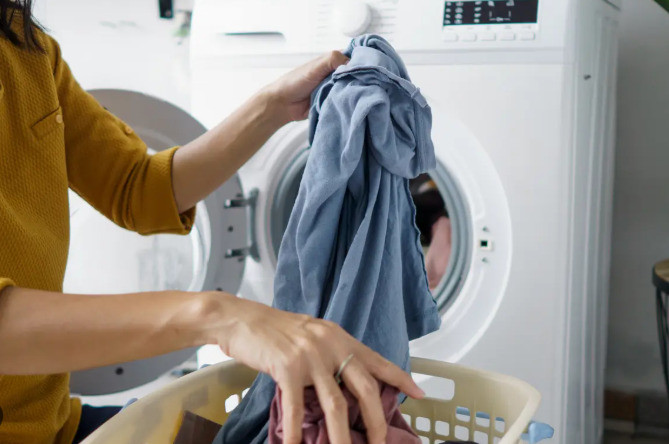
The aim is to reduce avoidable changes while keeping the garment clean. Start with the care label, then choose the wash and drying settings together.
1. Read the complete care label.
Check whether the pajamas are machine washable, hand-washable or dry-clean-only. Then check the temperature and drying instructions. A washable garment is not automatically suitable for a dryer.
2. Choose a suitable wash cycle.
For washable pajamas where the label permits it, a cool, gentle cycle is a cautious option. Avoid a heavy-duty program for delicate sleepwear, and choose a detergent suitable for the material. Silk, in particular, needs an appropriate cleaning product.
3. Make drying a deliberate choice.
If tumble drying is permitted, use the specified setting and avoid leaving the pajamas through an unnecessarily long cycle. Where air drying is recommended, follow the stated method: flat drying and line drying are not interchangeable for every garment.
The distinction matters for heavier wet knits, which can stretch under their own weight when hung. Support the garment as it dries rather than suspending it from narrow straps or stretching it over a hanger.
4. Reshape gently while damp.
Smooth the sleeves, trouser legs and seams into their intended position without pulling hard. For hand-washed items, press out excess water gently; a clean towel can help absorb moisture without wringing. This tidies the shape, but it does not make the fabric shrink-proof.
Can You Restore Pajamas That Have Already Shrunk?
Some mild dimensional changes can be eased by gentle reshaping, but full recovery is not guaranteed. The result may also be temporary if the fabric contracts again during the next wash.
For pajamas that allow wet washing, rewet them using the permitted care method. Press out excess water, support the garment on a towel, and gently ease the affected areas toward their original shape. Stop if the fabric, seams or surface begin to distort, and dry according to the label.
Avoid treating conditioner soaks or forceful stretching as a universal fix. A method that seems to help one cotton knit may be unsuitable for silk, a delicate print or a garment with special finishing. If the pajamas have shrunk severely or the elastic is damaged, stretching alone will not repair them.
Frequently Asked Questions
Do pre-shrunk pajamas still shrink?
They can. Pre-shrinking reduces the dimensional change left for later laundering; it does not necessarily eliminate it. The remaining change still needs to be assessed under the garment's intended care conditions.
Does shrinkage mean the pajamas are poor quality?
Shrinkage alone does not establish the cause. A substantial fit change after following the stated care instructions deserves investigation, including the fabric's stability, finishing and accuracy of the care advice. For a brand, checking an unwashed sample against a washed one helps separate an initial sizing issue from a laundering-related change.
Should I make pajamas one size larger to allow for shrinkage?
Not automatically. Going up a full size changes several garment measurements, while shrinkage may affect length and width differently. Base any pattern allowance on wash tests using the intended fabric and care method, then check that the washed sample meets your target measurements and fit.
How much shrinkage is acceptable for a pajama collection?
Agree the limits, measurement points, number of wash cycles and care procedure before evaluating results. AATCC TM150 provides a method for assessing garment dimensional changes after home laundering; it is not a universal acceptance percentage. During pajama sampling, review both the measurements and whether the washed garment still delivers the intended fit.
Conclusion
Comfortable pajamas should remain comfortable beyond the first fitting. Choosing care methods suited to the garment helps preserve that fit, while checking wash performance during development gives brands a clearer picture of what customers will experience at home.
Developing a pajama collection? Share your reference style and fabric preferences with KoalaPurr. Our team can help you compare material options and develop samples, with wash-performance requirements discussed before bulk production.