10 Best Fabrics for Loungewear: A Practical Guide for Clothing Brands
Loungewear can take many forms. It might be a lightweight set for relaxing at home, a ribbed outfit you can wear outside, or a heavier sweatshirt and jogger set for cooler weather.
That also means there is no single fabric that works for every style. In this guide, we’ll look at the most common loungewear fabrics and where each one works best.
10 Common Loungewear Fabrics Compared
| Fabric | Feel | Structure | Warmth | Best For |
|---|---|---|---|---|
| Cotton Jersey | Soft, familiar | Light to medium | Light | T-shirts, shorts, casual sets |
| Modal Jersey | Smooth, fluid | Soft | Light | Relaxed sets, wide-leg pants |
| Bamboo Viscose Jersey | Soft, lightweight | Fluid | Light | Summer sets, tops, relaxed pants |
| Lyocell | Smooth, refined | Fluid | Light | Premium sets, soft pants |
| Linen | Dry, airy | Light to crisp | Light | Loose shirts, pants, summer sets |
| French Terry | Soft, substantial | Medium | Medium | Joggers, sweatshirts, matching sets |
| Brushed Fleece | Plush, warm | Heavy | High | Hoodies, joggers, winter sets |
| Rib Knit | Soft, textured | Body-following | Varies | Fitted tops, pants, ribbed sets |
| Wool | Warm, soft to structured | Medium | High | Knitwear, premium winter sets |
| Blended Fabrics | Depends on blend | Varies | Varies | A wide range of loungewear |
One useful distinction is that fiber and fabric construction are not the same thing.
Cotton, modal, lyocell and wool describe fibers. Jersey, rib and French terry describe how the yarn is made into fabric.
What Makes a Good Fabric for Loungewear?
- Softness & Comfort: The fabric should feel comfortable against the skin, especially for pieces designed to be worn for long periods at home.
- Breathability: Good airflow helps keep loungewear comfortable in warmer conditions and for everyday wear.
- Drape & Structure: The fabric should match the silhouette, whether you want a fluid wide-leg set or a more structured jogger.
- Stretch & Recovery: Fitted styles need enough stretch to move comfortably and enough recovery to hold their shape.
- Weight & Warmth: Fabric weight affects both the season and the overall feel of the garment.
- Durability & Easy Care: Loungewear is washed frequently, so the material should maintain its appearance and hand feel over time.
- Opacity: Lightweight and light-colored fabrics should provide enough coverage for the intended garment.
Common Fabrics Used for Loungewear
1. Cotton Jersey
Cotton jersey is a knitted fabric made primarily from cotton fibers, known for its soft hand, breathability and familiar everyday feel. It is one of the most versatile options for everyday loungewear like T-shirts, shorts and lightweight sets
The final result depends on fabric weight and knit density. Lighter jerseys work well for summer styles, while heavier qualities give pants and sets more coverage and shape. For fitted pieces, cotton is often blended with elastane to improve recovery.
2. Modal Jersey
Modal is a regenerated cellulose fiber usually made from wood pulp and is known for its soft hand and fluid drape. When knitted into jersey, it works especially well for relaxed tops, wide-leg pants and matching sets with a softer silhouette.
For fitted pieces, modal is often blended with elastane to improve recovery. Weight, knit density and finishing also matter, as two modal jerseys with the same fiber content can still feel and perform quite differently.
3. Bamboo Viscose Jersey
Bamboo viscose is a regenerated cellulose fiber made from bamboo pulp. When knitted into jersey, it creates a lightweight, smooth fabric that works well for next-to-skin loungewear, including summer sets, relaxed tops and soft lounge pants.
It is less structured than most cotton jerseys, which makes it more suitable for flowing silhouettes than crisp shapes. Because the fabric can also be very fluid, weight and recovery should be checked carefully, especially for pants or fitted styles.
4. Lyocell
Lyocell is also a regenerated cellulose fiber made from wood pulp and is often used when a collection needs a cleaner, more refined appearance. Its smooth surface and clean drape can give relaxed pants, tops and matching sets a more polished, premium look.
It is also commonly blended with cotton, modal or elastane depending on the required finish and performance. These blends can help balance softness and drape with more structure, stretch or recovery.
5. Linen
Linen is a natural fiber made from the flax plant and is known for its dry hand, breathability and relaxed texture. It is a strong option for warm-weather loungewea like loose shirts, drawstring pants, shorts and summer lounge sets.
Compared with jersey, it has less stretch and a slightly crisper hand.That makes it better suited to loose woven silhouettes than fitted designs.
Pure linen wrinkles easily, which may suit a relaxed natural look. Linen blends are another option if you want a softer touch or easier care.
6. French Terry
French terry is a knitted fabric with a smooth outer face and looped texture on the inside. It offers more body than regular jersey without being as warm or plush as brushed fleece.
It is commonly used for joggers, sweatshirts, sweat shorts, hoodies and matching sets.
French terry can be made from cotton, cotton-polyester blends, modal blends or even recycled polyester blends, depending on the target price, hand feel and performance.
7. Brushed Fleece
Brushed fleece is a knitted fabric with an inner surface that has been brushed to create a soft, raised texture. This extra loft helps trap warmth, making it a common choice for hoodies, joggers and winter lounge sets.
The main thing to watch is bulk. If the design is supposed to look relaxed and fluid, a heavy fleece can make it feel too stiff.
Fleece may be made from cotton, polyester or blended fibers, so pilling and shedding should also be checked during sampling
8. Rib Knit
Rib knit is a knitted fabric with visible vertical ribs that give it natural stretch and flexibility. It is commonly used for when a style needs a closer fit, such as tanks, fitted tops, pants and slim matching sets.
For rib fabrics, recovery is just as important as stretch.A material that stretches easily but does not recover well may start to bag at the knees or waistband after several hours of wear.
Rib can be made from cotton, modal, viscose or blended fibers, often with elastane added for better recovery.
9. Wool
Wool is a natural animal fiber valued for warmth, insulation and softness in finer grades. In loungewear, it is more often used for premium cold-weather knitwear such as sweaters, cardigans, knit pants and matching sets.
Fine wool, especially merino, is better suited to next-to-skin loungewear because it feels softer than coarser wool.
Care requirements and cost should also be considered early in product development.
10. Blended Fabrics
Many loungewear materials are blends rather than 100% single-fiber fabrics. Blended fabrics combine two or more fibers to balance comfort, durability, stretch, structure or ease of care
Cotton-modal blends can combine a familiar cotton feel with a softer finish. Cotton-polyester blends are common in French terry and fleece, while cotton-elastane and modal-elastane combinations provide more stretch and recovery for fitted styles.
Wool blends can make winter products easier to care for, while linen blends can soften the hand and reduce some of the stiffness associated with pure linen.
A blend is not automatically better than a single-fiber option. What matters is what each component contributes to the final garment.
How to Choose Fabric for Different Types of Loungewear?
The easiest way to narrow down your options is to start with the product.
Lightweight Lounge Sets
Modal jersey, bamboo viscose jersey, lightweight cotton jersey and lyocell blends are common choices for soft, relaxed sets.Choose modal or lyocell when you want more fluid drape, while cotton jersey gives the set a slightly more casual and structured feel.
Joggers and Sweatshirts
French terry is one of the most practical options because it gives joggers and sweatshirts enough body without the bulk of heavy fleece. For colder styles, brushed fleece adds more warmth, while lighter French terry works better for transitional or indoor collections.
Ribbed Lounge Sets
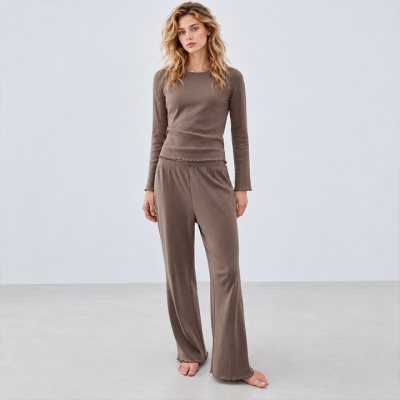
Cotton-elastane rib and modal-elastane rib are both widely used for fitted sets. Cotton rib tends to feel firmer, while modal rib gives a softer and more fluid fit.
Wide-Leg Lounge Pants
Wide-leg pants need enough weight to fall cleanly, but not so much that the silhouette becomes heavy or stiff. Modal, viscose and lyocell-rich fabrics are commonly used because they drape well, while heavier jersey can create a more structured look.
Summer Loungewear
For soft knit sets, lightweight cotton jersey, modal, bamboo viscose and lyocell are common choices. For looser woven styles, linen and lightweight cotton wovens create a crisper, more resort-inspired look.
Winter Loungewear
French terry, brushed fleece, wool and heavier cotton knits are more suitable for colder seasons. French terry works well for moderate warmth, fleece gives a cozier feel, and fine wool or wool blends suit more premium knitwear.
What Fabric Weight Is Best for Loungewear?
Fabric weight is usually measured in GSM, or grams per square meter, but the right weight varies by fiber, construction and garment type.
As a general reference:
140–180 GSM:Common for lightweight tops, summer sets and thinner jersey fabrics.
180–250 GSM:Often used for everyday lounge sets, pants, rib fabrics and some lighter French terry.
250–350+ GSM:More common in sweatshirts, joggers, heavier French terry and winter styles.
These numbers should only be used as a starting point.
A 200 GSM modal jersey and a 200 GSM cotton rib can behave very differently even though their weight is the same.
GSM is useful, but it should always be considered together with construction, fiber content and finishing.
What Should You Check Before Approving a Loungewear Fabric?
- Hand Feel: Make sure the fabric feels right for the product and target customer.
- Fabric Weight: Confirm that the production fabric matches the approved GSM。
- Stretch & Recovery: For fitted or ribbed styles, make sure the fabric returns to shape after stretching.
- Shrinkage: Test the fabric after washing to avoid unexpected size changes in bulk production.
- Pilling & Wash Performance: Check how the surface looks after repeated wear and washing.
- Opacity: This is especially important for lightweight fabrics and lighter colors.
- Color Consistency: For matching sets, confirm that tops and bottoms maintain a consistent shade.
FAQ
Is a 100% Fabric Better Than a Blend?
It depends on the style. A 100% fiber fabric may give you the hand feel you want, while blends can improve stretch, recovery, durability or care performance.
Is Cotton or Modal Better for Loungewear?
Cotton usually feels more casual and familiar, while modal gives a smoother and more fluid look. The better option depends on the fit and overall direction of the collection.
What Is the Softest Fabric for Loungewear?
Modal, bamboo viscose and lyocell are all commonly used when softness is a priority. The final result still depends on the knit, weight and finishing.
Is French Terry Good for Loungewear?
Yes. It works particularly well for joggers, sweatshirts and medium-weight matching sets because it gives the garment more body than regular jersey.
What Fabric Is Best for Summer Loungewear?
Lightweight cotton, modal, bamboo viscose, lyocell and linen are all useful options. The best choice depends on the fit, weight and structure of the garment.
Conclusion
The right loungewear fabric depends on the product, season and feel you want to achieve.
Once you have narrowed down the options, test the material in a finished sample. It is usually the easiest way to see whether the weight, fit and overall feel are right for the design.